
The 1970 Chevy SS Restomod Built To Outperform Even The Rare L78 Big-Block
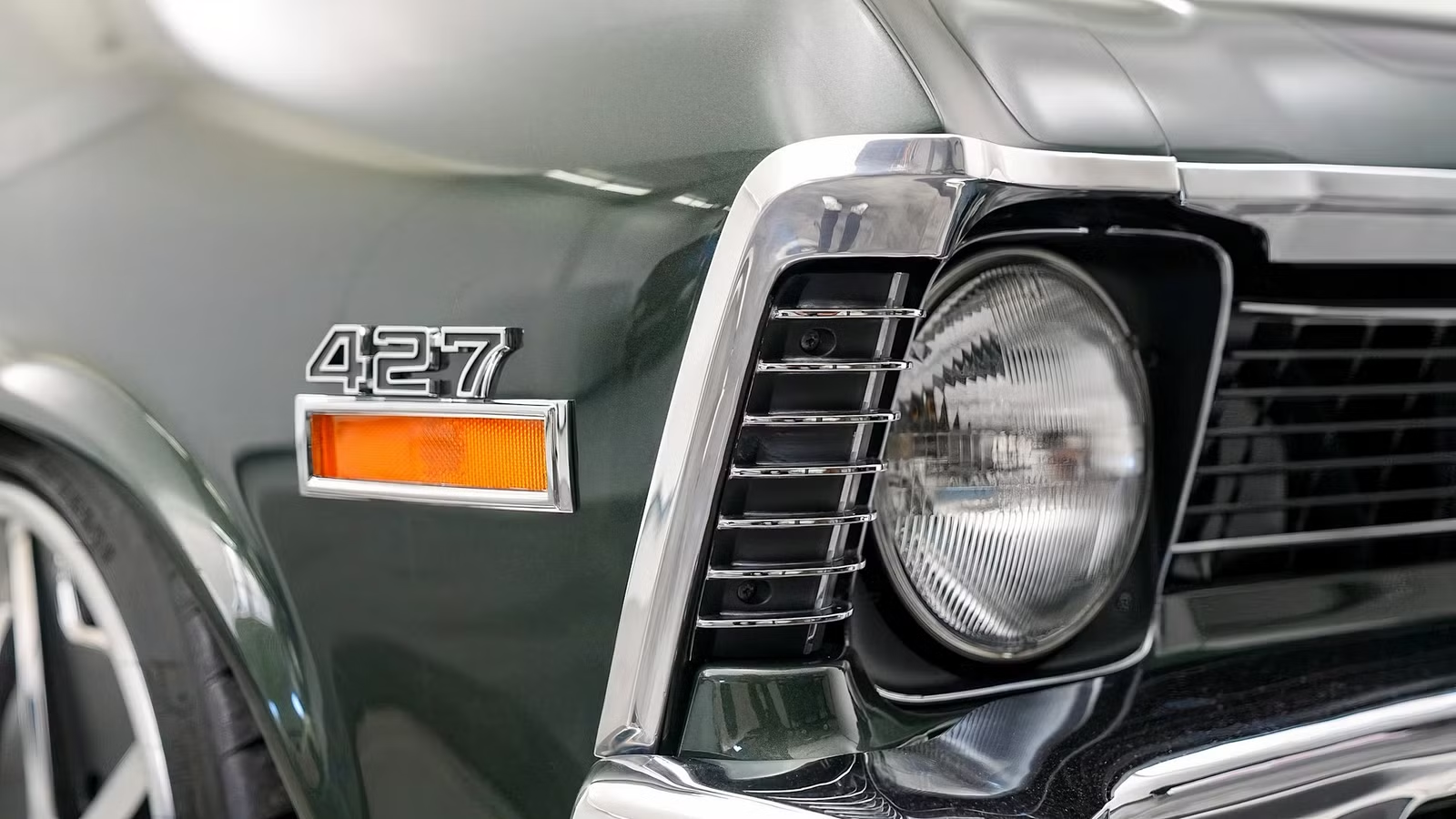
Classic Muscle Cars can look convincing in a digital render. Making one work as a modern performance car is harder. The stance and badges are easy, but the engine, chassis and brakes have to work together. One completed build, packing a fuel-injected big-block and a pro-touring chassis, offers a useful way to examine that difference. There’s a twist, too. It rolled off the block in August still up for grabs and is due back in November for a second shot. So what does a real revival have to deliver that a render never will?
Why Chevrolet’s Compact Muscle Car Still Has Something To Prove

Chevrolet’s compact muscle car made its case with restrained styling and serious V-8 power. A long hood, short deck, and straightforward body gave it the proportions enthusiasts still like, while an available big-block turned an ordinary-looking coupe into a genuine threat at the stoplight.
The appeal was never just retro sheet metal. The sleeper vibe is part of the charm. Modern hardware can help it use that power, but it also changes the car’s character, so the real challenge is deciding which parts of the original idea are worth preserving. A digital rendering can suggest the right silhouette. It can’t tell you how the steering loads up, how the rear tires put power down or whether the brakes can repeatedly shed speed. Those are engineering questions, not styling exercises.
The Factory Big-Block Set A Serious Benchmark


Chevrolet’s compact coupe was available with a top big-block option rated at 375 hp. That gave it a formidable factory claim in an era when manufacturers were putting serious power into relatively small cars. Today, those cars appeal to collectors who care about factory specification and provenance as much as raw output.
The number is a useful benchmark, but it doesn’t tell the whole performance story. Gearing, traction, vehicle weight, tires, and suspension all decide what a car can actually do with its power. That leaves a sharp question for any modern interpretation. Can updated hardware make the car more capable without confusing modern performance with factory authenticity? A collector chasing originality has a different brief from someone who wants to drive hard on modern roads.
This 1970 Chevrolet Nova SS Restomod Packs A Modern 427 Punch

The car is a 1970 Chevrolet Nova SS built by Cambra Speed Shop in Orange, California, and it crosses the block as Lot V314 at Mecum’s Las Vegas sale on November 14, 2026. It’s not new to the auction stage. The same car was offered as Lot F156.1 on August 14, 2026, and came away unsold, with Mecum still listing it as up for grabs.
The headline hardware is Chevrolet Performance’s ZZ427/480 crate engine, rated at 480 hp at 6,000 rpm and 490 lb-ft at 3,800 rpm, fed by Holley Terminator X Stealth fuel injection. That’s a nominal 105 hp more than the factory L78’s 375-hp rating, although the figures come from different rating eras. A Tremec Magnum six-speed gives the driver more ratios than any factory four-speed of the era.
TCI’s Pro Touring independent front suspension and Torque Arm rear setup, Ridetech coilovers, and power rack-and-pinion steering aim to improve chassis control. Wilwood 13-inch rotors with six-piston front and four-piston rear calipers handle the stopping, while Michelin Pilot Sport 4S tires measure 245/45-18 up front and a meaty 315/35-19 out back. The point is the combination. Extra power is easy to advertise, but getting a car to steer, stop and put that power down consistently is the hard part. Without independent testing, there’s no lap time or acceleration figure to prove this one does it better.
More Horsepower Does Not Automatically Make A Better Collector Car

Market values show exactly where a modified performance car and a factory-correct example part ways. Current valuation guides put a 1970 Nova SS 350 in #3 (Good) condition at $36,900, an L34 396 at $51,400 and an L78 at $63,900. Rarity explains much of that gap. Only 3,765 Novas left the factory with the L78 in 1970, and the best of them blow right past that $63,900 figure.
A numbers-matching, registry-certified L78 sold for $275,000 at Mecum’s Dallas/Fort Worth sale on November 1, 2025, while a highly original example made $126,500 at Mecum Indy in May 2025. One record isn’t a market-wide benchmark, and condition and provenance move those numbers as much as the engine code does. A restomod can offer modern brakes, tires, a six-speed, and easier driving manners. A factory-correct L78 offers originality and documented history that no amount of modification can recreate. Neither one wins outright, because they’re built for different buyers. That’s why this Nova’s November result will say more about its market position than any comparison with a $275,000 original.
The Nova Revival Has To Deliver More Than Retro Styling

Think of this build as a physical reference point for the modern Nova conversation, not proof that Chevrolet should or will revive the nameplate. A render can borrow familiar proportions, but a convincing production car would need a coherent answer to power delivery, gearing, steering, braking, ride quality and everyday use. This restomod shows one approach, keeping the old body and reworking the hardware beneath it.
The auction history raises a real question, not an easy answer. The car left August still up for grabs and returns on November 14, but the record gives no reason why. It could have been the reserve, the build or plain bad timing, and anything more would be invented drama. Factory values can’t predict demand for a new car, and digital enthusiasm isn’t a purchase order. A revival needs a complete driving experience, not just a familiar face.
Sources: Mecum, Hagerty Valuation Tool

Related posts



Latest Post



No Comments