
Audi Just Patented Fake Engine Vibrations, Sparks, And Even Simulated Misfires For EVs
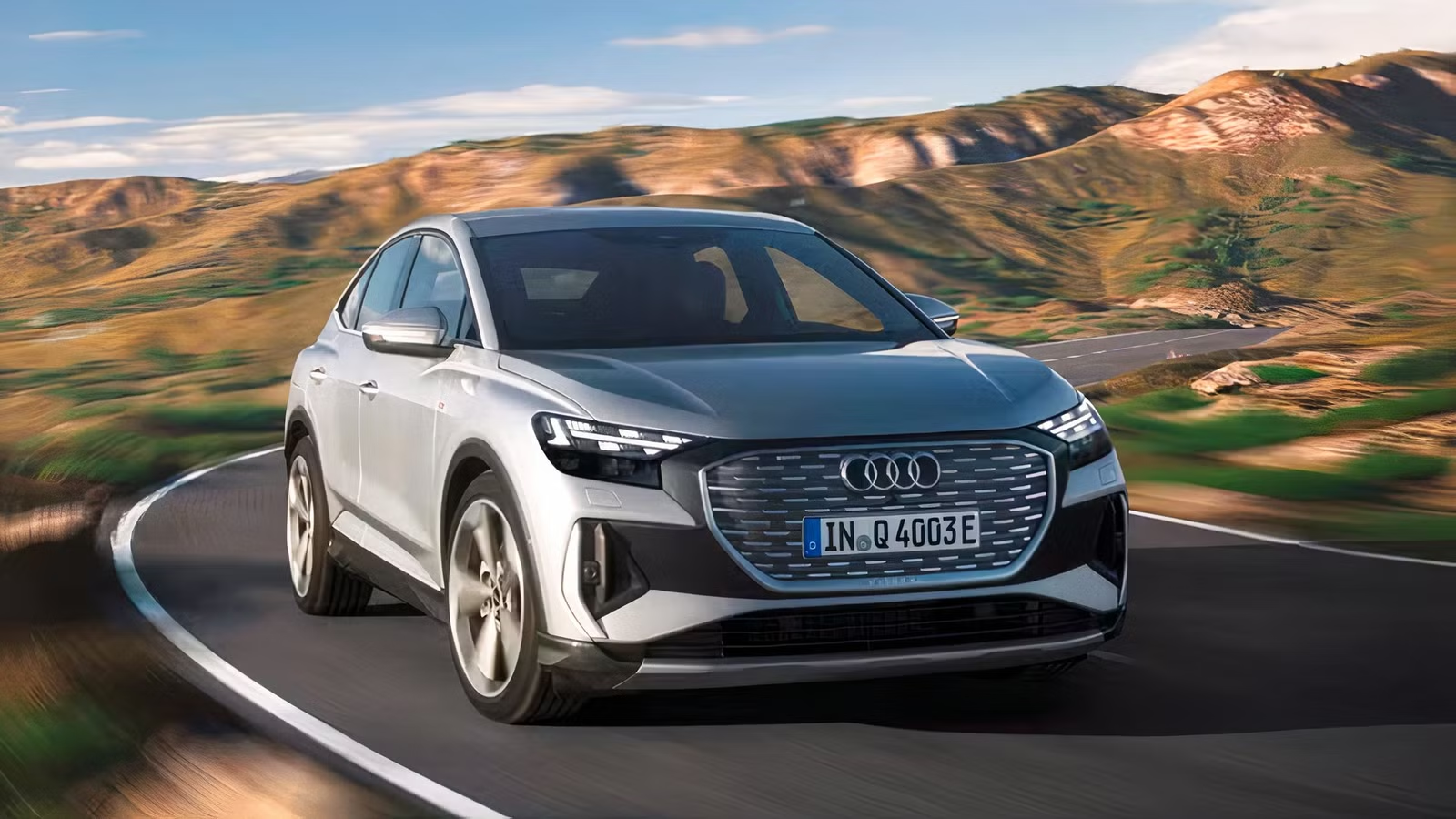
Audi has filed a patent that reads like a wish list for making electric cars feel less electric. Published on August 27, 2026, German patent DE102025107436 describes a system that lets an EV’s electric motor spin in neutral, decoupled from the wheels, purely to generate the kind of vibration and noise a combustion engine makes at idle. It doesn’t stop there. The filing also covers simulated gear shifts, fake turbo lag, and visual effects including electric arcs, friction sparks, and flashing lights designed to mimic a backfire.

It’s a striking document because it’s less about hiding that a car is electric and more about admitting what’s been lost in the process. Audi’s own filing states plainly that reducing noise and vibration, while good for comfort, can also strip away “emotional appeal and character” that made cars feel alive. The patent’s answer is to engineer that feeling back in, mechanically and theatrically, rather than leave it to a speaker playing a sound clip.
How Audi Plans To Fake The Feel Of A Combustion Engine
The centerpiece of the patent is a coupling device that can disconnect the electric motor from the drive shaft and wheels entirely. With that link broken, the motor can keep spinning in neutral even while the car is parked, generating vibration and noise “reminiscent of an internal combustion engine,” in the patent’s own words. A vibration transmission element, essentially a deliberately uninsulated motor mount made of hollow steel profile, then carries that buzz into the cabin and out to the exterior, rather than damping it the way modern engineering usually tries to.

A control unit layered on top can simulate actual gear changes, complete with paddle shifters that alter acceleration curves, vibration, and sound to mimic an upshift or downshift. The patent specifically calls out rev-matching sensations on downshifts and a simulated turbo lag, drawing from stored characteristic curves tied to simulated engine speed. There’s even a provision for AI that anticipates when a driver wants a burst of power and releases it on demand, like a virtual boost button standing in for a turbo spooling up.

The visual side of the patent goes further than most sound-generator patches automakers have tried before. It describes an arc generator that produces a visible electric arc, shielded behind glass, with intensity tied to simulated engine speed or vehicle speed. A separate spark-generating unit can throw actual sparks, either through electrical discharge or by pressing a metal component against the road surface for friction, like a sacrificial brake pad designed purely for pyrotechnics.
Layered on top of that: speed-dependent LED pulsing across light strips and screens mounted on the body, plus a feature that briefly flashes rear and underbody lights to simulate misfires or flames. The patent also describes a fragrance-generating device with reservoirs that release calming scents in traffic and more invigorating ones during aggressive driving, plus a specific fragrance meant to represent a misfire. A windshield-edge display can even blur or distort peripheral vision at speed, simulating the sensory rush of hard acceleration.
Why This Is Bigger Than One Automaker’s Filing

Audi’s application cites three earlier German patents covering similar territory, one on simulating combustion vibrations and noise in an electric drivetrain, one on virtualizing internal combustion drivetrain feel through tooth-pressure modeling of virtual gears, and one on adapting an EV’s appearance to visualize its operating state. That prior art suggests German automakers have been independently circling this same problem for a few years now: how to keep the emotional signature of a gas engine alive once the engine itself is gone.
Audi frames all of this as a safety and engagement play as much as a nostalgia one, arguing that quieter EVs are harder for pedestrians and cyclists to notice and that reintroducing vibration, sound, and visual cues can address both the sensory flatness critics point to and a real road-safety gap. Nothing here confirms this system reaches a production Audi. Patents get filed constantly, and plenty never leave the drawing board. But as a signal of how a traditional performance brand is thinking about competing against the hushed, minimalist experience Tesla built its identity around, it’s a pretty unambiguous one.
Whether any of this survives contact with actual engineering budgets and regulators is an open question. Simulated backfires and roadside sparks sound more like a concept-car stunt than a feature bound for an A6 e-tron showroom floor. But the filing is a useful data point on where legacy automakers think the EV experience still falls short, and how far they’re willing to go to patch it.
Source: Eureka

Related posts



Latest Post


No Comments