
Suzuki Built The Rotary Motorcycle Honda, Yamaha And Kawasaki Only Prototyped
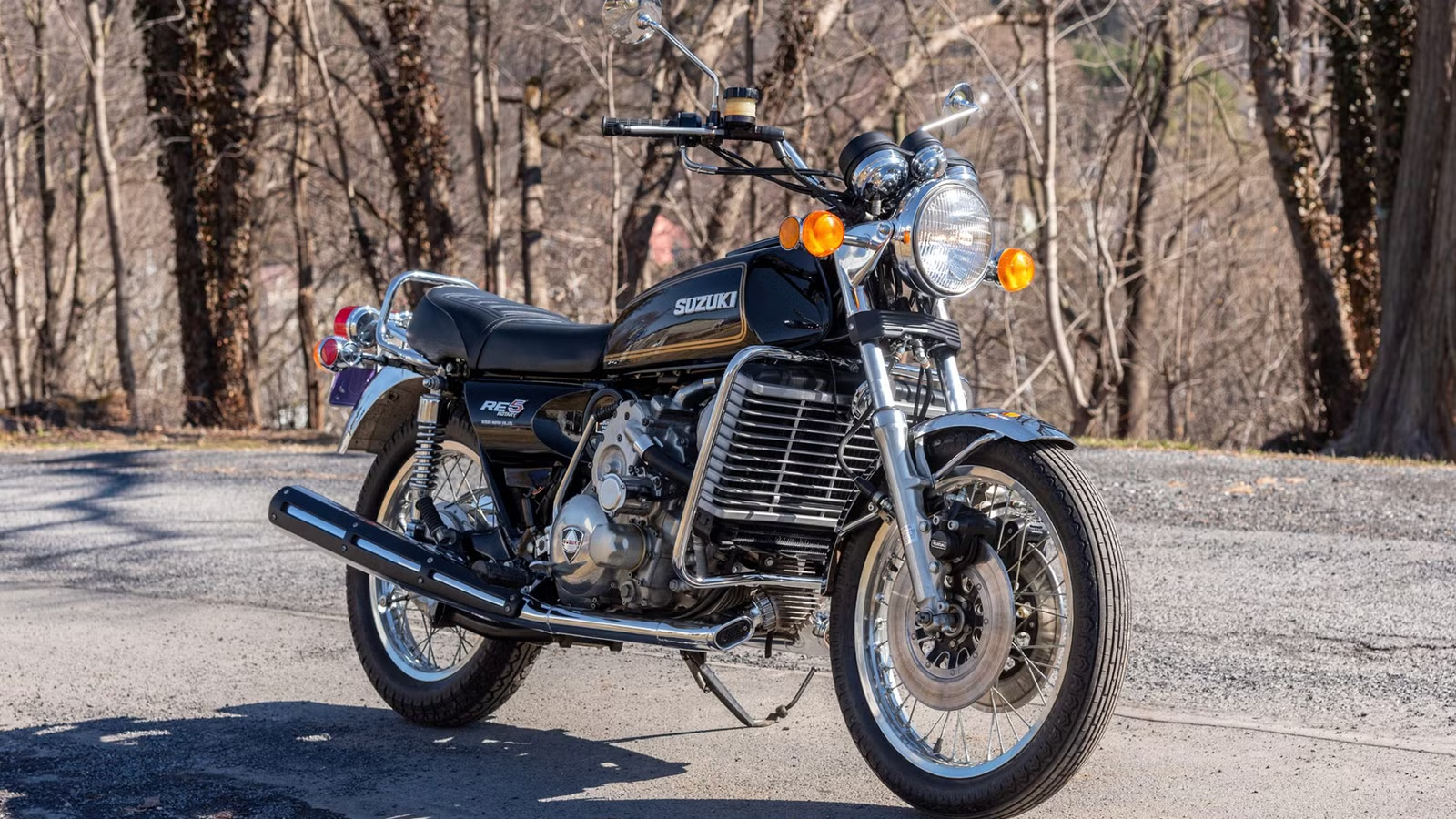
The 1970s were a time when Japanese motorcycle manufacturers weren’t afraid to experiment. Bigger engines, unconventional designs, and new technologies were all part of the race to build something extraordinary. But one manufacturer took things a little further than the others and put an ambitious new engine into production. The motorcycle was unlike anything its Japanese rivals had seen. Unfortunately, it also became the brand’s one of the most expensive commercial disappointments.
Japan’s Fascination With Rotary Engines

The 1970s were an exciting time for Japanese bike makers. The horsepower race was brewing, and companies were experimenting with technologies that promised to change motorcycling forever. One of them was the Wankel rotary engine.
Unlike conventional engines, which use pistons moving up and down inside cylinders, a Wankel engine uses a triangular rotor spinning inside a specially shaped housing. With fewer major moving components, it promised smoother operation, compact size, and impressive power delivery.
Honda, Yamaha, and Kawasaki all explored rotary-powered motorcycle concepts. However, none of these manufacturers committed to mass production. One Japanese manufacturer decided the technology deserved more than this.

An Engineering Marvel With Unnecessary Complexity

On paper, a rotary engine should have been relatively straightforward. No conventional pistons, connecting rods, or complicated valve train. What could possibly go wrong?
Quite a lot, apparently. Rotary engines generate a lot of heat, and keeping the operating temperatures under control proved to be a challenge. Engineers needed liquid cooling for the engine housing and a separate oil-cooling circuit for the rotor.
Then came lubrication. The rotor’s apex seals needed a dedicated oil supply, while the engine’s unusual combustion characteristics demanded a sophisticated ignition arrangement. Even the carburetor was complicated, requiring five cables to coordinate throttle operation and associated controls. By the time engineers had addressed these challenges, the supposedly simple rotary engine had become surrounded by an extraordinary collection of supporting engineering components.
The 1974 Suzuki RE5: The Rotary That Reached Showrooms

The motorcycle was the Suzuki RE5, introduced in late 1974. Suzuki had licensed rotary-engine technology from Germany’s NSU Motorenwerke AG in 1970 and spent the following years developing a production-ready motorcycle around it. At its heart sat a 497cc, liquid-cooled, single-rotor Wankel engine producing approximately 62 PS (61 horsepower) at 6,500 rpm and 55 lb-ft (75 Nm) of torque at 3,500 rpm. Power went to the rear wheel through a five-speed transmission and chain final drive.
The chassis was relatively conventional, borrowing heavily from Suzuki’s existing motorcycles. It had a telescopic fork, twin rear shock absorbers, and dual front disc brakes for underpinnings. What made the RE5 remarkable wasn’t its chassis. It was the fact that Suzuki had actually put a rotary-powered motorcycle into series production when its Japanese competitors had stopped at prototypes.
Smooth Performance, But At What Cost?

The RE5’s greatest strength was its refinement. Without conventional reciprocating pistons, the rotary engine delivered remarkably smooth acceleration. It also produced a distinctive exhaust note that sounded quite unlike the inline-fours dominating Japanese dealership floors. Its torque delivery made relaxed riding enjoyable, and contemporary testers generally praised its stability and handling.
However, the RE5 weighed approximately 507 pounds dry, or around 550 pounds ready to ride. That’s a considerable amount for a motorcycle producing roughly 61 horsepower. Meanwhile, Kawasaki’s Z1 offered an air-cooled 903cc inline-four producing approximately 82 horsepower, along with stronger outright performance.
Fuel economy was another disappointment, and the Suzuki managed around 30–33 mpg (US), hardly impressive for a motorcycle that was built during the period of fuel efficiency concerns. The rotary engine also required specialized maintenance knowledge, making it a less reassuring proposition than conventional piston-powered alternatives.
Futuristic Styling, But The Timing Was Terrible

Suzuki wanted the RE5 to look as unconventional as its engine, so it enlisted renowned Italian designer Giorgetto Giugiaro. The result was a motorcycle with an unusual cylindrical instrument cluster, complete with a hinged cover, and similarly distinctive rear lighting. It looked futuristic, but everyone didn’t appreciate the styling.
For 1976, Suzuki introduced a revised version with more conventional instruments, lighting, and cosmetic details. The changes made the motorcycle look more familiar, but they couldn’t address its fundamental shortcomings.
The timing was equally unfortunate. The 1973 oil crisis had pushed fuel efficiency higher on buyers’ priority lists. Suddenly, a thirsty, expensive motorcycle with an unfamiliar engine wasn’t particularly appealing. Suzuki had developed something technically fascinating, but the market had little reason to embrace it.
From Commercial Failure To Collector’s Motorcycle

The RE5’s production timeline was quite short. Suzuki discontinued the project after the 1976 model year, with commonly cited production estimates ranging from approximately 6,000 to 7,000 motorcycles. It was a costly experiment, especially considering the research, development, and specialized manufacturing it required.
Today, however, the qualities that made the RE5 difficult to sell are precisely what make it interesting to collectors. Well-preserved examples have attracted considerable interest, with exceptional motorcycles reportedly drawing auction bids exceeding $15,000.
Suzuki Took A Gamble Its Japanese Rivals Wouldn’t

The Suzuki RE5 wasn’t a particularly sensible motorcycle. It was heavy, thirsty, complicated, and no faster than several conventional alternatives. But judging it purely by those shortcomings misses the bigger picture. Honda, Yamaha, and Kawasaki explored rotary-powered motorcycles, yet Suzuki was the Japanese manufacturer that actually brought one to showrooms.
The RE5 ultimately failed commercially, but it demonstrated an engineering ambition that went far beyond simply building another powerful inline-four. And sometimes, motorcycles are remembered not because they were successful, but because someone was ambitious enough to build them.

Related posts

Latest Post


No Comments