
Low EV Brand Loyalty Means Automakers Can’t Coast On Early Adopters Anymore
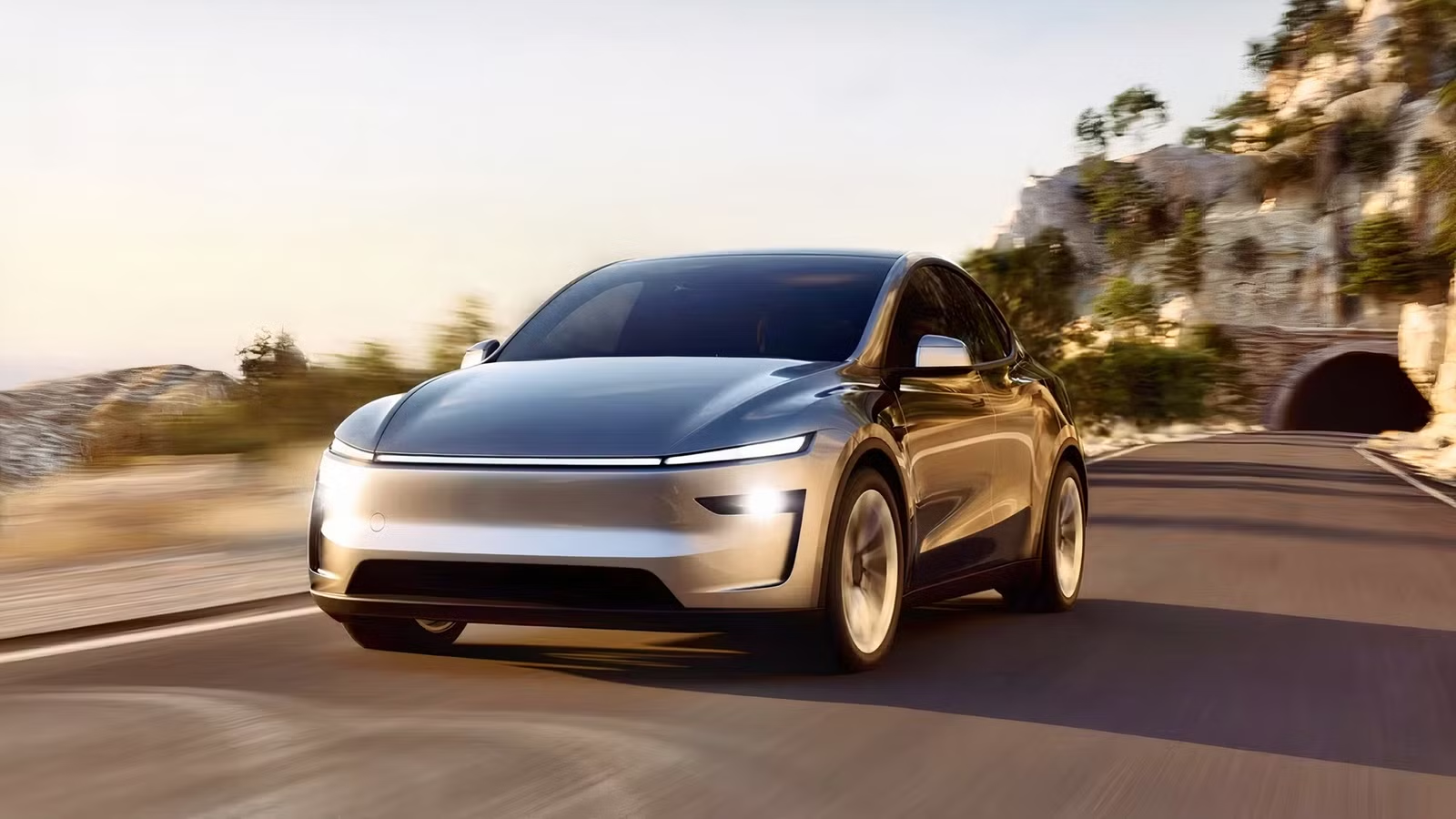
A new study out this week says EV buyers treat brand loyalty very differently than traditional gas-car owners, and the numbers are stark. According to the 2026 EVForward Brand Deep Dive from Escalent, a Michigan-based market research firm, 93% of people in mixed households, meaning they own both a gas car and an EV, bought their electric vehicle from a different brand than the one that made their gas car.

That’s not a small shift. It suggests the loyalty automakers spent decades building through repeat buyers and dealer relationships doesn’t automatically carry over once someone decides to go electric. For shoppers weighing an EV purchase right now, this churn has real consequences for warranty coverage, charging access, software support, and resale value.
Why EV Shoppers Keep Leaving Their Old Brand Behind
Part of the answer is simple availability. Not every automaker sells a fully electric model yet, so a buyer loyal to a brand without an EV in its lineup has no choice but to shop elsewhere. That alone pushes a lot of traffic toward companies like Tesla, Rivian, and Lucid, or established automakers that moved early into EVs, including Hyundai and Kia.

McKinsey & Company’s research adds another layer: EV shoppers, who tend to be more affluent than the average new-car buyer, care more about range and charging speed than about the badge on the hood. The McKinsey study found that over half of premium car owners say they’d switch brands specifically to buy an EV. Direct exposure matters too. Households that already own one EV alongside a gas car are three to four times more likely to go fully electric with their next purchase than households that have only owned gas vehicles, according to McKinsey.
The Automakers Still Winning Loyalty, And Why

Not every brand is losing ground. Escalent’s study found that Toyota, Hyundai, Subaru, and Honda lead in loyalty among current owners. The common thread is choice: each of those brands sells gas, hybrid, and electric models under one roof, so a loyal customer doesn’t have to leave the fold to go electric. That’s a meaningfully different position than a single-powertrain brand faces, where every EV shopper is a potential defector by default.
It also explains why hybrid sales have stayed strong even as EV adoption climbs. A buyer who isn’t ready to commit to a full EV can stick with a trusted badge and still inch toward electrification.

For buyers actually weighing the switch, the lesson is to shop the ownership experience, not the badge. Warranty coverage varies widely by automaker, especially on battery and drivetrain terms, and that gap matters more with an EV than it ever did with a gas car. Charging network access is another differentiator worth checking before signing anything, since not every brand offers the same plug compatibility or fast-charging reliability.
The software update policy is worth a hard look too. Some automakers handle fixes and feature upgrades over the air, while others still require a service center visit. And because EV depreciation curves differ brand to brand, the resale value of a three-year-old EV can vary more than it typically would for a comparable gas car. Gas prices climbing to $4.35 a gallon this month, according to AAA, up from $3.08 a year earlier, are clearly pushing more shoppers toward EVs. But with EVs representing just 7.9% of U.S. sales this spring, per the Alliance for Automotive Innovation, the market is still young enough that picking the right fit matters more than picking the familiar name.

Related posts

Latest Post


No Comments