
Porsche 918 Spyder Architecture Behind Corvette ZR1X Design
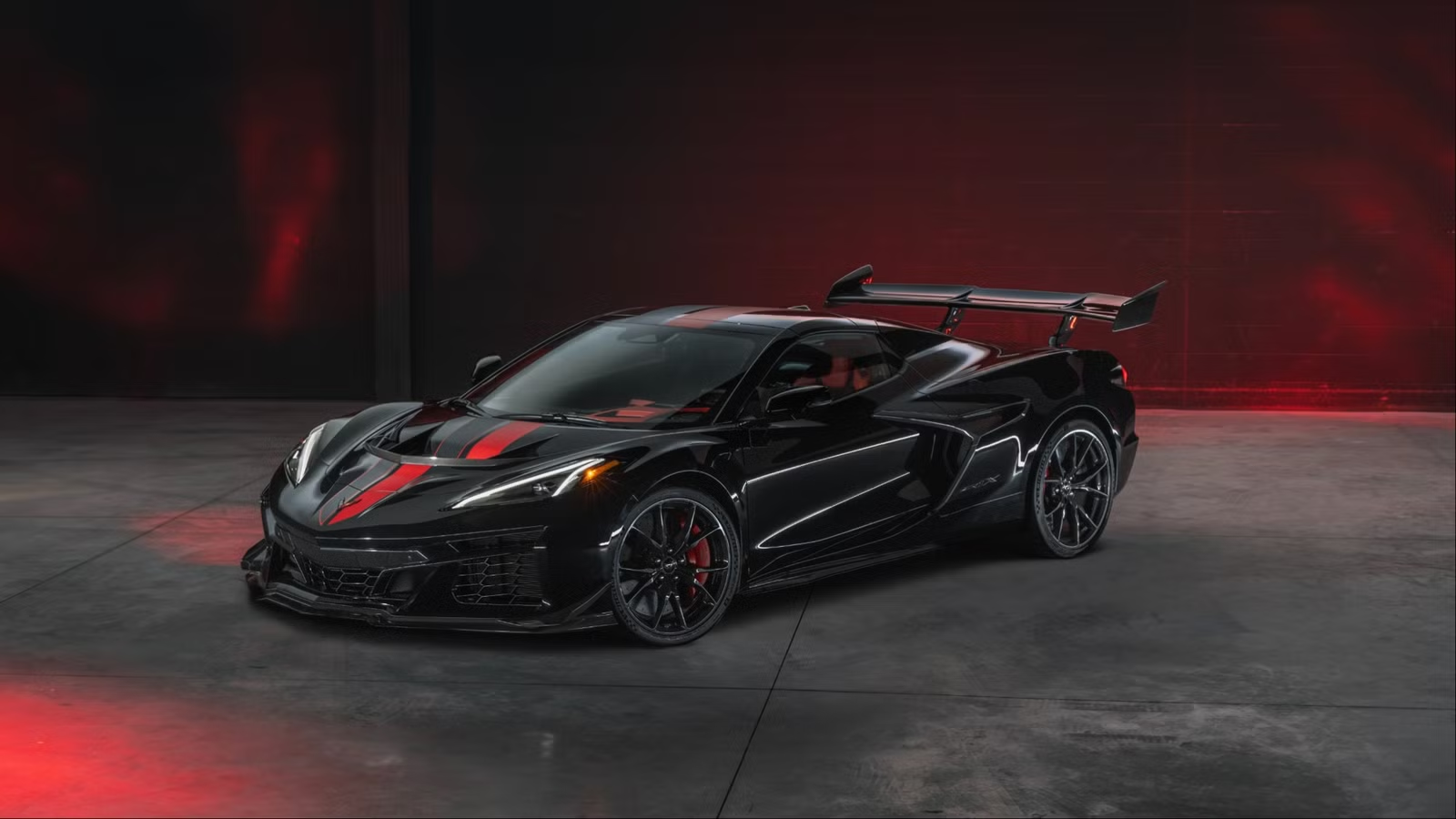
When Porsche‘s engineers designed the 918 Spyder’s hybrid architecture in 2013, they were solving a very specific problem: how to add all-wheel-drive performance to a mid-engine hypercar without the weight penalty of a conventional front driveshaft. Their answer — a single electric motor on the front axle — was elegant, purposeful, and, as it turns out, ahead of its time. Road & Track confirmed this week that the same template now underpins the 2026 Corvette ZR1X, Chevrolet’s 1,250-hp flagship.

This isn’t a case of parallel thinking. The 918 was the only car among the 2013 hypercar trio — Ferrari LaFerrari, McLaren P1, Porsche 918 — to put a motor on the front axle. The other two kept electrification at the rear. That single architectural decision, made in Stuttgart over a decade ago, quietly became the blueprint that a team in Bowling Green, Kentucky would eventually follow to build the most powerful Corvette ever made.
The 918’s Front Motor Was The Odd One Out — Until It Wasn’t
The LaFerrari and the P1 are both plug-in hybrids, but neither sends electric power to the front wheels. Porsche did, and the reasoning was straightforward: a front axle motor delivers genuine AWD traction and stability without the mechanical complexity of a front differential or a prop shaft running beneath the cabin. The weight savings matter at this level of engineering. So does the packaging.
In the years since the 918’s 2013 debut, the front-axle electric motor has gone from outlier to industry standard. The Acura NSX second generation used two front motors. Ferrari’s SF90 Stradale, the Lamborghini Revuelto, the Aston Martin Valhalla, and the upcoming Bugatti Tourbillon all followed with dual front motors. The 918’s core insight — electrify the front axle, leave the rear to the combustion engine — became the dominant hypercar architecture of the 2020s.
How Chevy Adapted The 918’s Architecture For The ZR1X

The Corvette ZR1X doesn’t reinvent the formula. It refines it. The rear of the car is standard ZR1, built around the LT7 twin-turbocharged V-8, which shares its basic architecture with the Z06’s naturally aspirated LT6. Up front, Chevy engineers took the electric motor from the outgoing E-Ray and upgraded it — new software, revised internal components — to produce 186 hp, a meaningful step beyond the E-Ray’s baseline output. They also extended the motor’s cutoff speed by 10 mph to 160 mph, meaning the front motor is still contributing thrust deep into the ZR1X’s quarter-mile run.
The result: 9.2 seconds at 155 mph through the quarter-mile. That’s the performance case. But the engineering case is just as interesting. Even in the ZR1X’s highest Performance Traction Management setting — Pro mode, which strips out all driver aids except ABS — the front-axle motor stays active as a stability tool. The same logic Porsche used at Le Mans, deploying the front motor not just for acceleration but for chassis balance, is baked into how the ZR1X manages itself at the limit.
Single Motor vs. Dual Motor: A Deliberate Choice

Most of the ZR1X’s hypercar contemporaries have moved to dual front motors. Ferrari, Lamborghini, Bugatti — they all run two motors up front, which allows for torque vectoring between the front wheels and finer dynamic control. Chevy stuck with one. That’s not a budget decision on a car at this price point; it’s a philosophy.
A single front motor keeps the system lighter and simpler. It delivers AWD grip and stability without the software complexity of managing torque split between two independently driven front wheels. For a car that already makes 1,250 hp from its combustion engine alone, the argument is that you don’t need front torque vectoring — you need front traction and a stable platform. That’s exactly what the 918 was designed to provide, and it’s exactly what the ZR1X delivers. The Grand Sport X, Chevy’s other electrified Corvette variant, uses the same single-motor layout, confirming this isn’t an isolated decision but a deliberate engineering direction for the C8 hybrid family.
The 918 Spyder ended production in 2015 after 918 units. Its engineering didn’t retire with it. Gearheads watching the ZR1X pull a 9.2-second quarter-mile are watching a direct descendant of that Stuttgart-built hypercar do its thing — just with an American accent and a Bowling Green address.

Related posts
Latest Post


No Comments