
The Beginner-Friendly Sports Car That Just Became A Smart Buy
When I got my driver’s license some 13 years ago, a small-engined hatchback that was not particularly fun to drive and had a massive insurance premium was about all I could afford to run. Today, my insurance premiums have for the most part come down, and I can get behind the wheel of something with a bit more gusto.
I wish I had looked into sports cars that were both fun to drive and beginner-friendly at the time; it would have saved me a lot of miserable trips as I struggled to keep up with others on winding back roads. Something like the Subaru of today’s discussion would have been a game-changer.
Affordable Sports Cars Are Getting Harder To Find
The obvious affordable sports car that everyone can drive is the Mazda MX-5 Miata. I had many happy years driving my NB through the countryside and was s ad to see it go when repairs to it (all my own fault) started to make things very expensive. Today, you can pick a new one up for just over $30,000.

While that isn’t a huge amount of money for a timeless classic, it is still a lot of money for something that only has two seats and can only carry around 4.6 cubic feet of stuff in the trunk. Want more space, another row of seating, and more oomph? Something like a new Mazda3 has an MSRP of around $25,000.
For all its good points and approachable performance, even the turbo model, which is more expensive, takes around six seconds to get to 60 and does not have the totally dialed-in handling you want from a sporty car.
A New BMW M2 Or Corvette Stingray Will Cost You Thousands Per Year To Run

So, the answer is generally to spend more money on something like a BMW 3 Series, an M model, a juiced-up Audi, or something even more expensive.
When it comes to spending more money on horsepower, there are some small engine models that pack a serious punch that can be more fuel-efficient, but if you want the rumble of a V8 and one of the best bang-for-your-buck sporty setups in 2026, you’re going to be spending $4,050 a year on gasoline for a $70,000 Stingray.
The Subaru BRZ Delivers The Kind Of Driving Fun Money Can’t Always Buy

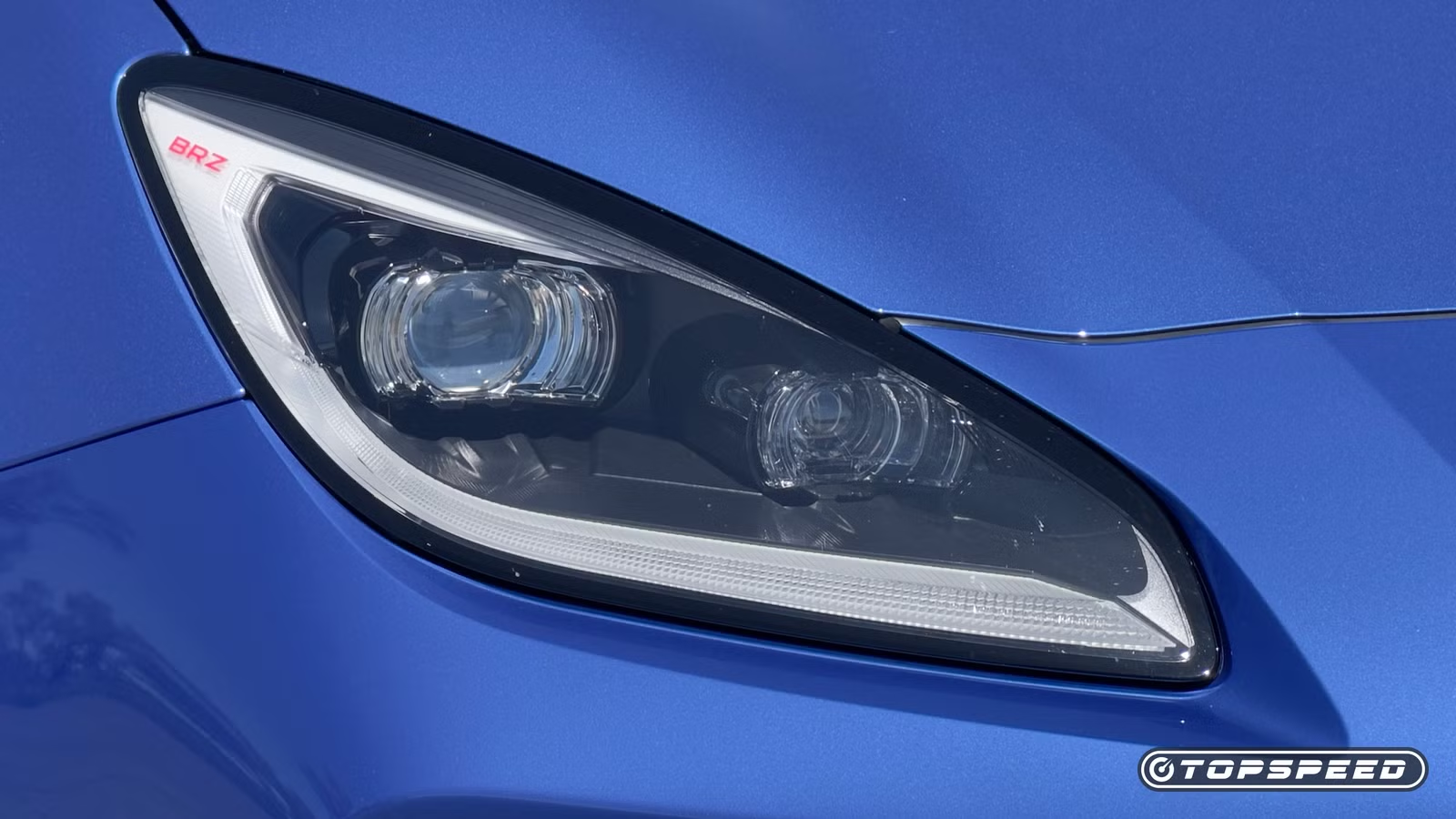
For a driver who wants real feedback without getting in over their head, the BRZ is engineered from the ground up to feel alive — not intimidating. It looks the part: a naturally aspirated engine sits in a front-mid position, it is relatively lightweight, power is sent to the rear wheels, and it is available with three pedals as well.
Naturally Aspirated Boxer Engine Keeps Power Delivery Simple And Fun

From 2022 to present, the BRZ is equipped with a naturally aspirated DOHC 16-valve FA24 boxer engine with D-4S injection. Power is rated at 228 horsepower at 7,000 rpm and 184 pound-feet at 3,700 rpm.
Power is linear; the redline is high; the throttle is snappy; and you do not have the synthetic feel of a turbocharger getting in the way of old-school character. 0–60 mph times are just over six seconds, and you can opt for a six-speed manual transmission for that proper hands-on feel.
Rear-Wheel Drive And A Balanced Chassis Make It Approachable
The BRZ puts its rear wheels to work, and that is a big part of why you want one in a world of AWD cars. The low-mounted boxer engine keeps the center of gravity down low, while the near 50:50 weight distribution and curb weight of up to 2,881 pounds keep things balanced in the corners.
There’s no huge power figure to wrestle with, either. The limited-slip differential helps keep things tidy at speed, and the chassis is tuned to deliver plenty of feedback without becoming unsettling.
The 2024 BRZ Is Becoming A More Tempting Used-Car Proposition

A 2026 BRZ has a starting price of $35,860, which, as mentioned about the MX-5, is not bad money for something with some serious back-road prowess. However, going slightly older and cheaper does not mean you are missing out.
Recent Depreciation Means A Nearly New Sports Car For Less
The national average fair purchase price, as reported by Kelley Blue Book, for a 2024 BRZ is $27,400 for the Premium trim down from $31,315, $25,500 for the Limited trim down from $36,465, and $28,000 for the tS trim down from $33,815.
That makes for a depreciation rate of between 12.5 and 24.59 percent in just two years. If you go for a 2022 model, average used prices range from $22,800 to $24,900, and a 2023 model has an average used price of between $24,000 and $25,400.
The BRZ’s Short-Throw Six-Speed Is One Of The Last True Manual Sports Car Experiences You Can Buy


Manual sports cars are becoming rarer , but all BRZ models can be equipped with a stick shift. It has a short-throw gate; there are triple-cone synchronizers on the first, second, and third gears; and single-cone synchronizers are used on the fourth, fifth, and sixth gears. Its gear ratios are designed to let you hold low gears for aggressive driving and to make the most of the high redline of the boxer mill.
If you want a more “hands-off” feel, a six-speed automatic transmission is also available, which gives you access to a lock-up torque converter, paddle shifters, blip control downshifts, and Sport Mode.
The BRZ Costs $27,000 Less To Own Over Five Years Than A BMW 3 Series

CarEdge says the BMW 3 Series has a five-year cost of $67,621. The Subaru BRZ: $40,138 over the same time. This includes $2,179 for maintenance and $13,330 for insurance over five years.
iSeeCars also says a BRZ has an average lifespan of 126,450 miles, or around 14.3 years. FuelEconomy.gov also estimates that the manual BRZ can achieve 22 combined mpg and will cost you $3,500 a year for gas, while the automatic model can achieve 25 combined mpg and will cost you $3,100 a year for gas.

So, while that isn’t Honda Civic-like affordable to run each year, it is still more affordable than something with a huge amount of power that will make proper engaging driving harder to get the hang of.
It may not be the fastest sports car, nor the most refined inside, but if you are looking for a sensible way into sports-car ownership without buying an MX-5, a used Subaru BRZ makes for a rewarding and fun choice.
Sources: Subaru, Kelley Blue Book, CarEdge, FuelEconomy.gov, and iSeeCars.

Related posts


Latest Post


No Comments