
Pontiac’s Stillborn 40th-Anniversary GTO Became A Red-Stitched Package To Clear LS1 Inventory
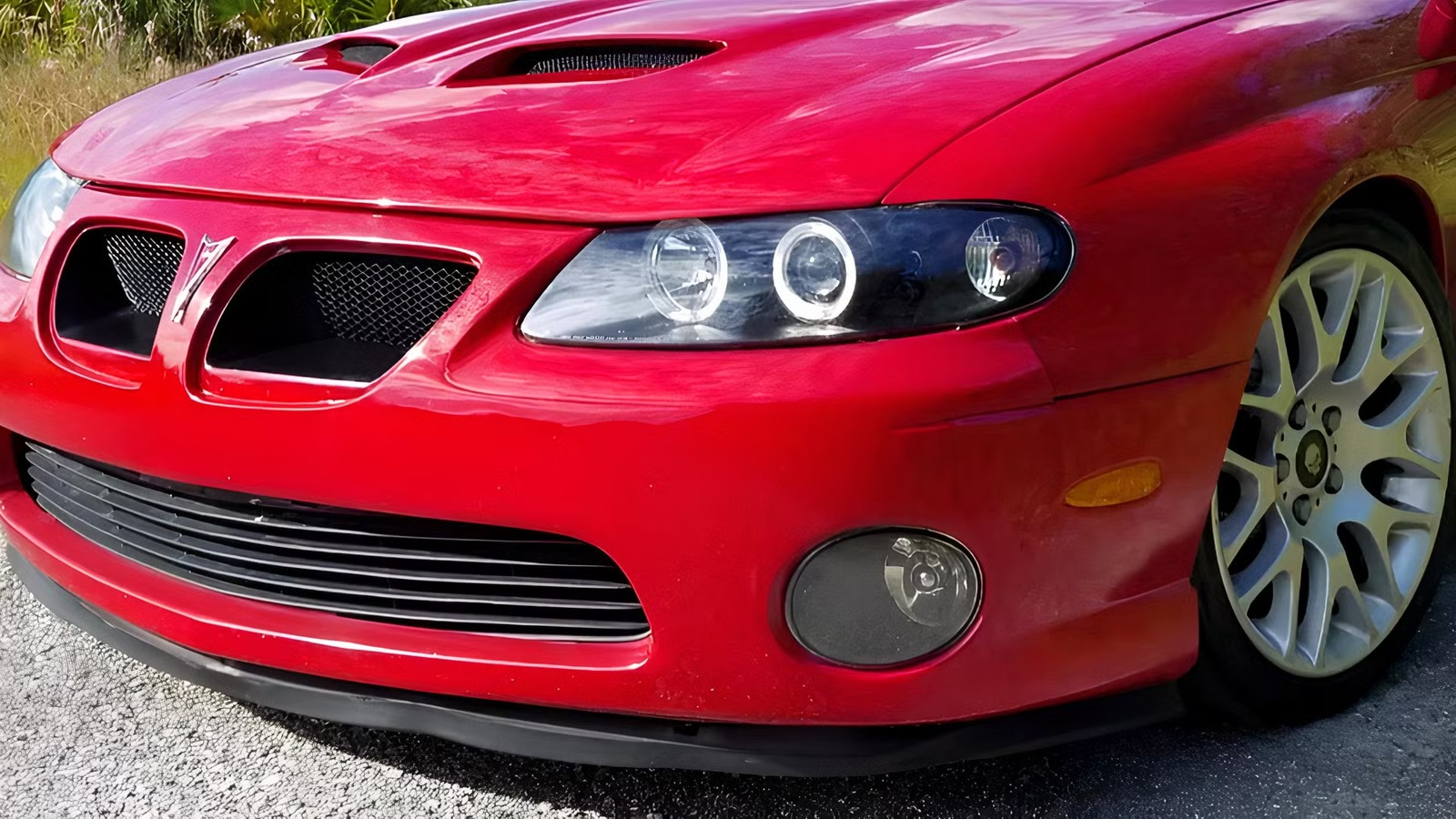
Pontiac was a dying brand in 2004. After decades of mismanagement, perpetual downsizing, and a chronic lack of what made it great in the first muscle car years, Pontiac was essentially a shell of what it used to be by the time the early-to-mid 2000s rolled around. Most of the lineup was uninspired badge engineering of cars from other GM brands, and even from places elsewhere occasionally. Still, there were one or two highlights mixed in with the drudgery. In that 2004 model year, Pontiac was also a repository for the very last of one of GM’s most iconic engines.
Pontiac in the Mid-2000s: A Sorry State Indeed

Let’s set the scene for you. It’s the mid-2000s, the first muscle car era ended three decades ago, and the next one isn’t set to kick off for at least another couple of years. Pontiac’s been struggling to find much of anything to fill the void left by the last of the classic GTOs, and the rest of its muscly confidants that once made the brand one of the coolest in the game. Across the range was a group of uninspired, half-baked, and embarrassing humdrum commuters.
Drag your ex drag-racing gramps through the same dealership he bought his GTO Judge from decades ago, and he’d roll his eyes at the front-wheel-drive Grand Prix, the cheap, plastic-riddled Bonneville, the badge-engineered Montana minivan, and the rebadged Toyota Matrix, the Vibe. Oh, and not to mention the apocalyptically ugly Aztek, an SUV commonly blamed as helping to kill Pontiac in the long run with its bad PR. Nearly across the board, Pontiac was an absolute wet noodle of a brand at this time.

Yet, the brand did serve one fairly important purpose beyond selling lowly economy cars to disappointed customers. At the precipice of great change for GM in the engine department, Pontiac was tasked with flushing out the very last batches of, what could be, the most important engine in its history after the 1960s. Then again, hardly anyone even noticed it at the time.

The LS1: A Game Changer for GM

Introduced in 1997 via the C5 Corvette, the LS1 V8 was a game changer not just for GM, but for the aftermarket performance community as a whole. Far more advanced than the old Chevy small-block but not so much so that it became fragile, the inaugural LS motor was a restomodder’s dream the minute it hit the scene. Internally, the LS1’s aluminum block gave it a clear weight advantage over older small-blocks. Modern niceties like a distributorless ignition system, free-flowing cathedral-port cylinder heads, and a composite intake manifold meant the LS breathed easier and started up faster than any GM V8 before it.
Thanks to cast-iron cylinder liners, the LS didn’t disassemble itself at the first sign of added boost or increased compression. The LS1 was a mainstay of not just the C5 ‘Vette, but also the late ’90s Pontiac Firebird and Chevy Camaro, plus a whole host of Holden models in Australia like the Commodoreand the beloved Monaro sports coupe. In every way imaginable, the LS1 was the performance engine for the every-man, not locked away behind a massive paywall like an S54 or an M113 often was.

Still, the first of the third-generation Chevy V8s couldn’t live on forever, and by 2004, GM was rapidly preparing to shift towards the newer Gen-IV architecture and the 6.0-liter LS2. With that said, there were still a bunch of LS1s floating around GM’s production facilities in 2004. To move them out the door, it was Pontiac that stepped up at the command of GM shot-caller Bob Lutz. When he gave the order, Lutz ended up creating one of the most interesting footnotes in Pontiac’s dying days.
The Phantom 40th Anniversary: Enter GTO W40

No, it’s not a fat finger typo of the legacy Oldsmobile W30 line. Though, you wouldn’t be an idiot for thinking it was. Instead, the W40 was an internal GM options package code for what was originally supposed to be the 40th-birthday celebration for the Pontiac GTO. The original Gen-I GTO graced us with its debut in 1964, and was credited with kicking off the first great muscle car renaissance in earnest. Whether it was really the first muscle car or not is another debate entirely, and some credit its creation to Pontiac’s sister brand Oldsmobile instead.
Either way, Bob Lutz’s decision to import the Holden Monaro and slap a Pontiac badge on the front and rear made some eyes roll in the beginning. For starters, ridiculous Australian exchange rates meant the GTO couldn’t be sold for anywhere near the $25,000 price point Lutz specifically requested of Pontiac. Secondly, the idea that a foreign brand, even one owned by GM for the better part of a century, would support a tribute act to the original American muscle car, irked people in a serious way. Knowing this, rather than dedicating more resources to an already controversial car for a celebratory anniversary, Pontiac opted to kill two birds with one stone and send the GTO to dealerships with the very last batches of LS1s.

Despite what you might think, the W40 didn’t offer much of anything different from the standard GTO performance-wise. Instead, it was strictly a visual package with Pulse Red paint, Black Anthracite leather seats, silver grey faces on the gauge dials, and not a single 40th-anniversary notifier of any kind throughout the entire car. In short, GM scrapped any plans of a grand 40th anniversary bash for the GTO when it became apparent the public thought it wasn’t something worth celebrating. If the GTO was a bespoke platform, designed and built in the USA right from the start, sentiments would’ve certainly been different. From the looks of things, it was all just a farce, and one Pontiac was all too eager to sweep under the rug like a bad habit.
Hiding in Plain Sight

Ultimately, Pontiac quietly produced 794 GTOs with the W40 options code, never once referring to it as an anniversary edition of any kind. Instead, the scant few in this configuration that saw the light of day serve as mere reminders of how badly GM fumbled the GTO— a car that could’ve helped to save the brand if it were handled correctly. Soon after, the GTO line was discontinued in 2006 with no fanfare, and very few teary eyes over it.
The Pontiac brand itself wouldn’t last much longer. By 2009, and with General Motors facing nothing short of catastrophic financial peril, a federal bailout program which injected $53 billion of liquidity into the stricken automaker decreed the firm would have to downsize its operation. On the chopping block immediately were lesser brands like Saturn and Hummer, but there were questions over whether it would be Pontiac or Buick which would round out this tragic operation. In the end, Buick’s strong sales overseas, primarily in China, saw it saved from the chopping block.

Pontiac officially closed its doors for good on October 31st, 2010, with failures like the GTO leading directly to its downfall. Since then, many think pieces have speculated and debated over whether GM might bring back the brand one day, ostensibly with a revised GTO as its flagship product. Even so, these always amount to eager conjecture, and the chances of Pontiac, or the GTO returning in any capacity remain in the realm of fiction.
Sources: GM, gm-efi.com, Bring a Trailer

Related posts






Latest Post


No Comments