
Pontiac’s Anti-Fiero Was A Chevy Caprice In Bonneville Taillights And Fender Skirts
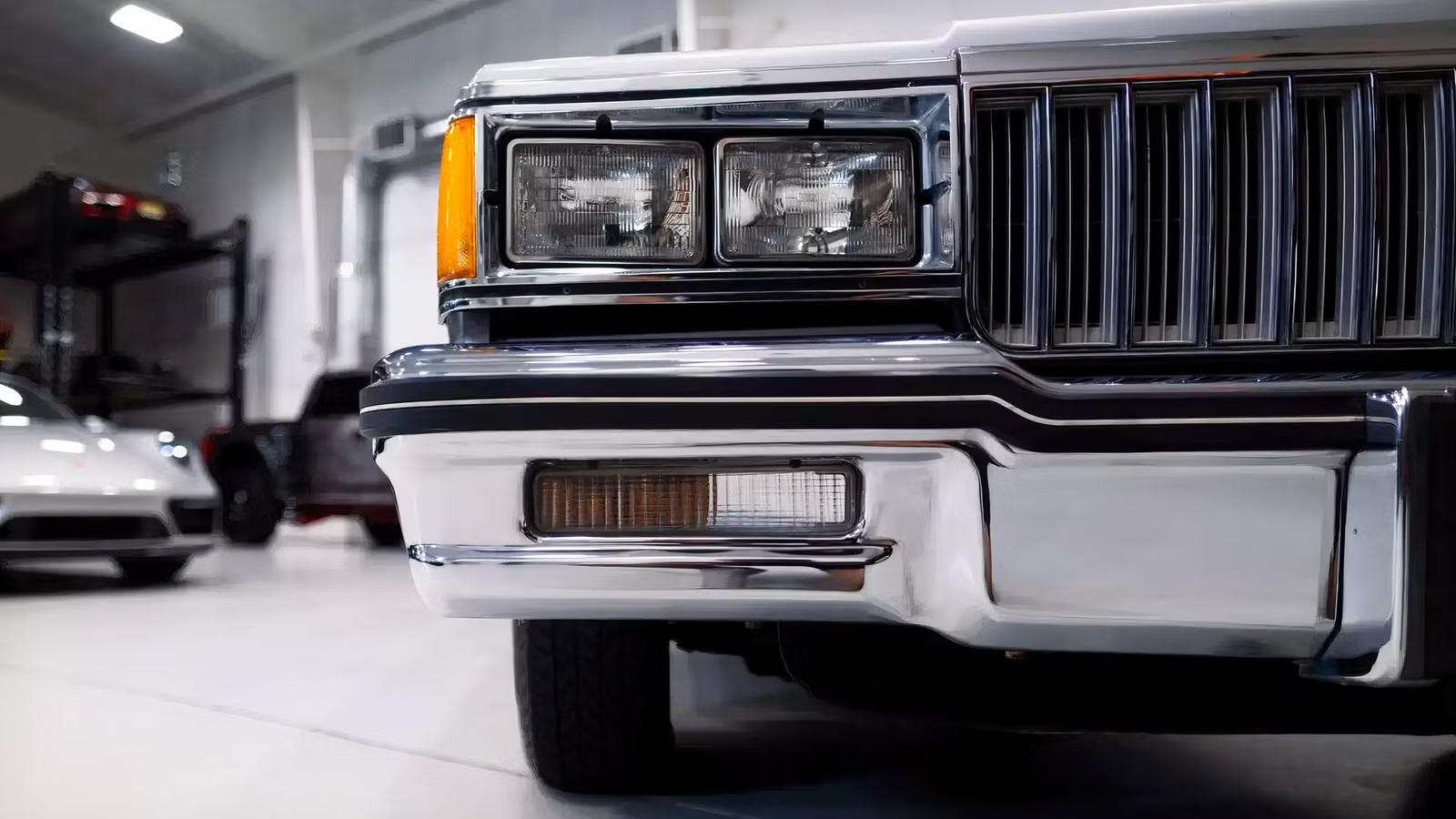
It all started in 1985 in Latrobe, Pennsylvania.

In June of that year, a man named Harry F. Prue was at Arnold Palmer Motors in Latrobe. Prue was there to take delivery of something unique.
Prue was taking delivery of a new car that had a black exterior and a tan velour interior.
Prue’s new ride was rolling evidence that a 1980s family sedan could be more than just boring, ordinary, disposable transportation.

Still, the car was also born out of corporate necessity, as opposed to its brand’s attempts at generating excitement.
It was a blast from the recent past whose very survival was remarkable, but its existence for sale in America was even more surprising.
The full-size that this automaker didn’t plan to keep
Pontiac was known throughout the ’70s for building large cars like the Bonneville and Catalina. In fact, the brand sold 226,300 cars in 1979, showing how important the large-car market was.
Yet General Motors decided to downsize and cut the full-size Pontiac B-body in 1981. That caused a problem for Pontiac — its customers wanted large, comfortable, roomy rear-wheel-drive cars, and Pontiac was watching some of its customers move across the street to its sibling brands, Buick and Oldsmobile.
In 1983, GM went north of the border to find a solution, bringing a model already sold in Canada to the United States.
Meet the “Canadian immigrant”, Aka the Cheviac

The car that Mr. Prue took possession of at Arnold Palmer Motors in Latrobe, Pennsylvania, was a Pontiac Parisienne Brougham. The car that was going to fill a hole for Pontiac was already for sale in Canada, and it would share its bones with Chevrolet’s Caprice.
Badge-engineering came to the rescue, as now Pontiac had a rear-wheel-drive car that could replace the Bonneville and Catalina.
Not only was the Pontiac Parisienne Brougham meant to replace the Bonneville and Catalina, it also contrasted heavily with the rest of Pontiac’s lineup, as the company was working on remaining known as a performance brand. Pontiac was pushing its Firebird pony/muscle car and compact Fiero sports car. Offering a more conservative sedan was a contrast to those vehicles, but it was necessary to cover a different part of the customer base than the one that shops for sports cars.
The 1985 makeover: Making a Caprice look like a Pontiac

In 1983 and 1984, Parisiennes sold in the American market looked a lot like their Chevrolet siblings. The style changed in 1985, most notably with the rear-end details that harked back a few years to the 1980 and 1981 model-year Bonnevilles. These rear-end details were inspired by the Bonneville, and they included wraparound taillights and rear fender skirts. Reports suggested that GM used the same tooling it had on the Bonneville earlier in order to bring the look back while saving money.
Pontiac brass must have felt that more visual distinction and luxury styling was needed. That is why Brougham models got the black exterior paint and the tan velour interior. Other stylistic items included a padded-vinyl roof, OEM wire-wheel covers, Firestone white-wall tires, and body-side molding that was installed at the dealership.
Pontiac needed the car to look different from Chevrolet models not just so that it could set the Parisienne apart, but because Pontiac customers expected a certain look, and the Parisienne’s exterior tweaks made the car look like more than just a Chevrolet Caprice with Pontiac badges.
Built for the long haul, not the quarter-mile

If you wanted a fast Pontiac in the mid-1980s, your local Pontiac dealer would gladly hand you the keys to a Firebird for a test drive. Those buying this car were looking for comfort. With that in mind, the powertrain was a 5.0-liter V8 mated to a 700R4 four-speed automatic transmission. That engine made just 165 horsepower, making it more of a motor for luxurious cruising as opposed to sporting performance.
The available features played into that mindset. They included dual eight-way power seats, a power sunroof, climate control, and an AM/FM stereo with a cassette player.
Those features, plus plush seats, a large interior cabin, and the exterior styling, sent a message that the car’s driving experience was best suited to road trips — or to making one’s commute to the office more comfortable.
This wasn’t a performance Pontiac, and it served as a contrasting model to the Firebird and Fiero.
That means Pontiac could cover different parts of the market, and wouldn’t be known only for performance.
Why this Pontiac survived when others disappeared

Prue’s Pontiac Parisienne is still hanging around, and here’s why. The car, which has 6,725 original miles on the clock, has lasted in part because cars like this were often not driven much. Even with their road-trip bona fides and ability to provide a comfortable commute, many buyers kept the mileage low instead of using them heavily. Perhaps because they were so luxurious, owners chose to drive them only on certain occasions.
And because these customers loved their cars, they took care of them.
Meanwhile, folks who bought less-luxurious models drove them more. That meant more miles, more wear and tear, and more exposure to vehicle-damaging weather systems. Some owners also neglected maintenance. This meant that eventually, most cars headed to the scrap heap.
Obviously, this doesn’t mean all Parisiennes were so cherished by their owners that they survive today — it’s just that we can see why this particular car was so well-kept, even though it doesn’t have the same pedigree as something like a Chevrolet Corvette.
Sources: Pontiac, Motorious

Related posts

Latest Post


No Comments