
2027 Silverado and Sierra Get New 5.7 and 6.6-Liter V-8 Specs
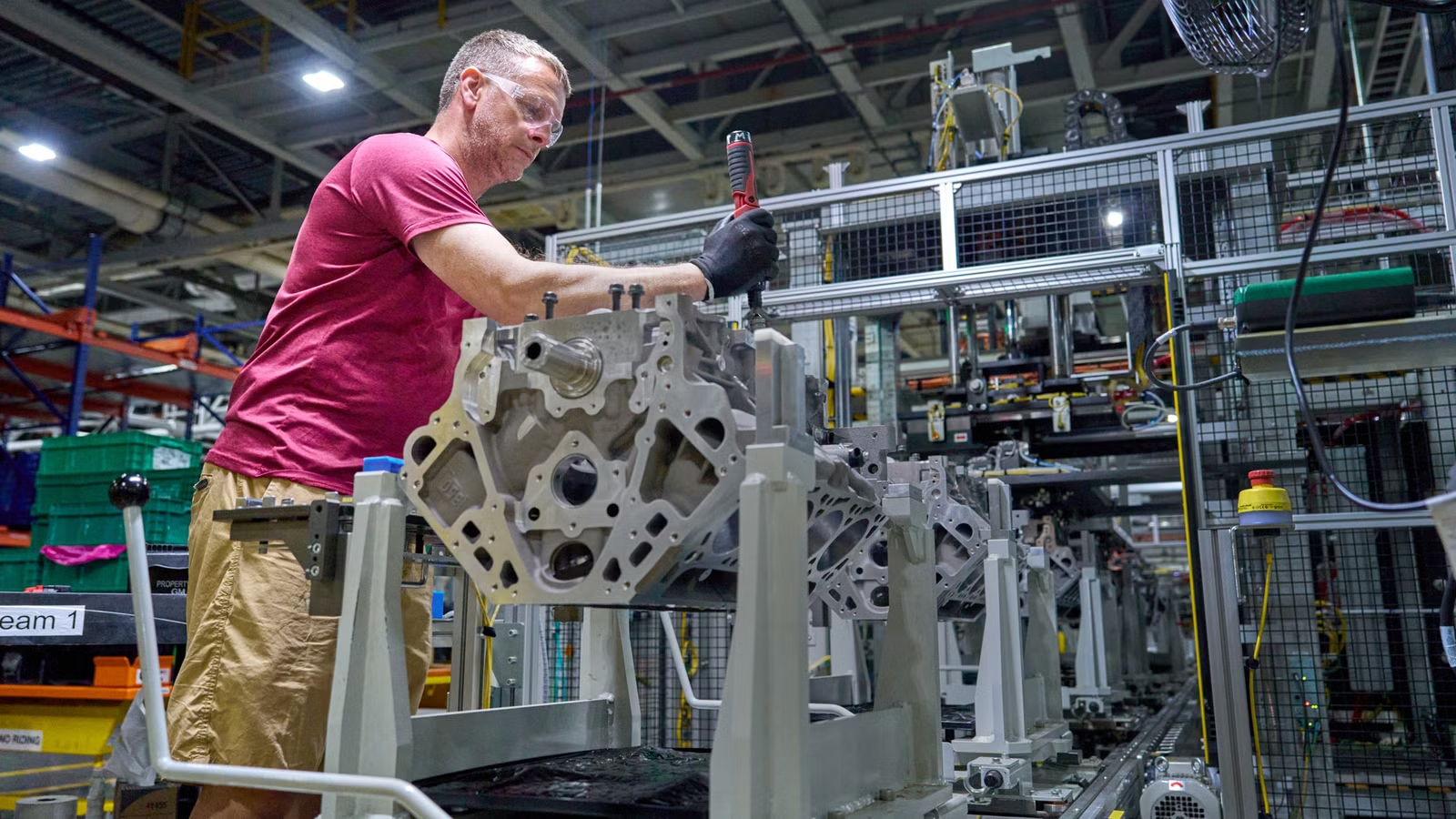
GM dropped the full engine specs for the 2027 Chevrolet Silverado 1500 and GMC Sierra 1500 on September 17, and the headline writes itself: both V-8s got bigger. The outgoing 5.3-liter is gone, replaced by a 5.7-liter making 402 horsepower and 428 lb-ft of torque — 47 hp and 45 lb-ft more than what it replaces. Above it sits the new 6.6-liter, pumping out 481 hp and 501 lb-ft, which makes these trucks the most powerful naturally aspirated pickups on the market.

Both engines are built on the sixth-generation small-block architecture that debuted in the 2027 Corvette’s 6.7-liter LS6, but tuned specifically for towing, hauling, and off-road use rather than track duty. The displacement gains aren’t just a spec-sheet flex — they translate directly into towing capacity that edges out Ford’s best EcoBoost numbers. Truck buyers who’ve been skeptical of downsizing trends at rival brands finally have a V-8 argument worth making.
The 5.7-Liter L76 Is the Towing Champion of the Pair
|
Engine |
 59 autotech Horsepower |
Torque |
Max Towing |
Max Payload |
|---|---|---|---|---|
|
L76 5.7L Sixth Generation V8 |
402 |
428 lb.-ft. |
13,700 lbs. (Silverado) 13,500 lbs. (Sierra) |
2,170 lbs (Silverado) 2,140 (Sierra) |
The smaller of the two new V-8s carries the RPO code L76 and displaces a heritage-steeped 350 cubic inches — the same number that’s been sacred in GM’s small-block lineage for decades. GM stretched the stroke by 6.0 millimeters to get there, and the result is an engine that nearly matches the outgoing 6.2-liter’s output while slotting in as the base V-8.
More importantly for work-truck buyers, the 5.7 is the towing king of the lineup. Properly configured — Silverado Double Cab, rear-wheel drive — it pulls up to 13,700 pounds. That’s 200 pounds more than the 2027 Ford F-150 with the 3.5-liter EcoBoost V-6, which tops out at 13,500. The Sierra 1500 with the 5.7 matches Ford at 13,500 pounds. The bigger 6.6-liter, by contrast, is paired with higher-trim configurations that carry more weight and consequently drop the tow rating to 9,700 pounds in the Silverado.
The 6.6-Liter L78 Is the Most Powerful Naturally Aspirated Truck Engine Available

|
Engine |
Horsepower |
Torque |
Max Towing |
Max Payload |
|---|---|---|---|---|
|
L78 6.6L Sixth Generation V8 |
481 |
501 lb.-ft. |
9,700 lbs. (Silverado) 9,400 lbs. (Sierra) |
1,510 lbs. (Silverado) 1,450 (Sierra) |
The L78 6.6-liter replaces the 6.2 and represents GM’s performance flagship for the half-ton segment. At 481 hp and 501 lb-ft, it outpaces the F-150’s 5.0-liter Coyote V-8 (400 hp, 410 lb-ft) and the EcoBoost 3.5-liter (400 hp, 500 lb-ft) on both metrics — though Ford‘s PowerBoost hybrid counters with 430 hp and 570 lb-ft if you want to count electrified assistance. Ram’s high-output Hurricane inline-six (540 hp, 521 lb-ft) still leads on raw numbers, but that’s a force-fed six, not a naturally aspirated V-8.
The L78 is not the same engine as the Corvette ‘s LS6, despite sharing the Gen 6 architecture and the same 4.40-inch bore spacing. GM small-block design systems engineer Randy Dufresne confirmed to Road & Track that the truck engine’s compression ratio sits at 12.5:1 — significantly up from the 6.2’s 11.5:1, but deliberately kept below the Corvette’s 13.0:1 to suit truck duty cycles. The 6.6 carries a premium-recommended fuel designation, but GM does not require it.
Engineering Details: New Oiling System, Dual Injection, and No Dipstick

Both V-8s share a set of significant engineering upgrades. Throttle body diameter grows from 87 mm to 95 mm — the same size used in the Corvette — and completely redesigned intake manifolds with tuned runners manage the increased airflow. Fueling moves from exclusive direct injection to a combined port-and-direct system, which GM says improves power, efficiency, and emissions simultaneously.
The oiling system received the most thorough redesign. A continuously variable displacement oil pump delivers flow and pressure on demand rather than protecting for worst-case loads at all times, reducing parasitic loss. An on-engine oil cooler and enlarged lifter galleries are also part of the package, along with dual main feeds to the main bearings. GM engineers specifically noted that every oil passage was machined for cleanliness to eliminate residual casting sand — a pointed acknowledgment of the rod-bearing failures that plagued the outgoing 6.2-liter. Recommended viscosity steps up to 0W-30 from 0W-20. One side effect of the new port injection hardware and revised packaging: there’s no room for a traditional oil dipstick. Both V-8s use a digital oil-level readout in the cabin instead, a feature that’s already common on German brands but will likely generate some grumbling from the truck crowd.
The Rest of the Lineup: TurboMax Four-Cylinder and Duramax Diesel

The 2.7-liter TurboMax four-cylinder carries over but gets a meaningful upgrade — new turbo, revised fuel injection, redesigned pistons, and improved thermal management push output to 350 hp and 455 lb-ft, gains of 40 hp and 25 lb-ft over the 2026 version. That torque figure actually tops the 5.7-liter V-8, and the four-cylinder leads the entire lineup in payload capacity at 2,340 pounds for the Silverado. It also moves to the 10-speed automatic shared with all other engines, dropping the old eight-speed.
The Duramax 3.0-liter turbodiesel carries over largely unchanged at 305 hp and 495 lb-ft, but gains updates to pistons, turbo vane, NOx sensor, and fuel injectors. A new optional 34-gallon fuel tank pairs with the diesel for an estimated highway range of over 900 miles on a full tank. Production of the new V-8s will be split across three GM facilities: Flint Engine Operations, Tonawanda Propulsion in New York, and St. Catharines Propulsion in Canada. Both engines will be available at the Silverado and Sierra’s late-2026 launch. Pricing has not been announced.
For truck buyers who’ve watched GM’s rivals lean harder into turbo sixes and hybrid assist, the 5.7 and 6.6 are a clear statement: displacement still wins arguments in the half-ton segment. Whether the new oiling architecture puts the reliability concerns of the 6.2 era firmly in the rearview mirror is the question every prospective buyer should be watching when these trucks hit dealerships.

Related posts

Latest Post


No Comments