
Plymouth’s Plain Family Car Hid A Race Engine With Factory-Notched Cylinder Bores
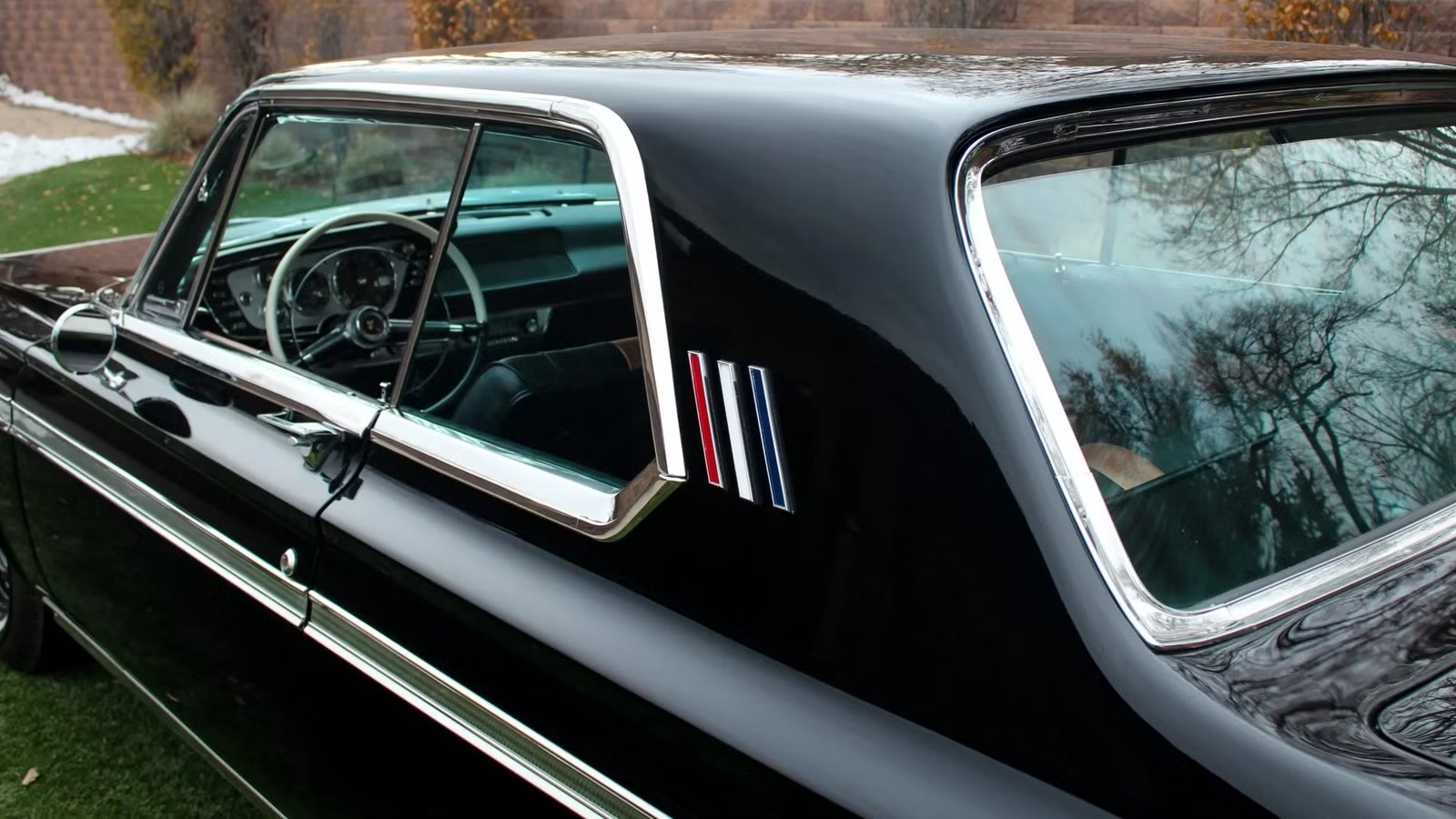
In 1963, Plymouth had a perfectly respectable lineup of midsize cars with plenty of room for the family and styling that wasn’t trying to stand out in traffic.

Except Plymouth also had order sheets that opened the door to serious performance options available even in its more mundane vehicles, provided you knew what boxes to check and had the nerve to do so.
Plymouth’s Ordinary Family Car Had A 425-HP Secret
Included in that family-friendly ‘63 lineup were the Plymouth Fury and its upscale variant, the Sport Fury. Don’t be led astray by the name, though. While the Sport Fury had some sporting credentials, it was hardly an exotic speed machine. It included some stylish accents with bucket seats and sportier trim, but underneath it was still a fairly straightforward and practical Plymouth.

That becomes less true when optioned out correctly. If you were trying to build your mid-’60s Plymouth sleeper, the available 426-cubic-inch Super Stock V8 was a good start. Better known today as the Max Wedge, its lower-compression configuration advertised 415 horsepower with a compression ratio of 11.0:1. Buyers who wanted to turn the dial up further could opt for 13.5:1 compression, pushing output up to 425 horsepower. Both versions delivered peak power at 5,600 rpm.
This was more than a little extra juice under the hood for passing on the highway.
The 426 Max Wedge Was Built For The Drag Strip

The Max Wedge showed up in dealerships in 1963, but the engine’s story begins a year earlier, when Chrysler rolled out a 413-cubic-inch V8 purpose-built for the drag strip. Dodge called it the Ramcharger 413 and Plymouth called its version the Super Stock 413. In 1963, the engine grew to 426 cubic inches and became available to order in everyday passenger cars.
The Max Wedge was based on Chrysler’s RB-series big-block architecture, and it had significantly more ambitious hardware than most V8s destined for regular vehicles. Most recognizable was a cross-ram intake manifold with two Carter four-barrel carburetors flanking opposite sides of the engine. Long intake runners helped deliver serious power at racing speeds.
The heads featured enlarged ports with exhaust manifolds reengineered to keep up with the demand. This wasn’t an engine designed around the needs of an average commuter. Chrysler even acknowledged that the Max Wedge had a rough idle that made it less than comfortable for daily driving, which served as fair warning to a Plymouth buyer who might be optioning into a high-horsepower spec that could be more than they bargained for.
Chrysler Had To Notch The Cylinder Bores To Make It Work

Nothing about the Max Wedge implies a superficial amount of performance engineering, but everything covered so far is just the tip of the iceberg. Popping the hood wouldn’t reveal the extent of the effort, but pulling the cylinder head would reveal quite a bit more.
The engine had huge valves by the standards of the day, 2.08 inches on the intake side and 1.88 on the exhaust. The exhaust valves were large enough that they would not clear the upper edges of the cylinder bores, and while smaller valves would have been one solution, Chrysler remained committed to the performance mission and instead machined relief notches into the tops of the cylinders to make room. These factory-machined notches are one of the identifying features of an authentic Max Wedge block.
The distinction matters today because Chrysler also used casting number 2406730 for the later 426 Street Wedge, which had smaller exhaust valves and didn’t need the same relief notches. Someone relying on the casting number alone could mistake a Street Wedge block for an authentic Max Wedge, but the factory-machined cutouts help tell the two apart.
Plymouth Was Willing To Sacrifice Comfort For Speed

As impressive as the Max Wedge was, there were more options available with Plymouth than simply choosing a drag-strip-oriented V8 with an idle rough enough to be annoying around town. Chrysler also offered a lightweight package that was packed with changes that made profound sense for a drag car and were borderline insane in a family cruiser.
There were aluminum front fenders and an aluminum hood with an air scoop. Lighter front bumper components were part of the package as well, along with thinner carpeting that made the ride both less comfortable and noisier. The result was not luxurious, but buyers were free to go even further, including deleting comforts that only added weight, such as the radio, heater, and even undercoating. The battery could also be mounted in the trunk, pushing weight to the rear for a better launch off the line.
Period testing recorded a Max Wedge Plymouth running the quarter mile in 12.69 seconds at 112 mph, while some competition-prepared examples were capable of even quicker runs. And while those lightweight racers sacrificed plenty of creature comforts, not every Max Wedge Plymouth had to be quite so miserable to drive.
Today, The Rarest Max Wedge Plymouths Are Almost Impossible To Find

The Max Wedge wasn’t a high-volume proposition in the first place and its installation was spread over a handful of different Plymouth models and option configurations, meaning that some combinations were built in extraordinarily small numbers.
As an example, consider the 1963 Sport Fury convertible with a Max Wedge and manual transmission. Just 15 were reportedly built, with 13 carrying the lower-compression engine and only two reportedly receiving the higher-compression version. With scarcity comes imitation, so collectors need to look beyond a cross-ram intake or a casting number stamped on the block to verify authenticity. Original production records, engine identification, and inspection of those distinctive cylinder-bore notches are all part of distinguishing an authentic Max Wedge from a convincing replica.
The Max Wedge’s moment in the spotlight was brief, with the iconic 426 Hemi arriving a year later to take its place at the top of Chrysler’s racing engine hierarchy. But before muscle cars as we know them now were an established showroom category, Plymouth was already selling ordinary passenger cars with engines built for the drag strip, right down to notched cylinders.
Sources: Chrysler, MaxWedge.com, Barrett-Jackson

Related posts




Latest Post


No Comments