
2027 Silverado Duramax Gets 900-Mile Range on One Tank
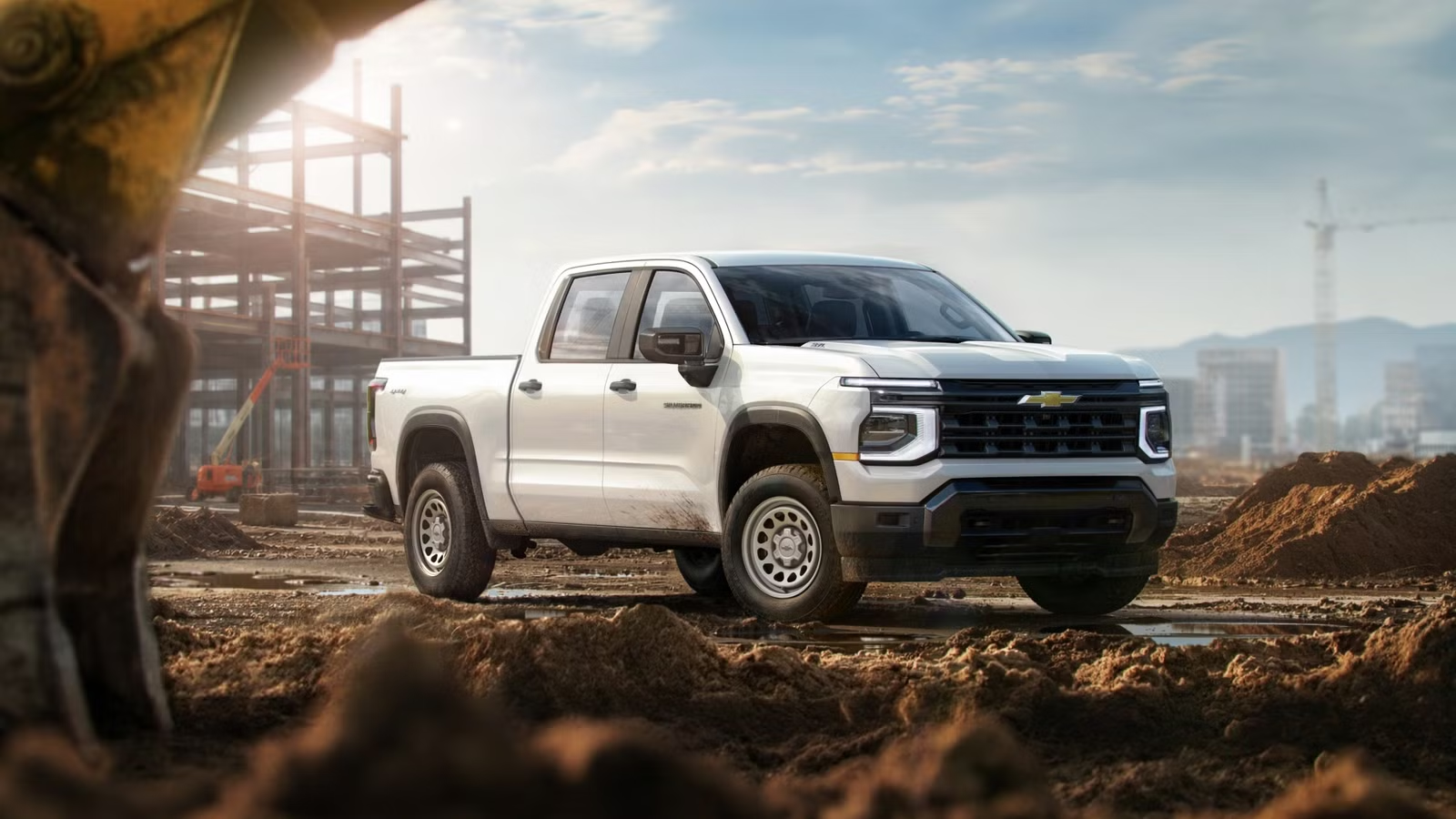
GM announced this week that the 2027 Chevrolet Silverado and GMC Sierra equipped with the 3.0L Duramax turbodiesel will offer an available 34-gallon fuel tank capable of pushing range past 900 miles on a single fill-up. That figure lands at a pointed moment: Ford is actively developing an extended-range Lightning EV targeting roughly 700 miles of electric range, and GM just put a diesel number on the board that beats it by a significant margin — no charging infrastructure required.

The math is straightforward. GM estimates a two-wheel-drive Silverado with the Duramax can reliably achieve 27 mpg on the highway. Multiply that by 34 gallons and you get 918 miles of projected range. A four-wheel-drive model uses a 24-gallon tank and a 26 mpg highway rating, which works out to around 624 miles. The Silverado EV, for comparison, tops out at 493 miles of range in Work Truck form and 478 miles in higher trims. The diesel’s advantage is real, and it’s not subtle.
The Duramax Gets Meaningful Upgrades, Not Just a Bigger Tank
It would be easy to dismiss the 900-mile headline as simple arithmetic — and GM’s own engineers acknowledge as much. Filling a 34-gallon tank means hauling roughly 241 pounds of diesel fuel. The range number is impressive; the method is not exotic. But the Duramax itself isn’t standing still.

The LZ0 3.0-liter inline-six carries over its output of 305 horsepower and 495 lb-ft of torque for 2027, but GM has revised the piston and turbo vane design, fitted a next-generation NOx sensor, and updated the DEF tank — which grows by two gallons, a 37 percent increase — along with improved level messaging. The engine also gets fuel injector corrosion protection updates and revised sealing. These aren’t headline-grabbing power bumps, but they’re the kind of durability and refinement work that matters over 200,000 miles. The Duramax was already smooth enough to serve in the Cadillac Escalade; these updates are about keeping it there.
Towing capacity for the diesel is rated at 12,100 pounds at launch — below the 13,700-pound figure achievable with the new 5.7-liter V8, though GM has historically raised diesel tow ratings after launch. The current-generation Duramax started at 9,300 pounds of towing capacity before GM bumped the number upward, so there’s precedent for the diesel to close that gap.
Diesel vs. EV Range: What the Numbers Actually Mean for Truck Buyers

Comparing a diesel’s range to an EV’s isn’t a perfectly clean exercise — the refueling experience, infrastructure, and operating costs are fundamentally different. But for buyers who haul long distances, tow regularly, or operate in areas where charging infrastructure is sparse, the comparison isn’t academic. It’s the actual decision they’re making.
The diesel case gets additional support from real-world precedent. A Ram 1500 EcoDiesel with a 33-gallon tank was once driven more than 1,000 miles on a single fill by exceeding its EPA highway rating of 29 mpg. A Duramax-powered Silverado with a lighter foot and favorable conditions could potentially do the same. GM’s 27 mpg estimate is the conservative baseline, not the ceiling.
GM President Mark Reuss made the company’s position explicit at the engine reveal event: “If you look at the performance and efficiency but also raw performance and range, hybrids really don’t do it.” That’s a pointed statement in a segment where Ford’s F-150 PowerBoost hybrid and Toyota’s Tundra iForce Max are both on sale. GM’s argument isn’t that hybrids are bad — it’s that diesel delivers better efficiency under load, and the range numbers back that up. One Autopian writer who tested both reported the Duramax bested a Tundra TRD Pro’s towing fuel economy by 42 percent.
For buyers who prioritize refueling speed and don’t want to plan routes around charging stations, a diesel Silverado that can run Detroit to Atlanta and keep going — without a plug — remains a genuinely compelling option. Production of the 2027 Silverado and Sierra is set to begin in October.
The Duramax’s 900-mile range figure is, as advertised, simple math. But simple math that beats the competition’s EV range target by 200 miles tends to resonate with truck buyers. GM is betting that a meaningful slice of the full-size truck market still wants diesel — and the 2027 numbers give that bet a concrete foundation.

Related posts


Latest Post


No Comments