
On This Day In Automotive History: The Subaru Impreza Is Announced
Today, Subaru isn’t as much just an automotive OEM as it is a cultural phenomenon. Its reputation as the all-wheel-drive rugged alternative to other Japanese automakers is rooted in decades of rally dominance and an advertising message rooted in dependability. Yet none of it would be possible without one particular model. Today, we’re going to celebrate it.
Replacing A Heavyweight Legacy

In the early 1990s, the brand was facing a dilemma on two completely different fronts: one at dealerships and one on the dirt. On the showroom floor, their aging Leone compact was desperately in need of a modern replacement to keep everyday buyers interested. Out on the WRC stages, its flagship midsize Legacy sedan had proven its worth on the global stage, but it was rapidly becoming far too bloated and heavy to keep up with the evolving demands of the World Rally Championship. Yes, we’re talking about competing with Subaru’s eternal rivals at Mitsubishi.
As Group A regulations pushed for tighter and more agile platforms to conquer twisting European gravel stages, the physics of throwing a heavyweight touring car around hairpin turns simply did not add up anymore. The engineering team needed a single solution to solve problems on both fronts. They required a brand-new blank canvas that could serve as an affordable and practical commuter to replace the Leone while simultaneously providing a featherweight shell to take over the Legacy’s global racing homologation.
Suffice it to say, what Subaru came up with did a more than serviceable job of satisfying the needs of customers and racers alike. Yet the path from start to finish was about as winding as the average rally stage the car would race on.

Starting in Japan, Spreading Around the World

Subaru’s engineering team stuck to its signature boxer engine and full-time AWD layout to solve both problems at once. They used that trademark low-slung flat-four engine to keep the center of gravity as close to the ground as possible. In its most basic form, it was an affordable and reliable economy car designed to get families safely through bad weather or even do some light off-roading.
As we all know, there was a demon hiding behind that form factor, one that made it a formidable force in any arena it found itself in. Officially announced on October 22 1992, and launched in Japan in November, Subaru’s new flagship immediately shattered the established performance hierarchy. Suddenly, ordinary driving enthusiasts could buy a practical sedan that sounded like a tractor at idle but could outrun a contemporary sports car the moment the pavement turned to gravel.
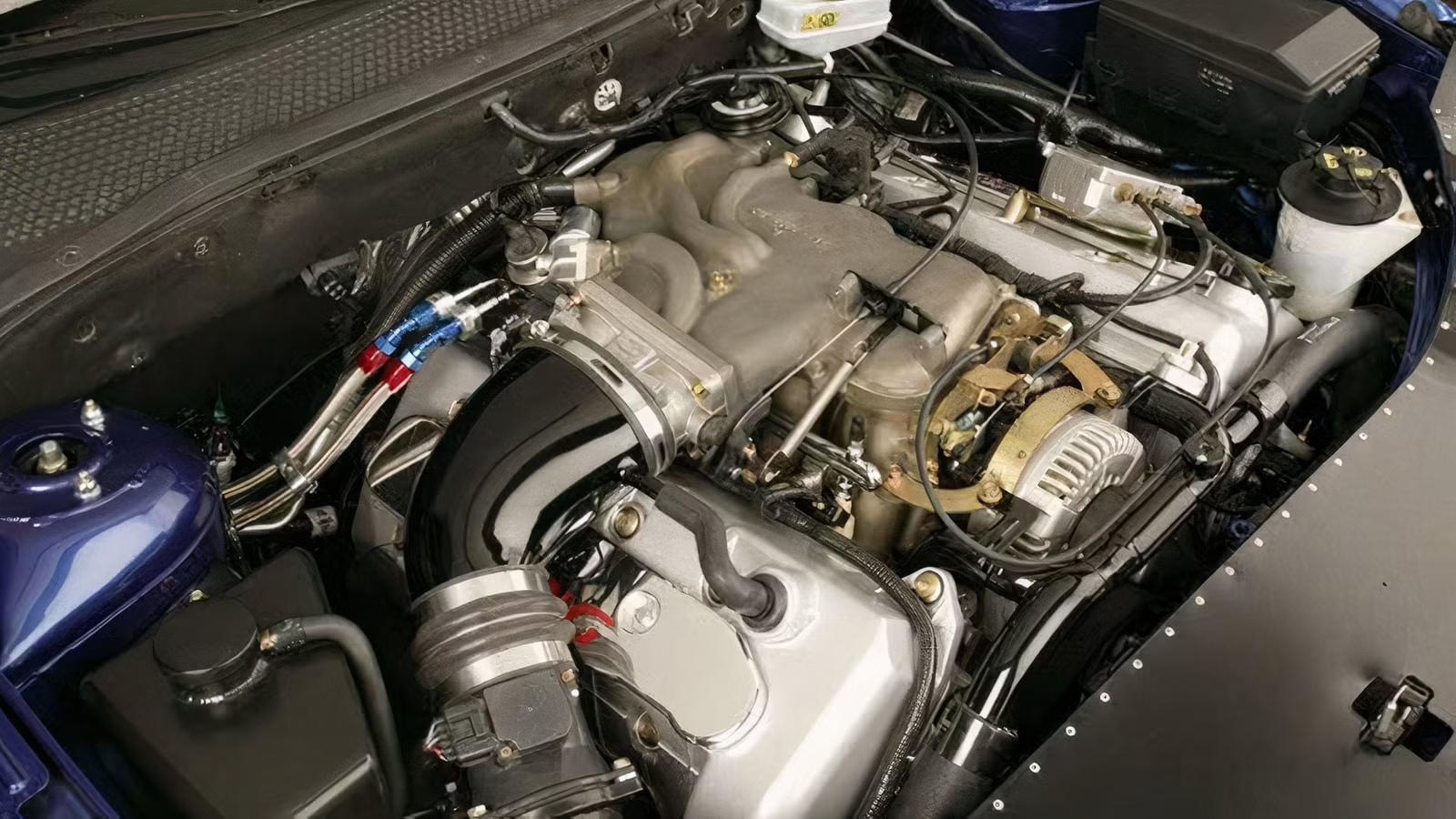
Sporting a legendary two-liter EJ20 boxer-four engine in its upper trims, or a larger 2.2-liter turbocharged engine in the rare rally special, Subaru’s newest gambit was about to change the rallying world forever. It was also about to supply the company with long-term financial stability as it rapidly spread across the world.
The Subaru Impreza Changes Everything

When the Impreza reached US dealers in 1993, lower trims with front-wheel drive and smaller naturally aspirated boxer engines were all that was available. Yet, once American buyers experienced the optional symmetrical all-wheel-drive, it became synonymous with the Impreza name, and the rest of the Subaru lineup for that matter.
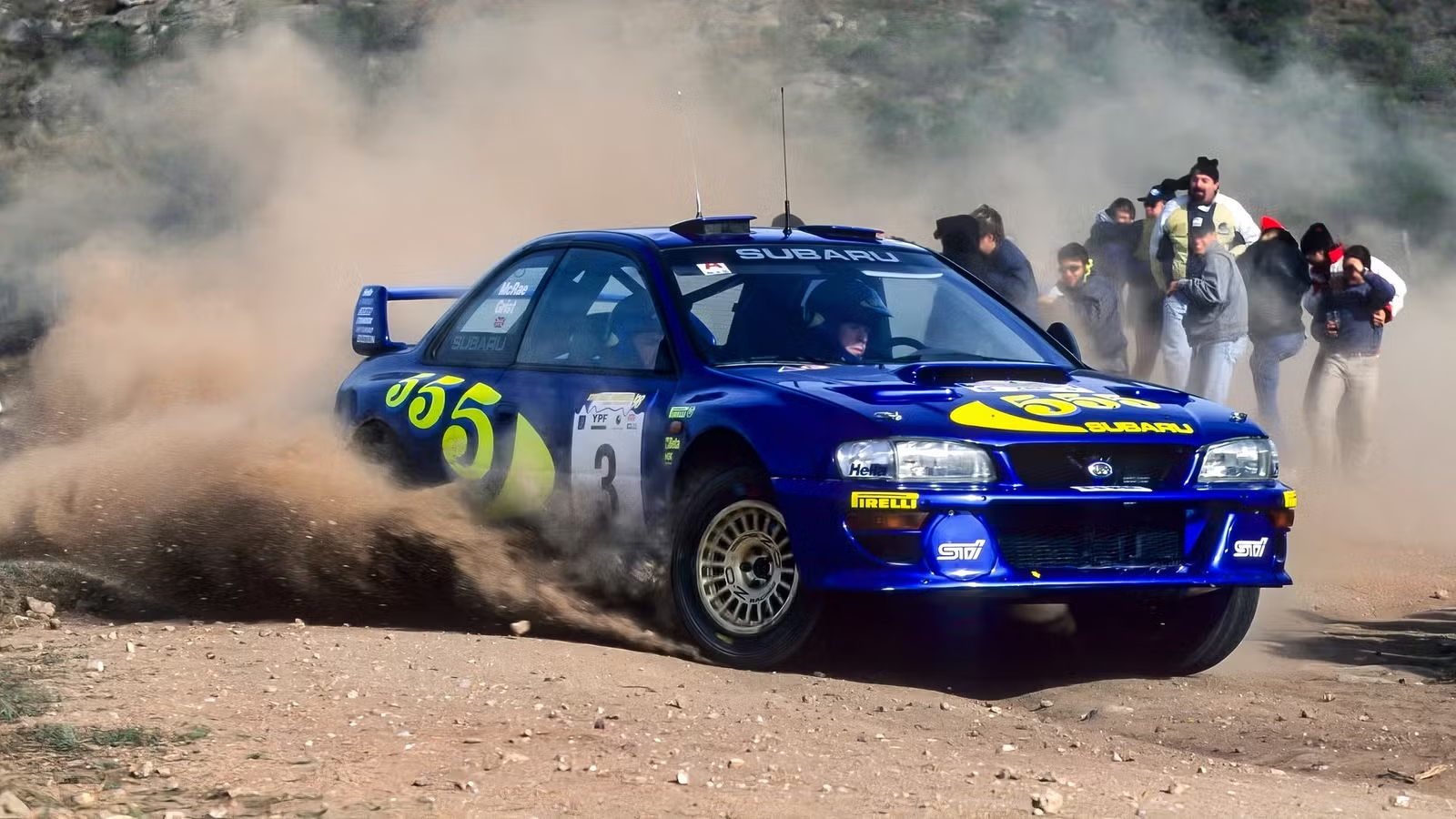
By 1997, the entire Subaru fleet had full-time AWD as standard equipment, and halfway across the globe, that same chassis was in the process of becoming the greatest rally car of the 1990s. On WRC stages across the globe, the Impreza was dominating the competition while forging a rivalry with the Mitsubishi Lancer Evolution that lasted for decades. Meanwhile,
Colin McRae drifted the iconic blue-and-gold 555-liveried chassis straight into motorsport immortality by securing the 1995 World Rally Championship Drivers’ title. Later, that translated into a hat trick of three WRC Manufacturers’ titles from 1995 to ’97. Over in Japan, that same rally spirit was turned into an icon called the 22b STi. Far from just a performance boost of the standard STi, it was a bespoke widebody coupe that shared more DNA with the actual WRC racer than a standard Impreza. Complete with BBS wheels and a widened chassis, the 22b remained unobtainable in the US for decades.
A Lasting Legacy, Pun Intended

Even without access to the 22b, the US-spec “Bug Eye” Impreza WRX and WRX STi of later years were direct descendants of this original rally-bred philosophy. When the 227-horsepower turbocharged WRX finally arrived on American shores for the 2002 model year, it brought the GC8’s world-beating DNA to a brand new platform.
Before long, high-performance Imprezas were cultural touchstones for Subaru in North America, just as much as they were in Japan. As the brand inches ever closer toward full electrification, fans are left wondering how the raw, mechanical spirit of the GC8 will translate to a battery-powered world.
Source: Subaru

Related posts

Latest Post


No Comments