
Oldsmobile’s Underrated Touring Sedan Made The Floaty Regency Look Outclassed
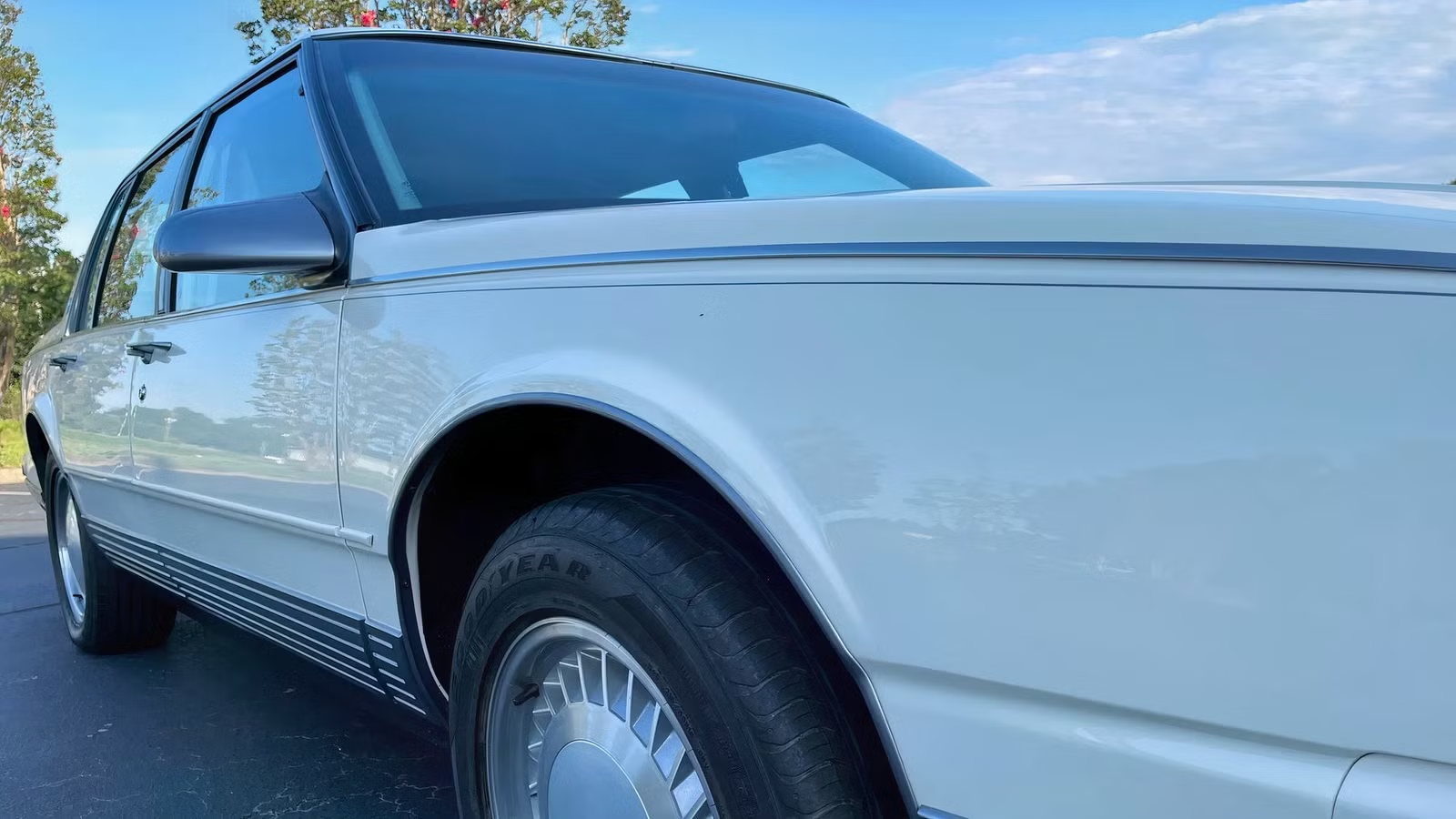
Sit in this classic Oldsmobile expecting a front bench and that familiar horizontal speedometer. Instead, the Touring gives you bucket seats, a console shifter, and full gauges. Apparently, Grandpa had discovered corners.

Oldsmobile had built other driver-minded cars before, but this European-leaning flagship kept the leather and generous cabin while using firmer suspension to tackle the Regency’s float. It still suited a long highway drive; the driver just got more attention.
The Touring’s Firmer Suspension Took On Regency Float
On a winding road, a soft sedan can leave you steering through a bend while the body is still leaning and settling. The Touring’s firmer suspension aimed to cut that float so the car would feel less removed from what you asked it to do. Four-wheel independent suspension and automatic load leveling remained. Passengers and luggage could still load the rear; the leveling system maintained ride height while the firmer tuning dealt with body movement.

Inside, the difference starts where you sit. The 1993 brochure’s power bucket seats let you adjust lumbar support behind your lower back, while the console puts the shifter beside you instead of on the steering column. Ahead, a tachometer follows engine speed; separate gauges show oil pressure, coolant temperature, and voltage. Leather and wood trim keep the luxury surroundings, but the cockpit gives the driver more to do than watch a wide speedometer.
The standard 16-inch alloy wheels in 1993 reinforced the Touring’s different priorities. Its European-leaning appeal came from putting the driver into a separate seat, moving the shifter alongside and paying more attention to body movement. For someone who found the Regency too floaty, those changes gave the Touring a purpose beyond different wheels.
The Touring Sharpened Oldsmobile’s Last Traditional Flagship

Oldsmobile made the sedan 9.5 inches longer for 1991 and replaced the old, square bodywork with smoother curves. Yet the body still stretched well beyond the wheels, and panels partly covered the rear wheels. Those rear-wheel skirts recalled the big American sedans built around cabin space and comfort. That’s why its styling divided opinion: the rounded body looked more modern, but the long ends and covered wheels still suggested a traditional luxury cruiser rather than a sporty sedan.
CarGurus lists the 1991 Regency Elite’s original list price at $24,275, compared with $29,175 for the Touring. That $4,900 gap bought a different package of seats, gauges and suspension, giving buyers reasons to choose the Touring. It also cost more than a base Buick Park Avenue or Chevrolet Caprice; that comparison applies to these versions, not every Oldsmobile or Buick. These were expensive cars when new, which helps explain why the Touring deserves more attention than its old-car image suggests.
The model family continued through 1996, ending Oldsmobile’s run of traditional top luxury sedans as the newer Aurora took over its luxury role. The Touring appeared earlier in that final generation, keeping the roomy cabin and comfort buyers expected while trying to make the driver feel more connected to the road. It challenged the brand’s grandpa image from inside the car that helped create it. That gives it a more interesting history than simply being somebody’s unwanted old luxury sedan.
The Ninety-Eight Touring Had A Durable 170-HP 3800 V6

The 1991–1993 Oldsmobile Ninety-Eight Touring Sedan put a driver’s cockpit and firmer suspension around GM’s familiar 3800 V6. Its standard 3.8-liter Series I engine, code L27, made 170 horsepower and 220 lb-ft in 1991, sending power to the front wheels through a four-speed automatic. The Regency had the same standard output, so Oldsmobile made the Touring matter through the way you sat, read the instruments and controlled the body. The driver got the upgrade, even when the horsepower didn’t.
The 3800’s durability adds the bigger surprise: staying power. Underhood Service technical editor Larry Carley reported that many engines in the family had passed 200,000 miles with normal maintenance. That’s a long working life hiding behind those wheel skirts, giving this driver-minded luxury flagship an ownership appeal its conservative shape doesn’t advertise. It isn’t a guarantee for your particular Oldsmobile, though; coolant, oil changes and transmission health still matter, and maintenance invoices carry more weight than calling the engine indestructible.
Oldsmobile even offered more punch: an optional 205-hp supercharged V6 for the Touring in 1992 and 1993. That option disappeared with the Touring before 1994, so don’t confuse it with the later Regency’s naturally aspirated L36 Series II. That engine arrived for 1995 and remained in 1996, making 205 hp, a 35-hp jump over the earlier standard V6. You could have the Touring’s driver-focused package or the later Regency’s extra standard power; there was no factory Series II Touring.
Beyond The Badge, This Forgotten Oldsmobile Rewards Care

A reputation for durability won’t rescue a neglected car, so start it cold and arrange an inspection before paying. Aging ignition coils and crankshaft position sensors can cause running or starting trouble; check vacuum hoses for leaks instead of dismissing an uneven idle. Inspect underneath for structural corrosion, rusted lines and damaged suspension mounting points; check the automatic transmission’s engagement and shifts when fully warm. A healthy V6 cannot turn rotten metal or a failing gearbox into a sound purchase.
The later Series II Regency needs another check before its extra 35 hp wins you over. GM service information reproduced by Underhood Service identifies deterioration of the plastic upper manifold around the hot exhaust-gas-recirculation passage, allowing coolant to leak inside or outside the engine. Ask for records of manifold and gasket repairs, and have unexplained coolant loss diagnosed before purchase. Keep this later-engine issue separate from the earlier Touring’s engine and equipment when weighing the later car’s extra standard power.
Sources: Oldsmobile, CarGurus, Underhood Service

Related posts


Latest Post


No Comments