
Not Every Sports Car Needs A Manual; Some Are Better Left Alone
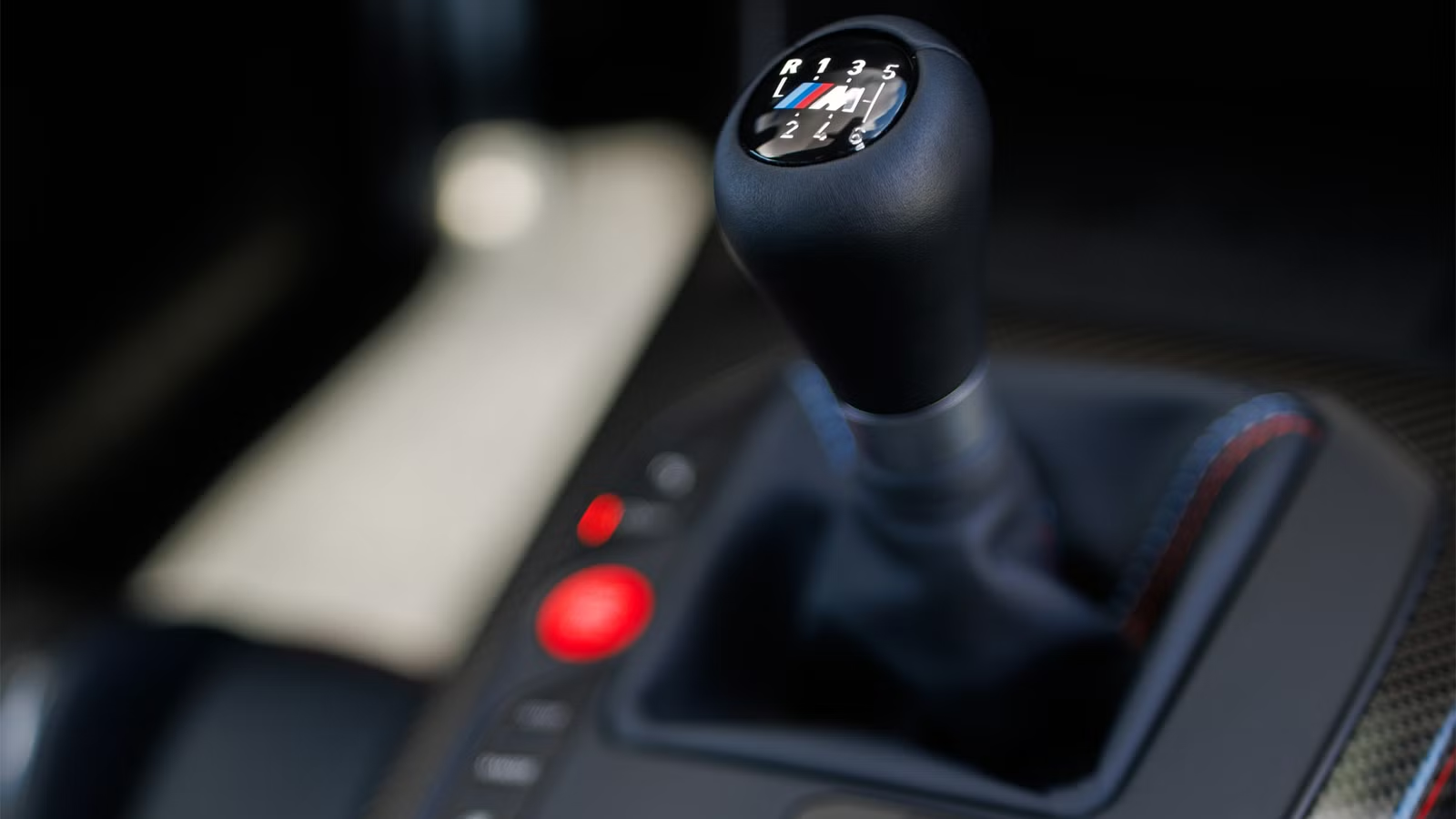
Every time an automaker drops the clutch pedal, the internet sounds the alarm. Petitions circulate, “Save the Manuals” stickers come out, and buyers swear they’ll walk. To be clear, rev-matching a downshift into a corner is one of the great joys in driving, and nobody is arguing otherwise. The manual deserves to survive. It just doesn’t deserve to survive everywhere enthusiasts insist on it, because some sports cars get better with three pedals, and some get measurably worse.
Why Enthusiasts Still Demand A Manual Transmission In Every Performance Car

Just 0.6 percent of new vehicles built for the US market in 2025 had a manual, an all-time low according to preliminary EPA data reported by The Washington Post. Inside the enthusiast bubble, though, the stick still wins. Motor1’s 2025 take-rate survey found 90 percent of Subaru BRZ buyers chose the manual, and manuals made up half of all BMW M3 sales. Automakers notice. A manual in a halo car buys credibility with exactly the people who write, film, and post about sports cars.
Why Three Pedals Became A Badge Of Authenticity

Somewhere along the way, the gearbox became an identity statement. Owning a manual reads as proof that you’re a real driver, not a passenger with a steering wheel. That’s where the logic starts to slip. When identity drives the purchase, buyers sometimes pick the slower, less usable version of their own car and call it the purist’s choice.
Where The Manual Transmission Actually Makes A Sports Car Better


Think Mazda MX-5 Miata, Toyota GR86, Subaru BRZ, and the manual-only Honda Civic Type R. These cars run modest power and low weight, so speed comes from carrying momentum rather than flattening the throttle. The gearbox is part of the performance here, not an obstacle to it. Pick the right gear, nail the downshift, and you go faster. That’s the driver’s car formula in its purest form, and an automatic would take something real away from it.
Why 911 GT3 Touring Buyers Accept A Slower 0-60 Time

Porsche quotes 3.2 seconds to 60 mph for the 992.2 GT3 with PDK, and 3.7 seconds with the six-speed manual. Half a second is a lifetime at this level, yet the manual stays hugely desirable. Motor1 reports that 83 percent of Porsche 911 buyers took the manual on trims where Porsche offers one. With a naturally aspirated 4.0-liter flat-six revving to 9,000 rpm, the GT3 is built for feel, and buyers knowingly trade a tenth here and there for it. That’s a rational choice, and it’s exactly where the manual earns its keep.
Where The Romance Gets In The Way Of A Better Car

The base M3 is the only version with a stick: 473 horsepower, 406 pound-feet, rear-wheel drive. The M3 Competition xDrive gets 523 horsepower, 479 pound-feet, an eight-speed automatic, and all-wheel drive. That’s 50 horsepower and 73 pound-feet left on the table, and KBB lists the manual car at 4.1 seconds to 60 mph against 3.4 seconds for the xDrive. Even BMW M’s former boss Markus Flasch admitted the stick is “not a performance-bringer.” In a fast, all-weather daily, choosing the manual means choosing less of everything the M3 does best.
Why The Mid-Engine Corvette Never Needed A Clutch Pedal

Chevrolet built the C8 around Tremec’s eight-speed dual-clutch, and it isn’t looking back. Former chief engineer Tadge Juechter said only about 15 percent of C7 Z06 buyers took the manual, and current chief engineer Tony Roma reiterated in 2026 that the car is faster and better with the DCT.
The result is a mid-engine bargain that rivals far pricier exotics. The Toyota GR Supra 3.0 tells the same story on a smaller scale. Toyota’s own figures put the automatic at 3.9 seconds to 60 mph and the manual at 4.2 seconds, and the 2023 EPA ratings gave the automatic 26 mpg combined against 21 for the manual.
Why Modern Automatics Are No Longer The Compromise Choice

Today’s best automatics shift faster than any driver, manage launch control flawlessly, and deliver the same result on lap one and lap 20. Away from the track, they make heavy traffic painless, and they no longer punish you at the pump. EPA figures rate both the manual M3 and the automatic M3 Competition at 19 mpg combined. For a performance car that gets driven every day, that combination is hard to argue with.
The Manual Resale Premium Only Applies To Certain Cars
Collectible cars are the exception. A manual GT3 Touring or a final-year enthusiast special can command a premium on the used market, because supply is limited, and the buyers are committed. On mainstream performance cars, the math flips. With manuals now below 1 percent of the market, a three-pedal version can shrink the pool of buyers when it’s time to sell, so the resale argument only works if the car itself is already a future classic.
The Manual Belongs Where It Makes The Car More Fun, Not Just More Authentic

No automatic, however quick, fully replicates the satisfaction of a well-timed heel-toe downshift. That’s the manual’s honest strength, and it’s worth protecting. But protecting it everywhere dilutes the argument. In a light, modestly powered sports car, fight to keep the stick. In a 500-horsepower sedan or a mid-engine supercar, the automatic is simply the better tool. Saving the manual works best when enthusiasts defend it where it matters, instead of everywhere at once.
Sources: KBB, Car and Driver, Porsche Newsroom, Corvette, Motor1

Related posts
Latest Post



No Comments