
Chrysler 300C SRT8: The Overpowered Sedan Detroit Built Before Anyone Was Ready
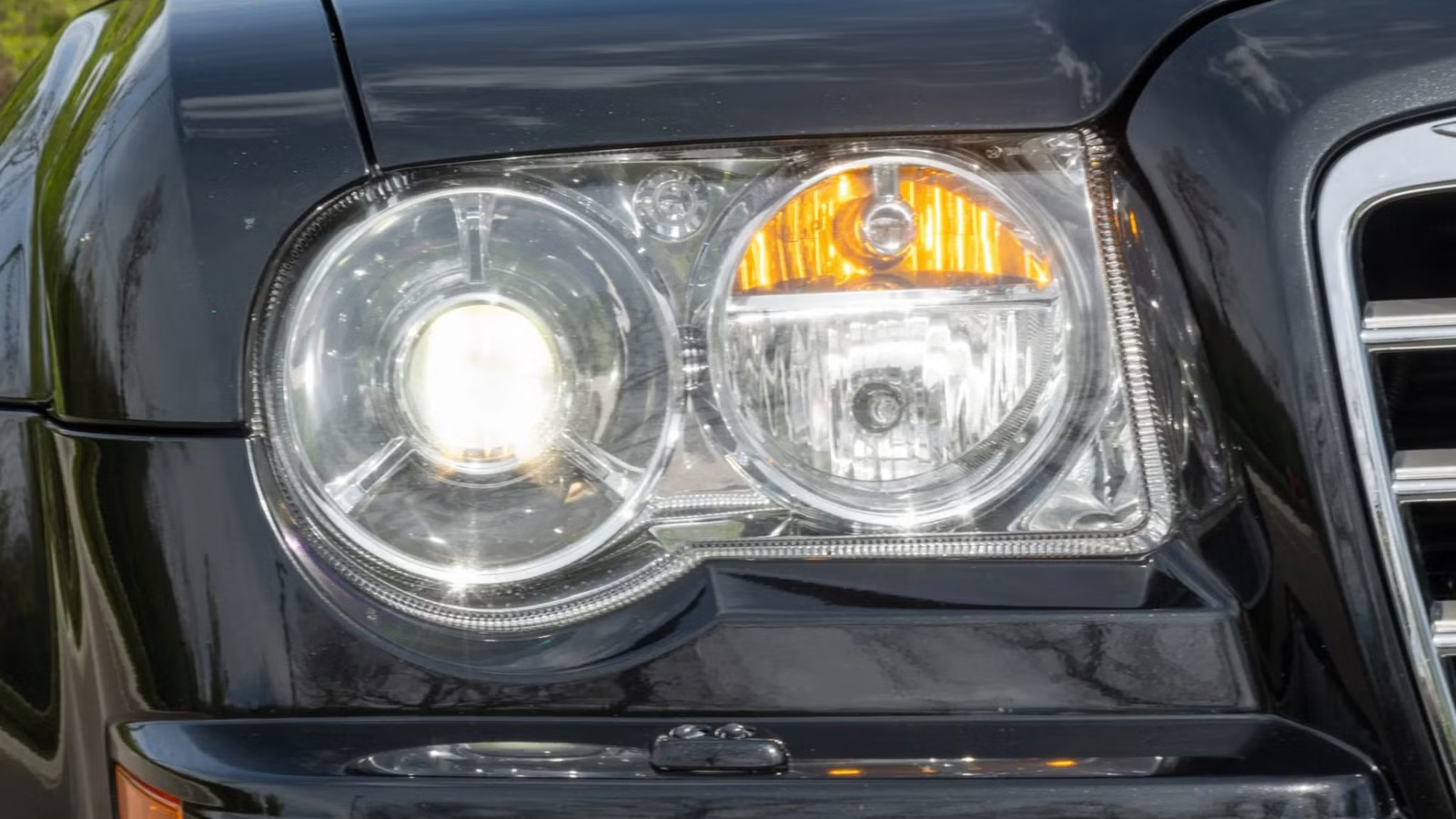
When it rolled into dealerships in early 2005, most Americans had no real frame of reference for it — a domestic sedan with a wide stance, a formal roofline, and the kind of road presence you’d normally expect from a six-figure European luxury car.

The thing is, American automakers had basically abandoned the performance sedan for more than two decades. GM and Ford had been chasing truck and SUV profits through the ’90s, and rear-wheel-drive sedans with genuine muscle had quietly disappeared from domestic showrooms.
What this American car pulled off was either reckless ambition or accidental genius — depending on who you ask.
How Detroit Lost The Performance Sedan

The American performance sedan was quietly discontinued, and by the early 1980s, the cars that once made Detroit dangerous had been replaced by front-wheel-drive compacts and economy-focused platforms that put fuel economy above everything else.
Through the ’80s and ’90s and early 2000s, GM and Ford doubled down on trucks, SUVs, and minivans. These were the real profit centers, and investment followed the margins. Rear-wheel-drive performance sedans were expensive to develop and hard to justify when Americans were buying F-150s and Suburbans by the millions.
Chrysler’s merger with Daimler-Benz in 1998 quietly changed the equation. The partnership gave Chrysler’s engineers access to Mercedes-Benz’s rear-wheel-drive architecture — including the rear suspension cradle and 5-link independent rear setup from the W210 E-Class, and the double-wishbone front suspension design from the W220 S-Class.
From that collaboration came the LX platform — a rear-wheel-drive foundation capable of supporting a full-size American sedan with genuine performance credentials. It was the skeleton of something no one in Detroit had attempted in over two decades.
By the mid-2000s, America was deep into crossover territory, and a slab-sided, rear-wheel-drive sedan felt genuinely countercultural. The question Chrysler’s team was quietly answering was simple but risky: could a domestic brand build something that felt expensive without actually being expensive?
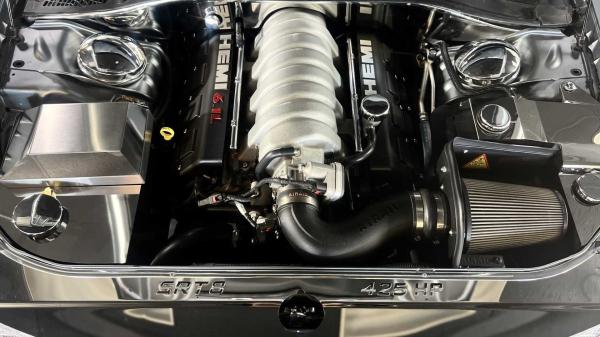
Chrysler Once Hid A 425 Horsepower Engine In A Rental Grade Sedan
Imagine rolling up to a stoplight in a luxury sedan that looks like a rental car, only to smoke 911s
Chrysler 300 SRT8 – The Sedan That Rewrote What $40,000 Could Buy

The car Chrysler had been building toward was the 300C SRT8, and it arrived in showrooms in the spring of 2005 with a starting price of $39,995 — roughly half what BMW was asking for an M5 that year. For what you got under the hood, that number was almost hard to believe.
That hood covered a 6.1-liter HEMI V8 — a naturally aspirated, pushrod engine producing 425 hp at 6,200 rpm and 420 lb-ft of torque at 4,800 rpm. That was 25-percent more power than the standard 300C, and more than a lot of sports cars of the era could claim at any price.

Off the line, the SRT8 ran 0–60 mph in 4.9 seconds and covered the quarter mile in 13.2 seconds at around 109 mph, with a governed top speed of approximately 170 mph. For a full-size sedan that could seat five adults in real comfort, those numbers demanded a second look.
The hardware behind that performance was equally serious. Brembo supplied four-piston calipers gripping 360 x 32mm vented front rotors and 350 x 26mm vented rears, while the suspension ran SRT-tuned Bilstein monotube dampers, custom spring rates, and large-diameter anti-sway bars. It was a setup built for real-world performance, not just a strong spec sheet.
The 6.1L HEMI itself was a direct evolution of the 5.7-liter engine found in the standard 300C — bored out, with higher compression and revised cylinder heads. SRT, short for Street and Racing Technology, was Chrysler’s in-house performance division, and they handled every element of the tuning.
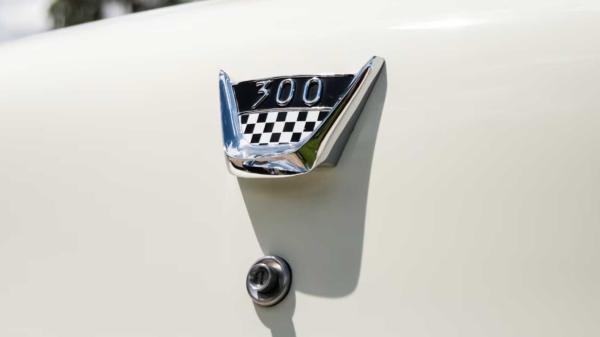
The First Production Car To Break 300 Horsepower
The 1955 Chrysler C-300 became the first mass-produced car to officially breach the 300 horsepower barrier.
A Pushrod V8 Embarrassed European Sport Sedans

|
Engine |
Transmission |
Power |
Torque |
|
6.1-liter HEMI V8 |
5-speed automatic |
425 hp |
420 lb-ft |
The 6.1-liter HEMI in the SRT8 was a pushrod V8 — old-school in architecture, but purpose-built for output. A bore of 4.06 inches, a stroke of 3.58 inches, and a 10.3:1 compression ratio combined to produce 425 hp from a naturally aspirated setup, with no turbo or supercharger needed. The result was genuine low-end pull that made the car feel fast before the tachometer even got interesting.
The rear-wheel-drive LX platform gave those 425 hp somewhere useful to work. Front-wheel-drive performance cars fight torque steer; the SRT8 didn’t, and the traditional RWD weight distribution kept the car planted in a way front-driven alternatives simply couldn’t match.

When the second generation arrived for 2011, Chrysler swapped in a 6.4-liter Apache HEMI with more displacement and improved breathing across the rev range. The 2012 model’s track numbers reflected it immediately — 0–60 mph in 4.3 seconds and a quarter mile in 12.7 seconds at 112 mph.
The Brembo and Bilstein hardware meant the SRT8 wasn’t only fast in a straight line — it could stop and change direction with real confidence, something that had long been the criticism aimed at American performance cars.
SRT calibrated the suspension to be stiffer than the standard 300C without making daily driving a punishment, keeping this a full-time driver’s car rather than a weekend-only proposition. Against European rivals like the BMW 550i and Mercedes-Benz E55 AMG, the SRT8 was quicker off the line in independent testing and significantly cheaper to buy.
10 Budget Performance Cars That Overdeliver On Thrills
In this age of hyper-promotion, almost everything feels like a letdown, but here are some cheap performance rides that are better than advertised.
The Best Performance Sedan Under $20,000 Nobody Is Talking About

Used examples of the Chrysler 300 SRT8 are averaging around $17,133 on Classic.com today — a long fall from the original $39,995 MSRP, and from the stronger values the car commanded a decade ago. That pricing now puts a 425 hp, Brembo-equipped performance sedan in the same bracket as a base economy car.
First-generation models from 2005 to 2010 represent the most affordable entry point. Second-generation cars from 2012 to 2014 command a modest premium but come with the 6.4-liter Apache HEMI and the sharper performance numbers that go with it.

Before buying, a few things are worth inspecting closely: HEMI lifter tick on higher-mileage examples, transmission fluid service history on the 5-speed automatic, and the condition of the rear suspension bushings.
The enthusiast community around these cars is still very active, with 300cforums.com and several SRT forums generating regular discussion on parts sourcing, maintenance, and modifications. That kind of support network is genuinely valuable on a car that’s now 15 to 20 years old.
Detroit built this sedan before anyone knew they wanted it, and at $17,133, you can own one before everyone else figures out what they’ve been missing.
The Forgotten American Sleeper That Was Basically A Four-Door Corvette
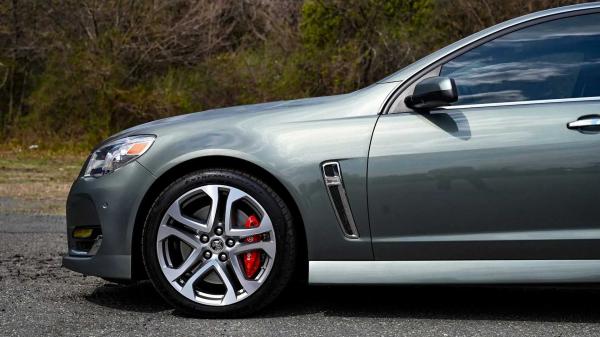
It was only sold in America for a few short years, and it’s starting to become a great used buy!
Why Hip-Hop Claimed The Chrysler 300

The 300’s cultural moment didn’t come from a marketing campaign — it came from a phone call. Before the car had even reached dealerships, Snoop Dogg reportedly called Chrysler CEO Dieter Zetsche directly in 2004 to request one for himself — the kind of endorsement no advertising budget can replicate.
What followed was entirely organic. 50 Cent, Jay-Z, and others featured the 300 in music videos, and the car eventually landed at No. 12 on Complex’s “25 Most Iconic Hip-Hop Cars” list. It wasn’t just a car people wanted to drive — it was one they wanted to be seen in.

With $5,000 to $8,000 in exterior modifications — chrome trim, 22-inch wheels, tinted glass — a $40,000 Chrysler could pass for a Rolls-Royce Phantom at a glance. That comparison spread fast online, and it stuck.
The design made it easy to believe. The upright formal roofline, broad C-pillar, and long hood were borrowed from pre-war luxury car styling — visual cues that read as expensive across every demographic.
The SRT8 brought something the standard 300C couldn’t offer: the performance to actually back up the presence. With 425 hp and quarter-mile times in the low 13-second range, this wasn’t a car that was just dressed for the role — it could play it.
Sources: Stellantis, Car and Driver, Classic.com, New York Times

Related posts





Latest Post


No Comments