
Nismo Officially Built Its Ultimate Skyline By Buying Back Secondhand R34s
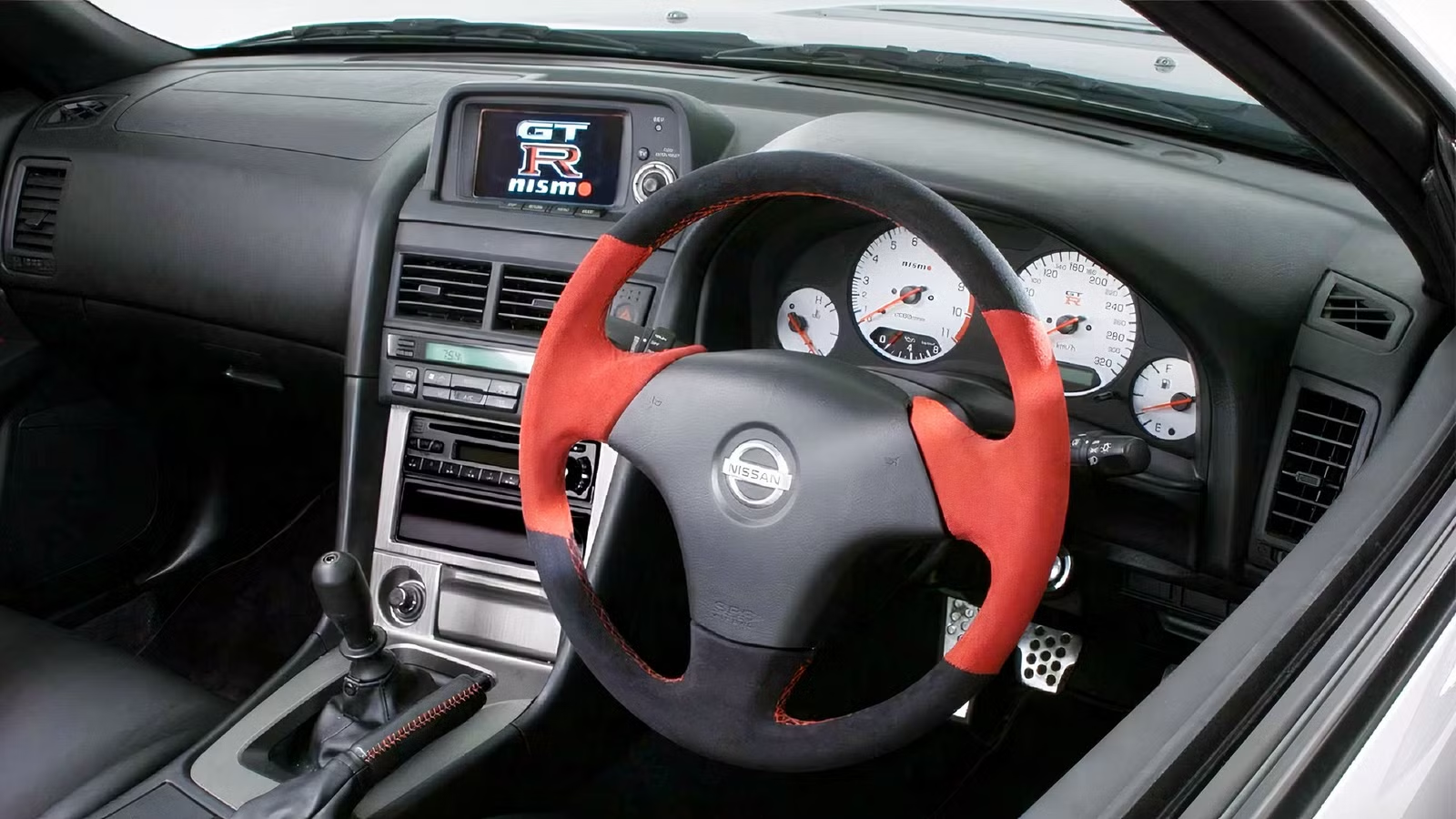
Nissan built its last R34 Skyline GT-R in 2002, closing one of the most celebrated runs in Japanese performance history. That left its motorsport division with an awkward problem. Nissan Motorsports International, better known as Nismo, wanted a flagship road car for its 20th anniversary, but the production line it needed was already gone. The fix was unusual: Nismo went back to the used market and bought GT-Rs from private owners. Even the final tally of finished cars, and whether the prototypes count toward it, is still argued over today.
The R34 GT-R Ended Before Nismo’s Masterpiece Could Begin

Nismo had been chasing the idea of an ultimate road-going R34 for years, proving parts and engines in competition long before Nissan signed off on a customer car. By the time the go-ahead finally came, the factory had stopped building the GT-R that every one of those cars would need as a starting point.
The firm confirmed customer sales in 2004, its anniversary year, which left it two choices. It could quietly shelve the project, or it could find suitable GT-Rs that already existed and rebuild them from the ground up. Nismo chose the harder route, and in doing so turned a factory special edition into something much closer to a bespoke restoration program.
How Nismo Sourced Its Donor R34 GT-Rs


The shopping list was short and strict. Nismo’s own specification sheet lists the base car simply as a used Skyline GT-R V-Spec, and registry records put the odometer limit at a 30,000 km ceiling, or roughly 18,600 miles. Every donor was going to be stripped to a bare shell, so Nismo needed straight, lightly used bodies rather than tired cars hiding years of wear.
Who Really Supplied The Donor R34 GT-Rs
Exactly how it filled that list is where the story splits. One widely repeated account says Nismo bought 12 cars outright and that the remaining seven came from owners who handed over their own V-Specs for conversion. Other enthusiast references tell a simpler story, with Nismo buying almost every donor itself on the open market.
The original order form backs the first version more than the second. Nismo listed the car two ways: as a complete Z-tune, or as a cheaper parts conversion carried out on a customer’s own R34. That second option only makes sense if some owners were expected to bring their own V-Specs to the table.
The difference is more than trivia. A car its eventual owner supplied carries a very different history from one Nismo picked off a dealer lot, and without a donor-by-donor list from the company, the exact split still can’t be settled. For collectors, that makes each car’s own paperwork the only reliable record of where it started life.
Inside The Nismo R34 GT-R Z-tune Rebuild

The finished car was the Nismo R34 GT-R Z-tune, and what happened to each donor went far beyond a body kit. Nismo stripped every shell, added extra spot welds around the door frames, and bonded carbon-fiber reinforcement to the strut tops, hood ridges, and center tunnel. A carbon-fiber front bumper, front fenders, and propeller shaft went on next, along with Brembo brakes running six-piston front calipers and Sachs dampers adjustable for ride height, bump, and rebound. Each car was then painted Z-tune Silver, a color reserved for the model, and weighed in at 1,600 kg, or about 3,527 lbs, according to Nismo’s specification sheet.
Under the hood sat the Z2, an RB26DETT rebuilt around Nismo’s GT500 race engine block. A bore and stroke of 87 mm and 77.7 mm took displacement from 2.6 liters to 2.8 liters, with forged pistons, a forged GT crankshaft, GT connecting rods, and IHI turbochargers made exclusively for the car. An earlier version of the engine, the Z1, proved itself by winning the 2004 Tokachi 24 Hours.
Nismo rated the Z2 at 500 PS or more, which converts to 493 hp, along with at least 398 lb-ft of torque. That “or more” wording is the important part. The company never claimed a hard ceiling, and the concept car shown at the Nismo Festival had targeted 600 PS, or 592 hp, which is why the production rating has long been treated as a floor rather than a final number.
Why So Few Z-tunes Ever Reach The Open Market

Nismo originally planned 20 cars but finished 19, a total that includes the prototype. It did serial-number 20 Z2 engines, though, which is why some accounts still quote 20 cars, and others claim two prototypes were built. Only two of the finished cars were delivered to customers outside Japan.
That scarcity means Z-tunes almost never cross a public auction block, so the market moves through private brokers. In January 2022, chassis number 11, a one-owner car from Thailand showing just 5,500 km, or about 3,400 miles, changed hands to an American collector, with the sale widely reported at a reported $1,985,000. The buyer later said that figure was not the real price, while confirming it was still the most expensive R34 ever sold.
That gap between headline numbers and verified prices fits the car perfectly. Nismo built its ultimate Skyline from cars that already had a past, and two decades on, every Z-tune still carries a history that has to be proven one document at a time.
Sources: Nismo, The JDM Registry, GTR Registry, Top Gear Netherlands, Nissan.

Related posts


Latest Post


No Comments