
Mazda Twin-Plug Skyactiv-X Patent: Compression Ignition Lives On
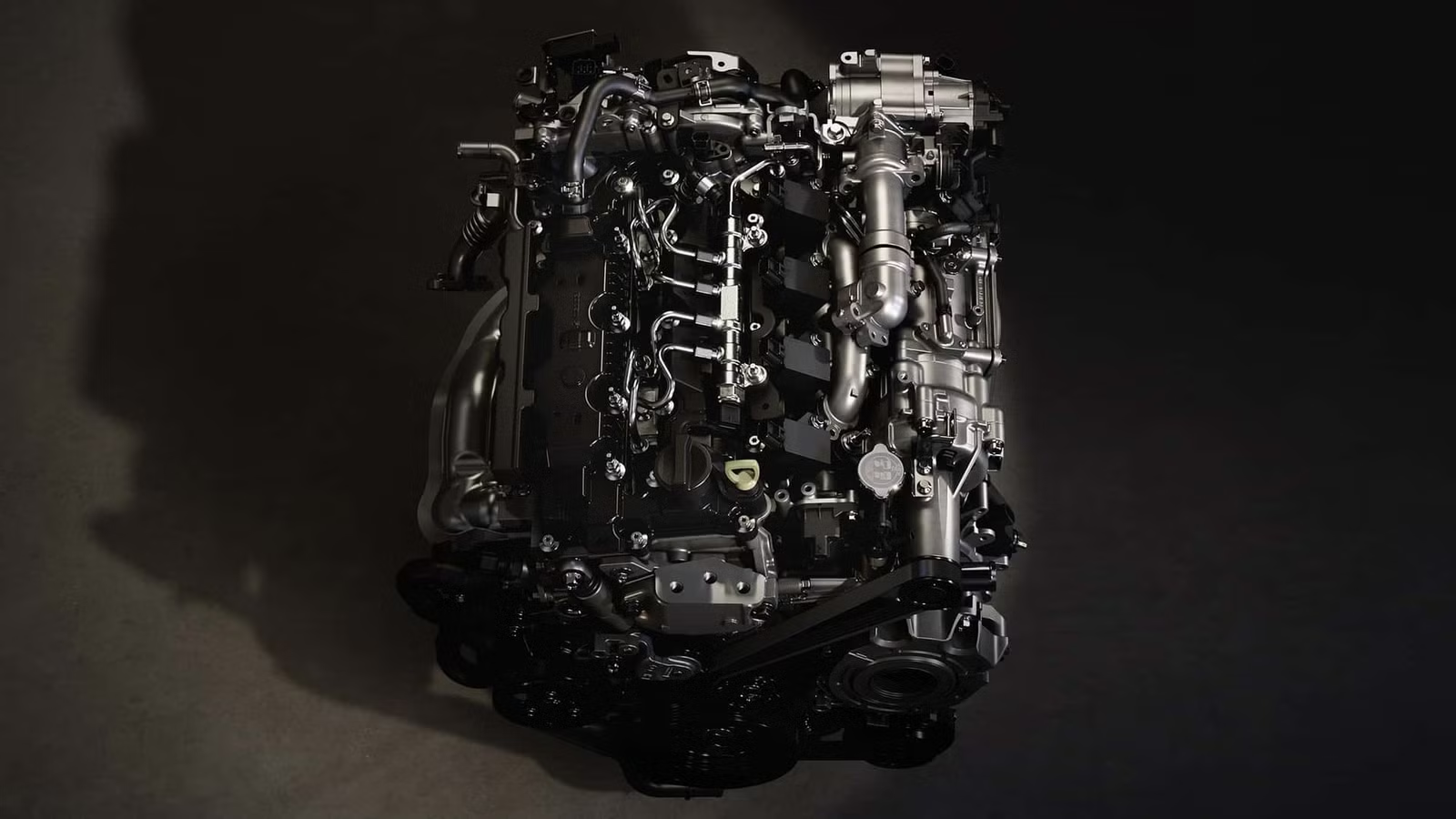
Mazda’s Skyactiv-X was starting to look like a technology the industry had quietly moved on from. Compression ignition in a gasoline engine is a genuinely difficult engineering problem, and the single-spark-plug architecture at the heart of the current system had real limits. Now, a pair of newly discovered patent filings reveals that Mazda‘s engineers haven’t given up — they’ve gone back to the drawing board and come back with a two-plug solution.

CarBuzz uncovered the filings this week, and the timing matters. At a moment when Toyota is hedging with hydrogen, BMW is deepening its EV commitments, and the broader industry is treating the gasoline combustion engine as a problem to be managed rather than solved, Mazda is filing patents to make its most ambitious engine architecture work better. That’s a concrete signal worth paying attention to.
Why the Single-Plug Skyactiv-X Hit a Wall
To understand what the twin-plug patent is solving, it helps to understand what Skyactiv-X actually does. The system uses homogeneous charge compression ignition — HCCI — which Mazda markets as Spark Controlled Compression Ignition. A small air-fuel mixture is lit by a conventional spark plug, and the heat and pressure from that initial combustion compresses the main charge until it ignites spontaneously, the way fuel does inside a diesel engine. The result is diesel-like efficiency from a gasoline engine, without the particulate and NOx headaches that come with diesel combustion.

The problem is lean combustion. Running the engine on very small amounts of fuel relative to the available oxygen generates extreme cylinder temperatures — enough to damage pistons and valves. Modern engines manage this with exhaust gas recirculation, or EGR, which displaces oxygen in the cylinder with inert exhaust gas, allowing the engine to run leaner without cooking itself. Mazda wants to push EGR further than the current system allows, getting the engine onto an even smaller fuel charge per cycle. But the leaner the mix, the harder it is to ignite reliably — and a single spark plug sitting on one side of the combustion chamber can only do so much.
What Two Plugs Actually Change

The twin-plug approach places a second spark plug on the opposite side of the cylinder head from the first. Both fire simultaneously, lighting the initial air-fuel charge from two points at once. The difference plays out in thousandths of a second — but at several thousand engine revolutions per minute, thousandths of a second matter enormously.
Because the charge ignites faster and more uniformly across the combustion chamber, the main air volume compresses more evenly. That more uniform compression means the spontaneous ignition of the main charge — the diesel-like part of the cycle — happens more efficiently. Emissions drop, fuel economy improves, and the engine can tolerate the higher EGR rates Mazda needs to push lean combustion further than the current single-plug architecture allows. Critically, none of this requires sacrificing power output when the driver actually needs it.
Dual-spark-plug setups are not a new invention. Aircraft piston engines have used two plugs per cylinder for decades, primarily for ignition redundancy at altitude. The modern Hemi V8 runs two plugs per cylinder. Ford used the arrangement in some four-cylinder engines through the 1990s, and Honda famously ran eight plugs total in early hybrid applications — two per cylinder, sourced from different manufacturers. What’s novel here isn’t the two-plug concept itself; it’s applying it to the specific combustion architecture of Skyactiv-X, where the goal is enabling more aggressive EGR and more uniform compression ignition rather than simple reliability.
What This Means for Mazda’s Combustion Roadmap

Patent filings don’t guarantee production. Mazda’s own disclosure language makes that clear — filings are often used to protect intellectual property without any commitment to build the technology. But engineering investment leaves a paper trail, and this one points in a clear direction.
Mazda has consistently positioned itself as a company that believes gasoline combustion still has meaningful efficiency gains left to unlock. Skyactiv-X was the most ambitious expression of that belief. If the technology had been quietly shelved, there would be no reason to file patents on a refined version of it. The twin-plug approach represents active engineering work on a next-generation variant, not a legacy system being maintained on life support.
For enthusiasts watching Mazda’s product roadmap, the most consequential downstream implication is the Miata. The MX-5 has always run on Mazda’s most current engine thinking, and a more capable, more efficient Skyactiv-X architecture could keep a gasoline-powered Miata viable well into the next decade. That’s not a guarantee — but it’s a better outlook than the alternative.
Skyactiv-X was always the kind of technology that deserved more runway than the market gave it. If the twin-plug variant makes it to production, gearheads who care about what a gasoline engine can still accomplish — and Miata fans in particular — should be rooting hard for it to work.

Related posts




Latest Post


No Comments