
Lincoln’s Quiet Sedan Can Out-Accelerate The Cadillac ATS And Infiniti Q50 Red Sport
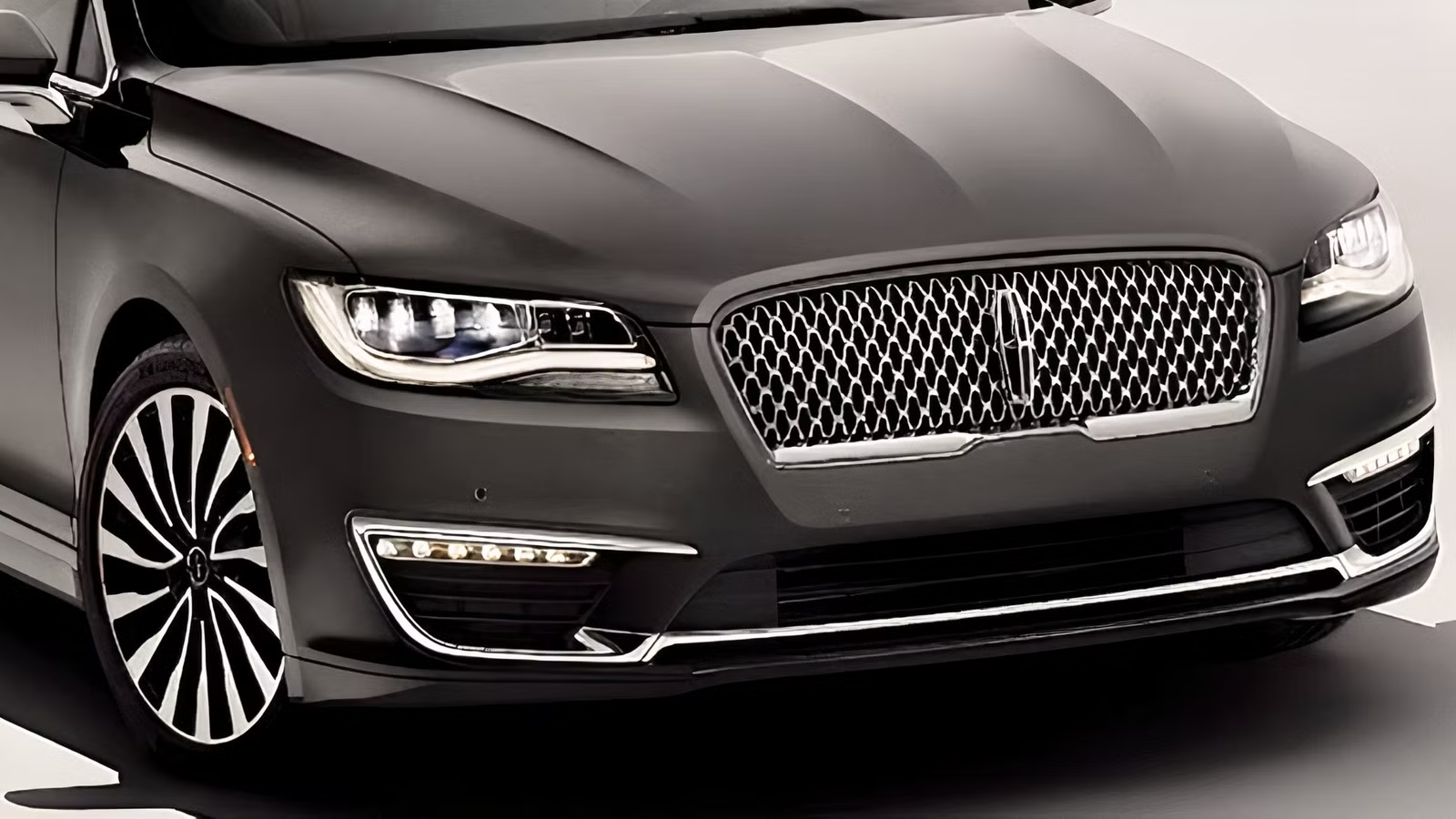
In the early 2000s, Lincoln was a burnt-out shell of its former glory, propped up almost entirely on the strength of its Navigator SUV. By the end of the 2010s, it was a brand resurgent, complete with a lineup of stylish and comfortable sedans and crossovers that FoMoCo could actually be proud of. Still, one rose above all others to become one of the greatest American factory sleepers of the 2010s. Nowadays, it’s one of the best price to performance bargains of the mid-2020s.
Lincoln in the 2000s: A Disaster That Had to be Remedied

To understand why this specific car is such a revelation, look no further than what the brand was up to at the turn of the millennium. Lots were packed with aging rear-wheel-drive land yachts and thinly veiled fleet vehicles. Sure, the Panther platform Town Car was amazing, but nobody was going to be impressed by the Blackwood pickup or the Aviator SUV that followed it. Instead of building a lineup that could compete with Mercedes, Audi, Lexus, or Acura, the brand leaned into soft-sprung cruisers targeted directly at, shall we say, a geriatric audience.
Ford, Lincoln’s corporate parent, narrowly avoided filing for bankruptcy as GM and Chrysler did in the 2008 recession, but lost Mercury in the immediate aftermath. Clearly, a change was needed at Lincoln: a brand reinvention so profound that it could change the fortunes of an OEM most had already written off.
With this in mind, Ford had quite the task on its hands. Not only did they have to fundamentally change Lincoln from an engineering perspective, but from a marketing standpoint as well. Sure, the mature, established customer base was still welcome, but a younger audience was what Lincoln desperately needed.

Saved by the EcoBoost: FoMoCo’s Saving Grace

It would not be hyperbole to say Ford would not be the company it is today if not for the EcoBoost line of GDI turbo engines. Debuting in 2010 under the hood of the Ford Taurus SHO, these turbocharged engines delivered solid power and impressive torque across the entire rev range. Over the next decade, this engine family trickled down into everything from the F-150 pickup truck to the Mustang EcoBoost, completely transforming the performance capabilities of the entire lineup.
From the lowliest little three-cylinder EcoSport to flagship trucks and SUVs, the EcoBoost did it all. To properly manage that kind of power, engineers paired the new engine with an all-wheel-drive system and a sophisticated torque-vectoring rear differential borrowed directly from the rally-bred Ford Focus RS. Suddenly, something that was seen as a detriment to the Ford portfolio, its powertrains, was now one of its biggest strengths.
Now, the drivetrain was finally ready to be dropped into a chassis. The resulting vehicle was an absolute rocket ship masquerading as a luxury sedan, perfectly setting the stage for the ultimate sleeper reveal. It was a transformative car for Lincoln, and one that depreciated enough to be a bargain second-hand.
2017-2020 Lincoln MKZ: Pure Infiniti-Fighting Twin-Turbo Luxury

The facelifted 2017 Lincoln MKZ was so much more than just a mid-cycle refresh. It served as the launchpad for the brand’s new Quiet Luxury design language. On the outside, there were no aggressive aerodynamic splitters, carbon fiber accents, or AMG-adjacent massive exhaust tips to give away its potential. It was sleek, unassuming, and featured smooth, curved styling lines that blended into any country club parking lot,and not as an airport shuttle like the old Town Car. Inside, the cabin was full of leather and noise canceling materials, but under the hood was a pure monster.
The MKZ equipped with the exclusive 3.0-liter twin-turbo V6 stood as the most powerful sedan Lincoln had ever produced. Buyers who opted for the all-wheel-drive variant unlocked the full potential of the new engine block, netting a staggering 400 hp and 400 lb-ft of torque. FWD variants were electronically limited to 350 hp, likely for the safety of the driver. Zero to 60 was handled in just under or just over five seconds, depending on which publication you were reading.
Regardless of which you choose, the MKZ 3.0T is fully capable of out-accelerating rivals like the Cadillac ATS and the Infiniti Q50 Red Sport in a straight-line drag race. Thanks to vented front brake discs and an optional sport-tuned suspension with Dynamic Torque Vectoring on AWD models, the MKZ was far more competent in corners than previous Lincoln sedans. It was the fastest sedan Lincoln ever built, and it is unlikely to be challenged any time soon.
Great Power, Solid Interior, Amazing Second-Hand Value for Money

The dramatic levels of depreciation on the used luxury car market are exactly what make the entire value proposition possible. A fully loaded AWD model commanded a sticker price of nearly $60,000 when it was brand new. Today, you can find these same twin-turbocharged sleepers trading hands for anywhere from $11,000 to $20,000on the used market. That’s a 60 to 80 percent discount over MSRP, depending on model year and the condition of the vehicle.
While the initial purchase price is undeniably tempting, owning a complex luxury vehicle on a hot hatch budget requires a serious financial reality check. The cheap speed narrative only holds up if you know exactly what you are getting into mechanically. Fortunately, buyers of the newer 3.0T engine avoid one of the most notorious Ford engine design flaws: the internal water pump in 3.5 and 3.7-liter EcoBoost engines.

Assuming you can find one in decent shape with low miles, this is the kind of car that significantly out-accelerates equivalent Infinitis and Cadillacs, and can even give Lexus and BMW models a run for their money. The 17 city and 26 highway MPG fuel economy may not be impressive, but neither are any of its rivals.
Source: Kelley Blue Book

Related posts




Latest Post



No Comments