
Lexus TZ600e: More Powerful Electric Three-Row SUV Coming
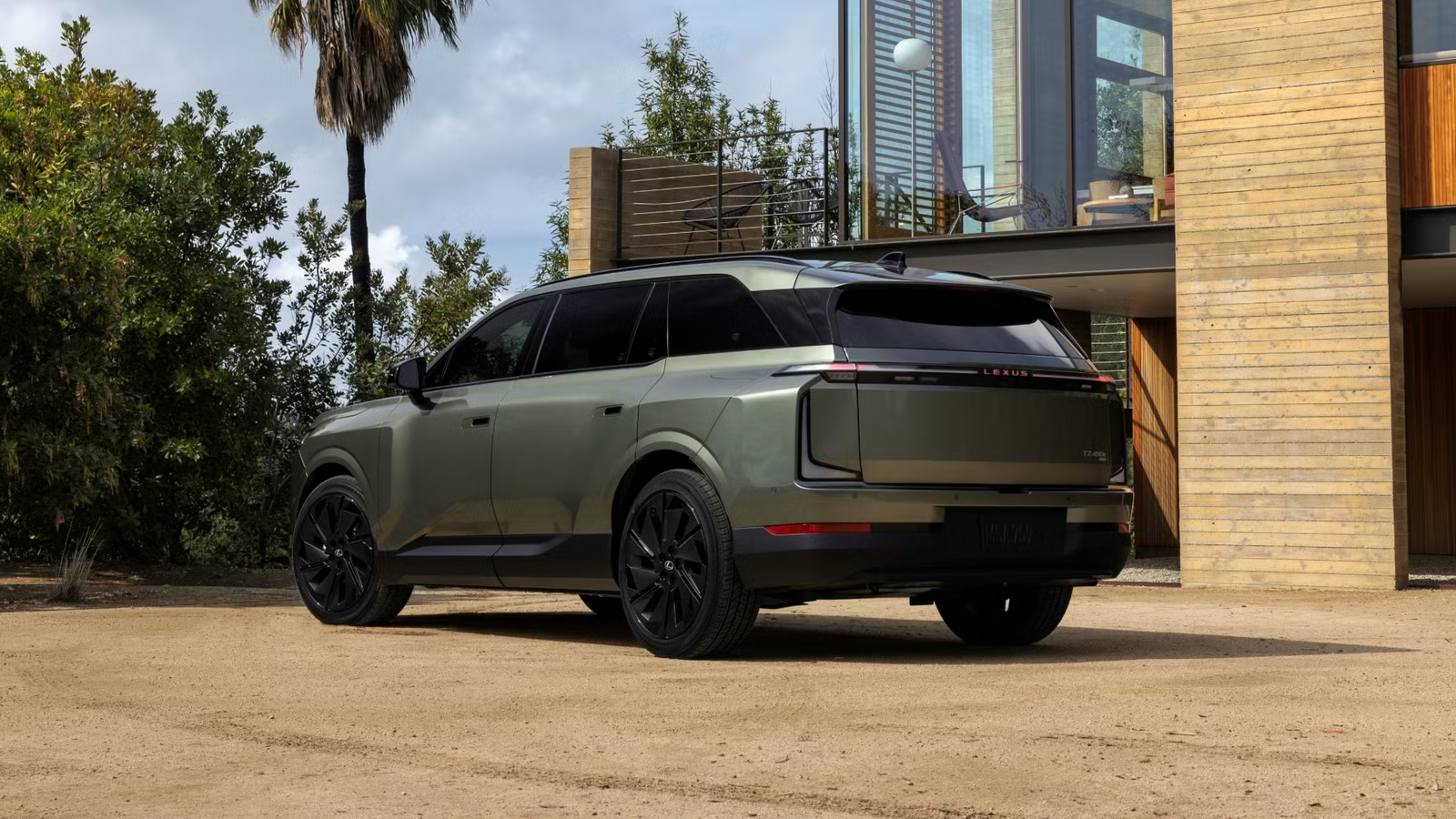
Lexus just revealed its new TZ electric three-row SUV to the world, and the ink on the press materials is barely dry. Yet trademark filings uncovered by CarBuzz suggest the brand is already planning something considerably more potent — a TZ600e that would push Lexus squarely into Mercedes-AMG GLS 63 territory.

The filings appeared in Great Britain, Norway, Australia, and New Zealand, covering the TZ600e name across multiple markets. No US filing was included, though that’s a common pattern for models heading to American showrooms — Lexus has done this before, and the absence shouldn’t be read as a sign the car won’t arrive stateside. What matters is the logic behind the trademark, and that logic is hard to argue with.
A Power Gap That Lexus Can’t Afford To Leave Open
The base TZ 450e launches with 308 horsepower and 323 pound-feet of torque, drawing from a 77 kWh battery in the entry Premium grade and a 95 kWh pack in the Premium Touring and Luxury trims. The larger pack delivers up to 315 miles of range. Those are respectable numbers for a luxury three-row EV — but there’s a problem sitting right next to it in Toyota’s showroom.

The Toyota Highlander EV, which shares significant underpinnings with the TZ, launches with up to 338 horsepower. That means the Lexus — the premium, more expensive sibling — is being out-powered by its own corporate cousin. In the luxury segment, that’s not a gap you leave open for long. A Lexus that loses a spec-sheet comparison to a Toyota is a Lexus with an image problem, and the brand clearly knows it.
What The TZ600e Is Expected To Deliver

Lexus has already moved to address part of this in Europe, where a TZ550e variant has been announced at 402 horsepower — enough to clear the Highlander EV’s output. The TZ550e has not been confirmed for the US market.
The TZ600e is expected to go further. Lexus doesn’t use a strict power-to-number formula the way some brands do — a higher number signals more performance, but not a precise figure. CarBuzz points to the existing LX lineup as a rough guide: the LX600 produces 409 horsepower from its 3.4-liter twin-turbo V6, while the LX700h hybrid pushes 457. Working from that logic, a figure around 450 horsepower for the TZ600e is a reasonable educated guess, though Lexus has not confirmed any output target. It’s worth noting that trademark filings don’t guarantee production — they protect a name, not a product. But given the clear power-gap problem the 600e would solve, this one carries more weight than a speculative filing usually does.
Lexus Steps Into Performance-EV Territory

If the TZ600e arrives near that 450-horsepower mark, it would position Lexus directly against the AMG GLS 63 — a 603-horsepower twin-turbo V8 SUV that has long defined what a performance-oriented three-row luxury SUV looks like. BMW’s M-tuned X7 and Porsche’s Cayenne Turbo E-Hybrid occupy similar space, and all of them have operated without meaningful Japanese competition at the performance end of the segment.
Lexus has performance credentials — the RC F, LC 500, and the IS 500 with its naturally aspirated 5.0-liter V8 all demonstrate the brand can build a driver’s car. But translating that into a three-row electric SUV is a different challenge, and one that requires genuine output to be taken seriously. A sub-310-horsepower electric SUV doesn’t start that conversation. Something north of 450 horsepower does.
The base TZ is expected to reach dealers this fall. Whether the 600e arrives alongside it or follows in a subsequent model year hasn’t been indicated by Lexus. Given the trademark activity across multiple markets, the higher-output variant appears to be a matter of when, not if.
For buyers cross-shopping in the performance-luxury three-row space, the TZ600e would represent a genuinely new option — an electric alternative to the AMG and BMW M machines that have owned this corner of the market for years. Lexus has the platform, the brand positioning, and now, apparently, the ambition. The horsepower just needs to follow.

Related posts

Latest Post


No Comments