
Jay Leno Sends A Serious Warning To Classic Car Collectors
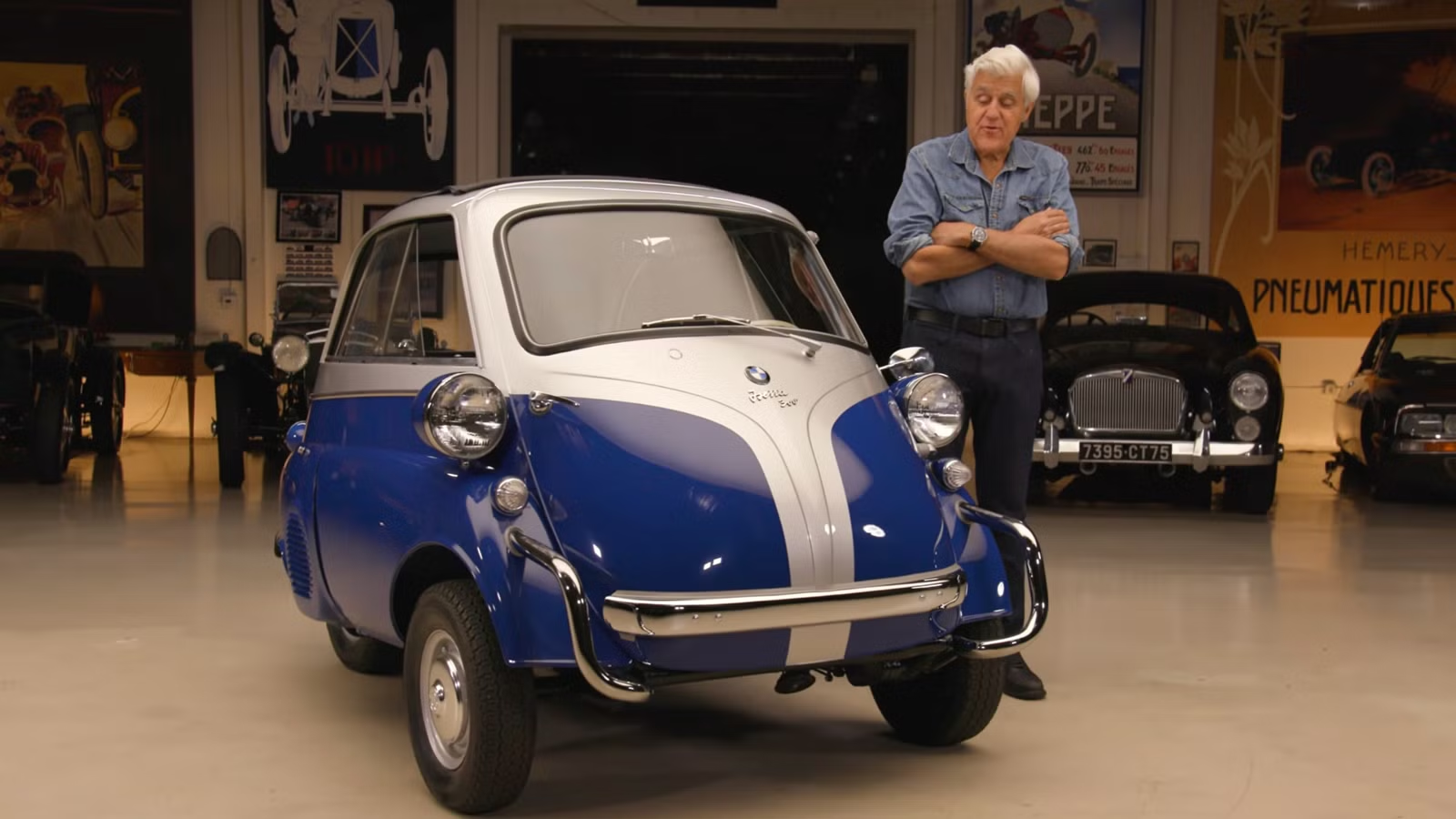
Low mileage can make car collectors completely lose their minds. Show them a decades-old car with fewer miles than a new dealership demonstrator, and suddenly the bidding paddles start flying. However, Jay Leno has issued a blunt warning to anyone who believes a parked classic car is automatically a preserved car. While examining three absurdly low-mileage American classics with Gabriel Iglesias and appraiser Donald Osborne, Leno explained that machines still age when nobody uses them. A spotless odometer may protect a car’s value, but it cannot stop oil from draining, rubber from drying or ancient gasoline from turning into something resembling varnish.
Parked Collector Cars Can Rot From The Inside

The latest episode of Assess & Caress featured Iglesias’ 1987 Buick GNX, 1988 Chevrolet Monte Carlo SS and 1994 Ford Mustang SVT Cobra Indy Pace Car Replica. The GNX has approximately 3,300 miles, but the other two make it look heavily used. The Monte Carlo shows only 36 miles, while the Mustang has covered a ridiculous 13 miles. Cars like these can command enormous premiums, but Leno explained why leaving them motionless for decades can cause serious mechanical trouble. When an engine sits, oil gradually drains away from internal components. That can leave parts such as the camshafts exposed to moisture in the air, allowing corrosion to develop inside an engine that appears perfect from the outside.
Leno singled out old Ferraris as one example. A car parked for 30 years may need extensive recommissioning before it can safely return to the road. In extreme cases, that could mean tearing deeply into the engine rather than simply installing a battery, pouring in fresh gasoline and hoping the Italian gods are feeling generous.
His advice is surprisingly simple. Drive the car around 1,000 miles each year. It does not need to be hammered around a racetrack, but regularly circulating the fluids and operating the mechanical systems can prevent a supposedly preserved car from quietly becoming an expensive sculpture.
Low Mileage Does Not Guarantee A Good Car
Mechanical components are only part of the problem. Osborne pointed out that rubber seals, plastic trim and flexible components continue aging regardless of what the odometer says. Plastic body panels can warp, rubber can crack and gasoline can deteriorate while the car sits under a cover looking financially responsible. Old tires are another major danger because appearance does not reveal everything happening inside the rubber. Iglesias said the tires on his Monte Carlo looked fine and showed no visible cracking, but they were still original. He wisely replaced them rather than discovering their actual condition at highway speed.
A collector car can therefore have 30 miles and still require more work than another example with 30,000 miles. Storage conditions, regular servicing and documentation matter tremendously. A neglected time capsule may preserve its seat plastic while cooking every seal, hose and fuel-system component underneath it. As Jay put it, a car is a machine. It was designed to move, warm up, circulate fluids and operate. Treating it like a stuffed animal with a VIN may protect the mileage, but it does not necessarily protect the car.
Gabriel Iglesias Actually Drives His Valuable Classics

Fortunately, Iglesias does not believe his cars should spend eternity trapped beneath fluorescent garage lights. His Mustang still had protective plastic throughout the cabin when he bought it. He eventually got drunk, ripped the plastic out and recorded the entire event, which apparently caused several collectors to react as though he had personally keyed the Mona Lisa.
Iglesias also keeps dog beds and blankets inside some of his valuable classics because he takes his dog along for the ride. That might make mileage-obsessed collectors sweat through their branded polo shirts, but Leno and Osborne both supported his approach. These cars remain valuable, yet they are also being used for the purpose their manufacturers intended.
That does not mean owners should abuse historically significant cars or pile on 20,000 miles every year. It means occasional, careful use can be healthier than abandoning them inside a climate-controlled tomb.
A tiny odometer reading is impressive, but maintenance records and proper storage tell the more important story. Before paying a huge premium for any barely driven classic, collectors should inspect everything beneath the shiny paint. Sometimes the car with a few thousand honest miles is a much safer bet than the “perfect” example that has spent 30 years slowly dying in silence.

Related posts





Latest Post


No Comments