
The Forgotten Performance Sedan That Was Years Ahead Of Its Time
One afternoon in 1989, at a red light, two cars idled side by side. On the right, a European sports sedan with a flashy badge, a noisy exhaust, and a price tag that could clear a mortgage. Next to it sat an unassuming American family car, the kind you would take the kids to school in or find parked at the grocery store. But as the light goes green, the story changes.

Within just a few seconds, the European luxury sedan is left staring at the unassuming family car’s taillights as it screams past with a mechanical, high-pitched wail that sounds more like a high-revving race bike on the streets of Tokyo than an American commuter car.
In an era dominated by heavy V8 muscle and highly European performance cars, a group of rogue engineers quietly built a vehicle that rewrote the rules of what a practical family car can do. It was a mechanical masterpiece with a secret hidden under the hood, wrapped in a plain body that no one would look at twice. A vehicle way ahead of its time, only to be forgotten by the masses.
The Sterile Reality Of Tomorrow’s Classics
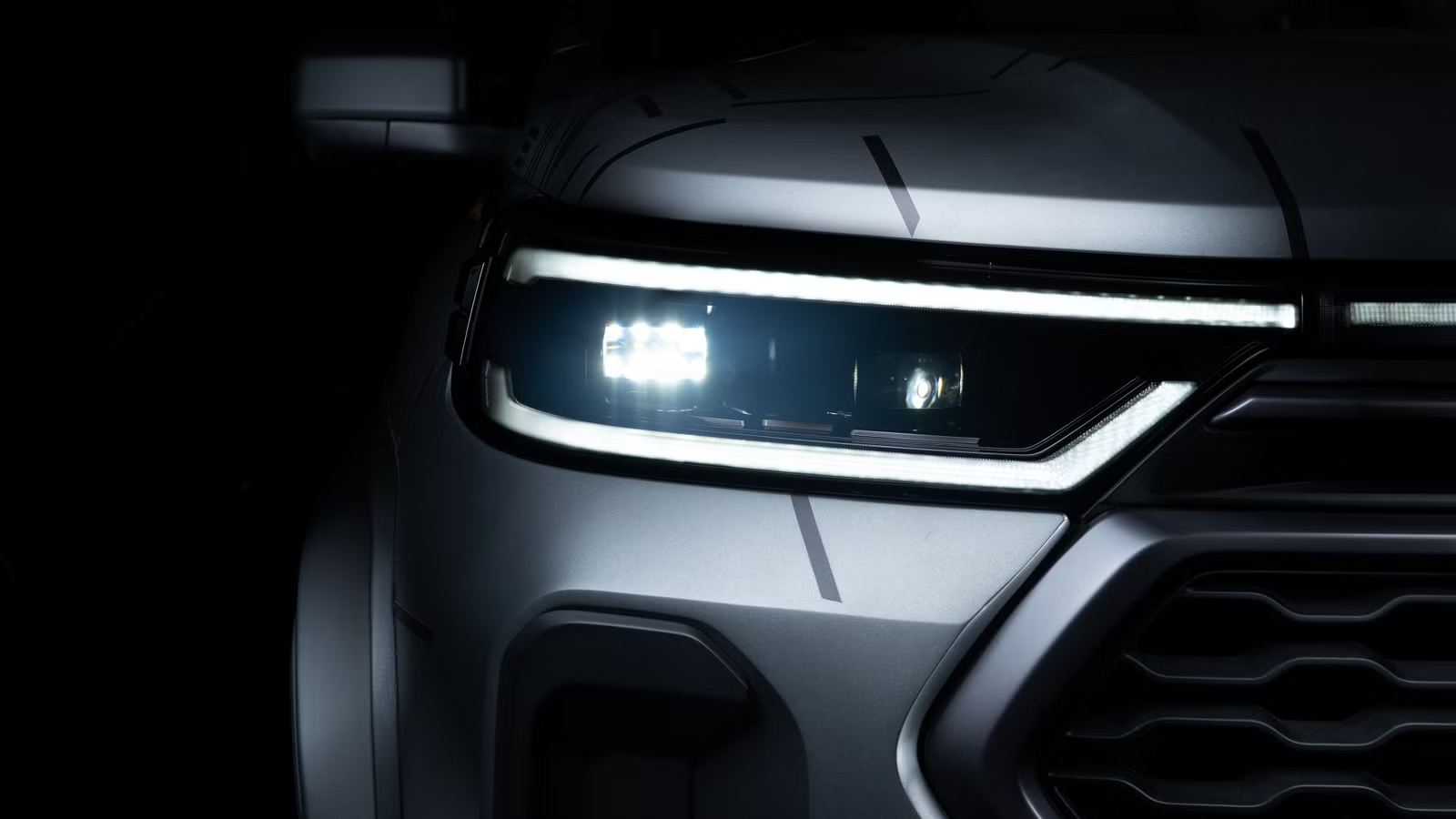
To understand the past and what makes those cars even more special today, we have to look at today’s performance offerings. The modern sports sedan has changed a lot in the past decades. Today, at the center of every performance sedan is the promise of “Track-inspired DNA” coupled with uncompromised aggression. What you really get is an overweight cruiser wrapped in plastic body cladding, fake exhaust tips, and synthetic engine noise pumped directly through the speakers.
In the age of computer-operated everything, power figures have skyrocketed to absurd levels, but the actual connection between the car and its driver has grown numb. Modern cars rely on complex computer algorithms, advanced suspensions, driving aids, and fully automated all-wheel-drive systems to keep drivers on the road. This makes it easy to drive these cars incredibly quickly while robbing the enthusiast of the skills required to handle such power.
This isn’t a new problem; it is the path the industry began decades ago, prioritizing mass-market compromise over pure engineering passion. But for a brief moment at the tail end of the 1980s, one engineering team at a domestic American company tackled this situation from a different perspective. Instead of taking a fast car and making it aggressive, they took a completely ordinary family car and engineered it to be a silent missile.
The Affordable Exotic With Ferrari Looks And Honda Running Costs
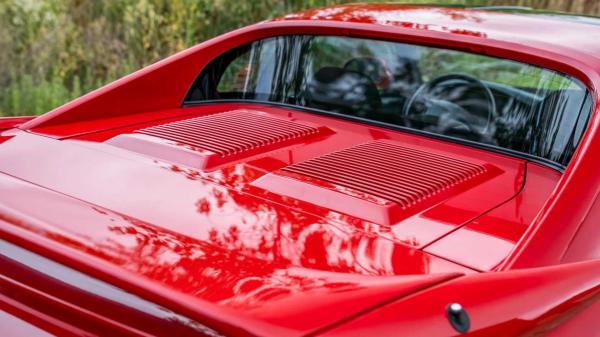
This mid-engine sports car delivers Ferrari-style looks and exotic performance without the supercar price tag or maintenance drama.
The Corporate Oversight That Created A Monster

During the mid-1980s, Ford signed a major contract with the Japanese motorcycle powerhouse Yamaha to build a high-tech, high-revving engine for a mid-engine sports car project. That project fell apart due to corporate restructuring. Ford found themselves stuck in a contract to buy thousands of highly advanced racing-derived power plants.
A group of enthusiasts inside Ford decided they couldn’t let these incredible engines sit in a warehouse. So they hatched a radical plan. They would stuff this high-revving engine into the engine bay of their most popular front-wheel-drive family sedan.
They decided that the vehicle had to be practical for carrying a family in comfort and quiet enough to navigate out of a suburban neighborhood without making a racket at half throttle. But as it hits the freeway and the driver puts the pedal to the metal, it should transform into a high-rpm beast capable of running door-to-door with the finest machinery from Europe.
The 1989 Ford Taurus SHO: A 143-MPH Suburban Deception

To a casual observer, it looked like the standard Taurus that was already dominating the sales charts. But at a closer glance, you could see the cues of what lay beneath the car: a subtle yet functional ground-effect body kit, unique fog lights, 15-inch aluminum wheels, and a dual-outlet exhaust at the rear. The Taurus SHO didn’t scream about its performance; it quietly whispered.
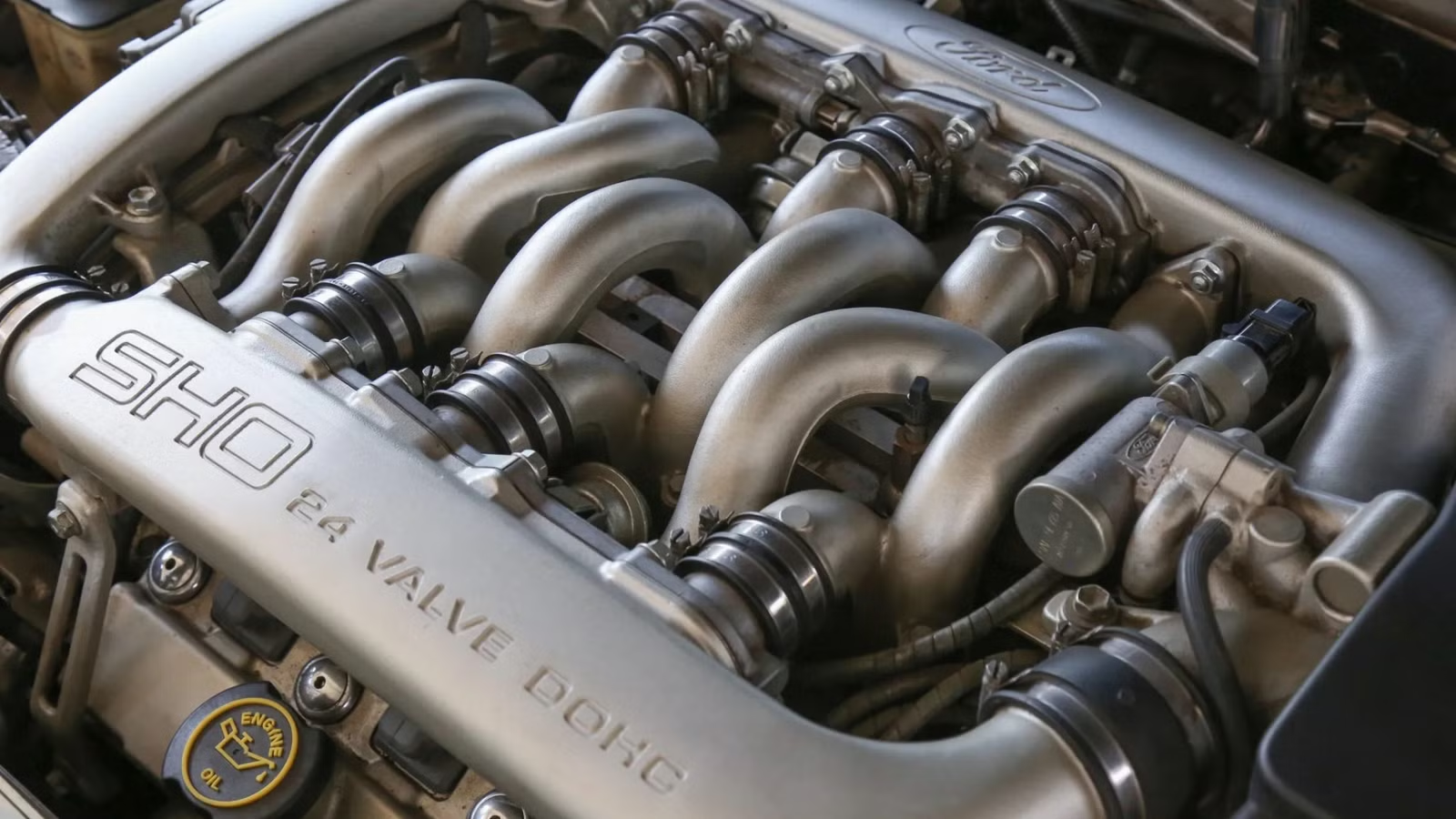
Under the hood lay the heart of the car: its engine was a revolutionary package for its time, never before seen in an American performance sedan. It was a 3.0-liter, 24-valve dual-overhead-cam V6 developed in partnership with Yamaha. While the standard American engines of the era were heavy, slow-revving, cast-iron pushrod designs, the SHO engine featured an aluminum head and a variable-length intake manifold that looked like a work of art.
The results were staggering for 1989. The Taurus SHO produced a healthy 220 horsepower and 200 lb-ft of torque, revving all the way to its 7,000 RPM redline. To put that into perspective, the Mustang GT with its 5.0-liter V8 produced 225 hp, just five more than the Taurus, despite being a purpose-built sports car. The Taurus SHO did 0 to 60 MPH in roughly 6.5 seconds and topped out at 143 MPH. It was incredibly quick for a suburban family hauler, making it one of the fastest sedans on the market at the time.
The Cheapest Turbocharged RWD Car With A Manual Transmission Money Can Buy
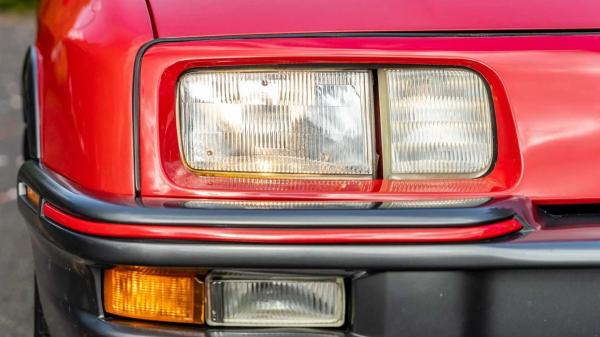
This forgotten turbocharged RWD manual from the ’80s is the cheapest of its kind – and it came from an unlikely German-American experiment.
The Mechanical Symphony Behind The Wheels

The spec sheet tells only half the story. The Taurus SHO was way ahead of its time because of how it delivered its power. The SHO is an exercise in analog joy. One reason was that it was available only with a Mazda-sourced 5-speed manual transmission for the first few years. As a result, it demanded complete driver involvement: there were no traction control systems to bail you out, no electronic drive modes to alter the steering feel, and no fake exhaust sound pumped into the cabin.
Below 4,000 RPM, the SHO behaved like a civilized, comfortable Taurus, quietly cruising over the pavement with its stiffened, sport-tuned suspension. But once you crossed the 4,000 RPM threshold, the secondary butterfly valves in the intake runners snapped open. The engine note instantly transforms from a smooth hum to a fierce mechanical roar.
The car lunged forward with urgency and revved to its redline, delivering top-end power that modern turbocharged engines cannot replicate. It demanded that the driver manage the torque steer caused by the rush of power being put down through the front wheels as the driver rowed through the gears. It was a visceral and highly rewarding experience that successfully blended high-rpm Japanese engineering with practical American design.
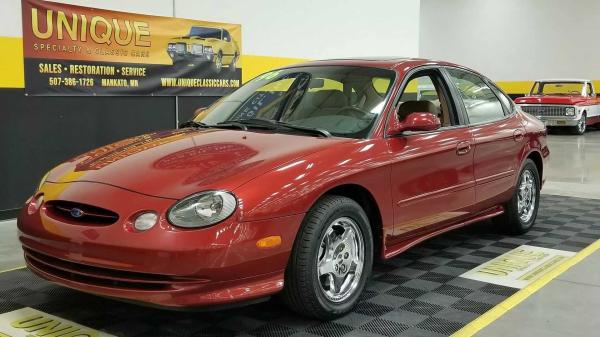
This 1996 Ford Taurus SHO Is A Forgotten Sleeper
The third-generation Taurus SHO packed Yamaha and Cosworth-built V8 punch.
Why the Taurus SHO Still Matters Today

The Ford Taurus SHO remains a high-water mark for its era because it was an exceptional enthusiast car without the pretentious badge or a price tag that required a second mortgage. It brought an exotic engine and genuine performance capabilities to the everyday driver’s driveway.
Decades later, manufacturers have forgotten how a simple car like the Taurus SHO could make enthusiasts fall in love with driving. Instead, we are trading the raw mechanical thrill of cars with manual shifters and exotic engine components for cars with giant screens and speed limiters.
The Taurus SHO didn’t need to fake its identity. It did not need aggressive styling to prove it was fast; the engineering spoke for itself. It stands as a reminder of an era when cars were pure and mechanical to drive, and when a family commuter could have the soul of a real performance car.
Source: Ford, Hagerty

Related posts




Latest Post


No Comments