
I Almost Bought A Toyota Grand Highlander, But Here’s Why The 2026 Volkswagen Atlas Changed My Mind
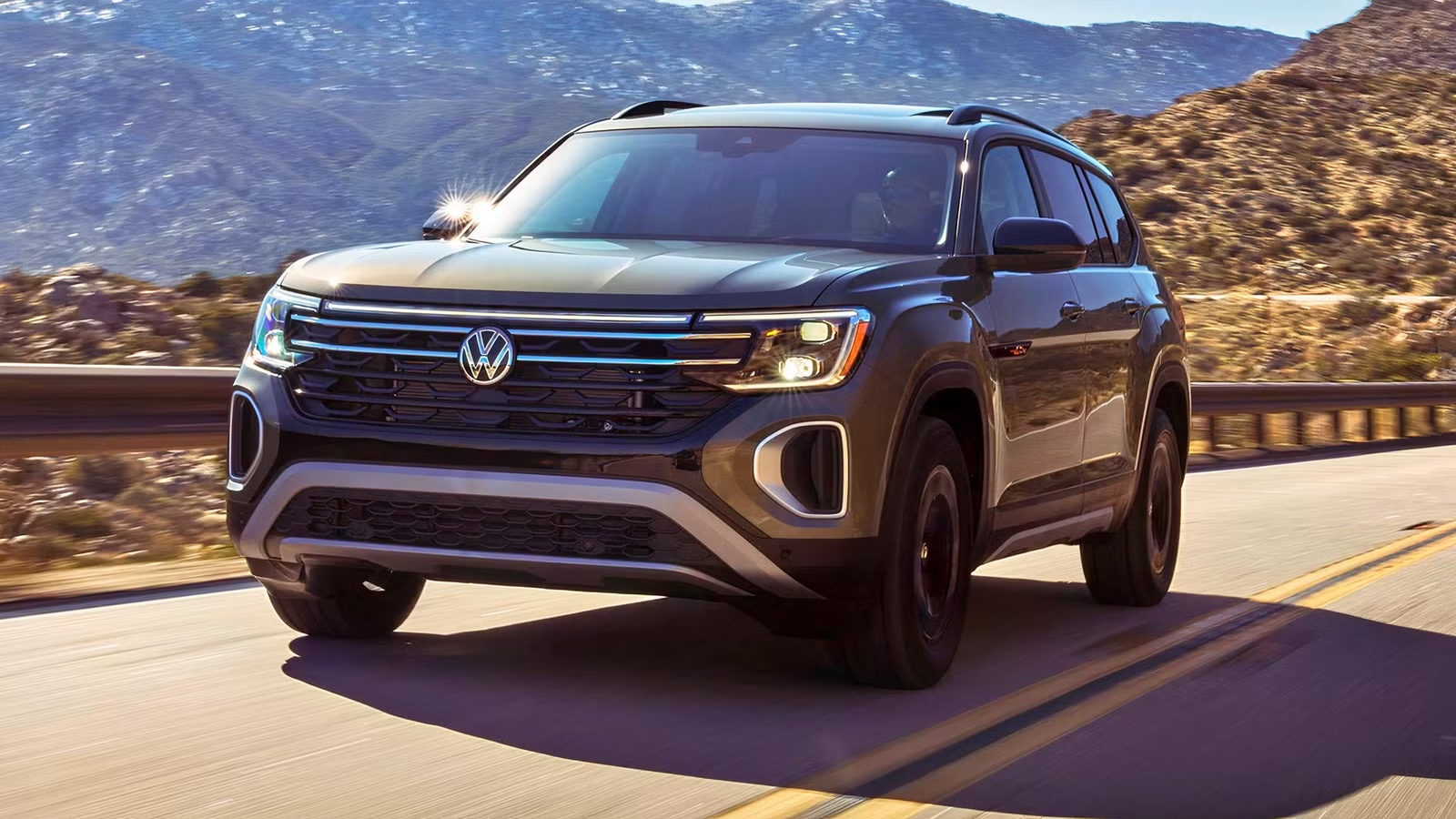
Buying a three-row SUV should be simple. Find something comfortable, spacious, dependable, and reasonably priced, then drive it home. Unfortunately, the more vehicles I compared, the more complicated that decision became. The Toyota Grand Highlander seemed like an obvious choice, particularly given Toyota’s reputation for reliability, generous passenger space, and available hybrid powertrains. Then I started seriously considering the 2026 Volkswagen Atlas, and everything changed.
Styling And Comfort Made The First Impression
I Preferred The Atlas’s European Styling

Appearance shouldn’t determine which family SUV someone buys, but pretending it doesn’t matter seems ridiculous. I’m going to see this vehicle in my driveway every day, so I might as well enjoy looking at it.
The Atlas has a clean, confident design that appeals to me more than the Grand Highlander’s styling. Its broad stance, squared-off proportions, and restrained exterior details give it an upscale appearance without looking overly aggressive. The Toyota certainly isn’t unattractive, but the Volkswagen’s understated personality appealed to me more. Sometimes a vehicle simply looks right, and the Atlas made that impression.
The Interior Felt Spacious And Comfortable

One of my biggest priorities was finding an SUV that didn’t make passengers feel squeezed together. Three rows sound wonderful in advertising, but they aren’t particularly useful when everyone is fighting for elbow room.

The Atlas offers approximately 41.7 inches of front legroom and 37.6 inches in the second row. The Grand Highlander is spacious, too, offering 41.7 inches up front and 39.5 inches in the second row. Toyota certainly wasn’t coming up short. Instead, I preferred the Volkswagen’s cabin layout and overall sense of openness. The interior felt designed around passenger comfort rather than simply accommodating as many people as possible.
I Wanted A Third Row People Could Actually Use

Some three-row SUVs seem designed around the assumption that the rear seats will only carry small children. That might work for certain families, but I wanted something with a third row that could accommodate more than an occasional short trip.
The Atlas provides approximately 33.7 inches of third-row legroom, compared with the Grand Highlander’s 33.5 inches. That’s hardly a decisive advantage, but it demonstrates that Volkswagen takes rear-seat accommodations seriously. Both offer usable third-row seating, but the Atlas provided the flexibility I wanted without making those rear seats feel like an emergency-only solution.
Performance And Technology Sealed The Deal
The Turbocharged Engine Offered Plenty Of Power

I wasn’t shopping for a sports car, but I didn’t want a large SUV that struggled whenever I needed to merge onto the highway. Fortunately, the Atlas’s turbocharged engine provides respectable performance.
Its 2.0-liter turbocharged four-cylinder produces 269 horsepower and 273 pound-feet of torque. The Grand Highlander’s standard 2.4-liter turbocharged engine produces 265 horsepower and 310 pound-feet of torque, giving Toyota a substantial torque advantage. However, the Volkswagen offers sufficient power for everyday driving, and I liked its overall powertrain character. I’m not interested in winning stoplight races with a three-row SUV. I simply want predictable acceleration when I need it.
I Liked The Eight-Speed Automatic Transmission

There’s something reassuring about a conventional automatic transmission, particularly in a vehicle intended to handle daily commuting, family trips, and occasional long-distance travel. Volkswagen pairs the Atlas’s turbocharged engine with an eight-speed automatic transmission.
The gasoline-powered Grand Highlander also uses an eight-speed automatic, so this wasn’t an advantage unique to Volkswagen. Nevertheless, I appreciated the familiar engine-and-transmission combination offered by the Atlas. I wasn’t looking for complicated performance technology or a family SUV pretending to be a race car. I wanted smooth shifting, predictable acceleration, and a powertrain suited to everyday driving.
Highway Comfort Was A Major Priority

A three-row SUV needs to do more than navigate grocery store parking lots. I wanted something comfortable enough for extended highway trips without leaving everyone exhausted when we reached our destination.
The Atlas appealed to me because of its composed road manners and comfort-oriented suspension tuning. Its 117.3-inch wheelbase contributes to the substantial feel expected from a midsize family SUV. The Grand Highlander is similarly designed for long-distance comfort, but I preferred the Volkswagen’s driving character. I wasn’t chasing aggressive cornering or sports-car handling. A comfortable vehicle that makes highway miles feel less tiring was much more important.
The Modern Interior Made A Strong Impression

Modern vehicle interiors can be frustrating. Manufacturers keep replacing physical controls with touchscreens, sometimes making simple adjustments unnecessarily complicated. Volkswagen certainly isn’t immune to that criticism, and the Atlas’s touch-sensitive controls won’t appeal to everyone.
Nevertheless, I liked the overall presentation. The 12-inch central touchscreen, Digital Cockpit instrument display, and clean dashboard create a contemporary atmosphere. Available ambient lighting and upscale materials further enhance that impression. Toyota takes a somewhat more traditional approach, which some buyers will prefer. For me, the Volkswagen’s modern cabin design was part of its appeal, even if I wouldn’t complain about having a few more conventional buttons.
Practicality And Personal Preference Made The Difference
The Cargo Space Fit My Needs

Cargo capacity matters when purchasing a family SUV. Between luggage, groceries, shopping trips, and everything else that accumulates during everyday life, having usable storage space makes an enormous difference. The Atlas provides approximately 20.6 cubic feet of cargo space behind the third row, expanding to 55.5 cubic feet with that row folded and 96.6 cubic feet with both rear rows down.
The Grand Highlander actually offers more maximum cargo capacity, at approximately 97.5 cubic feet. However, the Atlas provides the flexibility I wanted. I wasn’t buying a vehicle simply to win a cargo-volume competition. I wanted enough space to handle everyday activities without constantly rearranging everything.
The Equipment And Value Proposition Made Sense

Value isn’t necessarily about purchasing the least expensive vehicle. It’s about getting the features, comfort, and capability you want without paying for equipment that adds little to your ownership experience.
The Atlas offers an appealing selection of standard and available features, including heated and ventilated front seats, wireless smartphone connectivity, and driver-assistance technology. Depending on the trim, buyers can also get premium audio, heated rear seats, and additional convenience features. The Grand Highlander has a competitive equipment list, but Volkswagen’s packaging made the Atlas attractive to me. I was interested in equipment I would actually use, not simply which manufacturer offered the longest feature list.
Ultimately, I Wanted The Volkswagen More


This might be the most important reason of all. The Toyota Grand Highlander was a sensible contender, and I wouldn’t discourage someone from buying one. Its available hybrid powertrains, generous interior space, and Toyota’s established reputation make it a compelling family SUV.
However, I wasn’t purchasing a vehicle for somebody else. I was spending my money on something I would drive, maintain, and live with for years. The Atlas appealed to me in ways that went beyond a spreadsheet. I preferred its styling, appreciated its comfortable interior, and liked its overall character. Sometimes the vehicle that makes the most sense on paper isn’t necessarily the one that makes you want to grab the keys.
Sources: Volkswagen, Toyota

Related posts


Latest Post


No Comments