How The Maverick Hybrid Now Beats A Loaded Civic Sedan On MPG
9 minutes reading
Monday, 14 Sep 2026 01:00 0 41 autotech
A compact pickup returning 42 mpg in the city should not beat a Honda Civic at its own game, but that is exactly what the 2026 Ford Maverick Hybrid does. The FWD Maverick tops the gas-powered Civic Sport by 11 mpg in urban driving and the Civic LX by 10 mpg. That does not make the truck universally more efficient; the Civic strikes back decisively on the highway, but it removes fuel economy as the automatic reason to choose the sedan.
Pickup trucks have traditionally forced buyers to accept an efficiency penalty in exchange for cargo capacity, towing capability, and a higher seating position. The Maverick changed that calculation by combining a compact footprint and unibody construction with a 2.5-liter hybrid powertrain.
Unlike a conventional body-on-frame truck, the Maverick has a unibody build, sharing its platform with the Ford Escape and Bronco Sport SUVs. Its gasoline engine and electric motor produce 191 combined horsepower, while regenerative braking recovers energy that would otherwise be lost as the truck slows.
That is especially helpful in congested traffic, where frequent braking gives the hybrid system more opportunities to recharge its battery. The electric motor can also assist the gasoline engine at low speeds, reducing fuel consumption during the part of a commute that usually punishes a conventional truck.
You still get seating for five and a 4.5-foot cargo bed with 33.3 cubic feet of volume. Those numbers make the Maverick more useful than a sedan for certain jobs without forcing you into the fuel consumption of a larger pickup.
The Maverick Beats Both Gas Civic Trims Where City Drivers Feel It
Green Ford Maverick Parked In An AlleyFord
The FWD 2026 Maverick Hybrid is rated at 42 city/35 highway mpg, and 38 mpg combined. The gas-powered 2026 Civic Sport returns 31 city/ 39 highway mpg, and 34 mpg combined, while the Civic LX manages 32 city/41 highway mpg, and 36 mpg combined. That gives the truck an 11-mpg city advantage over the Civic Sport and a 10-mpg advantage over the LX. Even on the combined cycle, the Maverick leads the Sport by four mpg and the LX by two.
Trim accuracy matters here. The Sport Touring is not the Civic being challenged because it uses Honda’s 200-horsepower hybrid system. The relevant “loaded” gas Civic is the Sport, which adds equipment and 18-inch wheels but loses some efficiency compared with the entry-level LX.
Why City Driving Is The Maverick’s Secret Weapon
Stop-And-Go Traffic Plays Directly To The Hybrid’s Strengths
A vehicle’s category matters less than how its powertrain responds to your commute. The Maverick Hybrid is at its best in school traffic, on urban delivery routes, on crowded downtown streets, and on suburban drives filled with stoplights.
Its hybrid system can recapture energy under braking and reduce the workload placed on the gasoline engine. The gas Civic LX and Sport use a naturally aspirated 2.0-liter four-cylinder producing 150 horsepower. It is an efficient engine, but it cannot recover energy every time you slow down.
This is why the comparison reverses the usual sedan-versus-truck assumption. The Maverick is taller and larger, but its electrified powertrain is better suited to repeated acceleration and braking. If most of your mileage happens below highway speed, the pickup’s 42-mpg rating becomes more meaningful than its body shape.
A 50/50 Commute Produces A Smaller—But Still Real—Fuel Saving
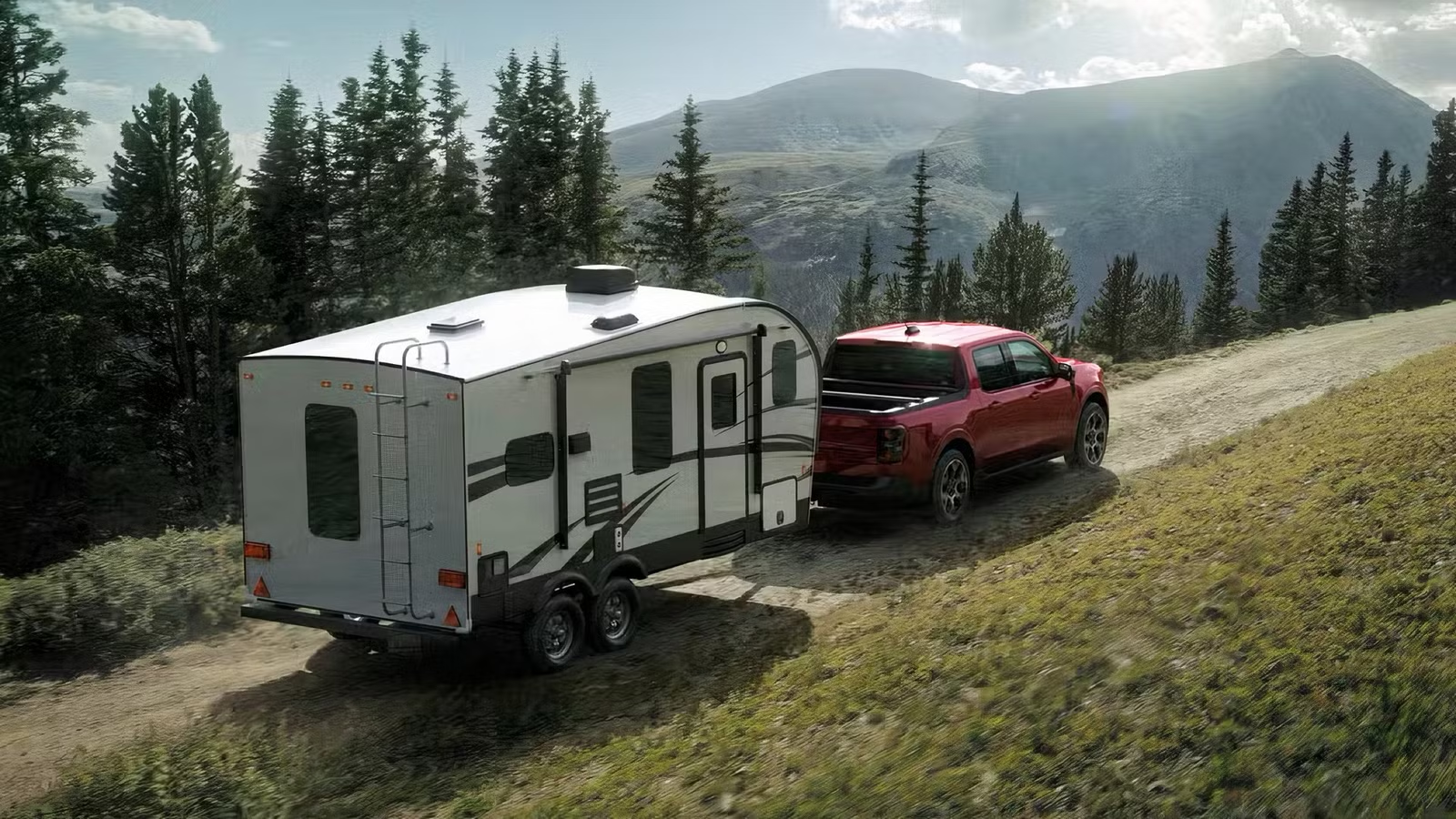
Ford Maverick Driving On A Dirt RoadFord
The Maverick’s large city advantage becomes less dramatic once highway driving enters the calculation. Assume you travel 15,000 miles annually, split evenly between city and highway driving. Calculating fuel use separately for each 7,500-mile portion provides a more accurate comparison than simply averaging the two EPA ratings. Under those conditions, the Maverick would use approximately 406 gallons per year. The Civic Sport would consume about 434 gallons, while the Civic LX would need roughly 418 gallons.
Based on average annual driving, the Maverick should cost about $1,600 in fuel per year, while the Honda Civic LX would cost about $1,700, and the Civic Sport adds another $100 to that total, making the Maverick the most affordable of the three to drive. Those are real savings, but they are not enough to justify choosing the wrong vehicle. At 15,000 miles annually on a 50/50 split, the Maverick costs about $100 less per year in fuel than the Civic LX. That gap feels reasonable — until you change the route.
The Civic Takes Back The Advantage On The Highway
Aerodynamics Still Favor The Lower, Lighter Sedan
Front 3/4 action shot of 2026 Honda Civic Touring driving on roadHonda
The Maverick may win in town, but its taller profile, greater frontal area, and pickup bed create more aerodynamic drag than the Civic’s lower sedan body. The Civic Sport’s 39-mpg highway rating beats the Maverick by four mpg. The LX stretches that advantage to eight mpg with its 41-mpg rating. For someone traveling long distances at steady speeds, either of the gas Civics can be the more economical choice.
The Maverick’s 35 mpg is still impressive for a vehicle with an open bed and available towing capability. It simply cannot match a sedan designed to slip through the air with less resistance.
More Highway Miles Can Reverse The Annual Fuel-Cost Result
Rear 3/4 action shot of 2026 Honda Civic Sedan driving into a tunnelHonda
EPA combined ratings are useful reference points, but they cannot describe every commute. A driver spending 70 or 80 percent of each week on the highway may see the Civic erase the Maverick’s city advantage. The LX is particularly difficult to dismiss. It gives up only two mpg to the Maverick on the combined cycle while delivering substantially better highway economy and carrying a lower starting price.
Real-world results can also change with speed, temperature, payload, tires, accessories, and driving behavior. Loading the Maverick’s bed, adding a tonneau cover, towing a trailer, or driving at higher interstate speeds can all affect consumption. Before choosing either vehicle, calculate fuel use from the route you actually drive rather than the most flattering number in the brochure.
The Maverick’s Efficiency Lead Comes With A $1,450-To-$3,450 Price Penalty
A Well-Equipped Maverick Costs More Than Either Gas Civic
Blue Ford Maverick Being LoadedFord
The Maverick’s efficiency win does not make it the cheaper vehicle. Ford lists the 2026 Maverick Hybrid XL from $28,145 and the XLT from $30,645 before destination and options. Honda starts the Civic LX at $24,695 and the Sport at $26,695. That places the base Maverick $1,450 above the better-equipped gas Civic Sport and $3,450 above the LX. Moving into a Maverick XLT expands those gaps, while a Lariat Hybrid can climb beyond both gas Civics and even above Honda’s hybrid Civic trims.
The claim that a well-equipped Maverick costs more than either gas Civic is therefore supported, but the “loaded Civic” needs context. The Sport is the better-equipped gas version, not the range-topping Civic. Honda reserves that position for the $32,395 Sport Touring Hybrid. You are paying extra for the Maverick’s bed, capability, and truck format, not merely its city fuel economy.
Adding AWD Pulls The Maverick Back Toward Sedan Parity
White Ford Maverick Parked Near A Night EventFord
The Maverick Hybrid is also available with AWD, which lowers its fuel efficiency to 40 city/34 highway mpg and 37 mpg combined. These mpg ratings remain strong, but AWD reduces the FWD’s city advantage by two mpg and its combined advantage by one.
Against the Civic LX, the AWD Maverick leads by eight mpg in the city but trails by seven mpg on the highway. The two vehicles are separated by only one mpg combined.
AWD makes sense if you need additional traction or intend to use the available 4K Tow Package, which can raise towing capacity to 4,000 pounds. It is not the configuration to choose solely for winning an mpg comparison.
Why Your Cargo Habits Matter More Than The MPG Gap
The Maverick Trades A Trunk For Genuine Pickup Utility
Rear Overhead Loaded Bed Shot Of A Red Ford MaverickFord
The Civic provides 14.8 cubic feet of secure, weather-protected trunk space. The Maverick counters with a 4.5-foot bed that can carry tall, dirty, or awkward items that would never fit in a sedan.
That flexibility comes with compromises. Cargo in an open bed is exposed to weather and theft unless you add a tonneau cover or cap. The Civic also provides more car-like road manners and a quieter, more polished environment for passengers.
Front 3/4 shot of 2026 Ford Maverick XL 2.5L Hybrid drivingFord
The Maverick offers a higher seating position, useful payload capacity, and available towing capability. Both vehicles seat five, but they solve different practical problems.
Choose The Maverick For The Commute You Have, Not The Headline
The Maverick Hybrid FWD makes its strongest case if most of your driving happens in town and you will regularly use the cargo bed. It delivers a genuine city-efficiency advantage without sacrificing the basic usefulness expected of a compact pickup.
The Civic LX is the more rational choice if you prioritize the lowest purchase price, highway economy, secure cargo storage, and sedan refinement. The Sport adds style and equipment, although its lower gas mileage creates the widest efficiency gap against the Maverick.
The Maverick has not made the Civic obsolete, nor has it defeated the sedan in every fuel-economy test. It has done something more interesting: it has made “trucks use too much gas” an increasingly incomplete reason to dismiss one.
Base Trim Engine
2.0-liter 4-Cylinder EcoBoost
Base Trim Transmission
8-Speed Automatic
Base Trim Drivetrain
Front-Wheel Drive
Base Trim Horsepower
250 hp
Base Trim Torque
277 lb-ft
Make
Ford
Model
Maverick
Segment
Compact Pickup Truck
Sources: Ford, Honda, EPA, Kelley Blue Book, Fueleconomy.gov













No Comments