How The Lexus ES And Genesis G90 Exploit One Weakness Every Luxury SUV Shares
9 minutes reading
Friday, 19 Jun 2026 22:00 0 99 autotech
The luxury sedan obituary has been rewritten so many times over the last decade that the ink has practically become permanent. Halfway through 2026, industry analysts paint a stark picture: data from firms like Persistence Market Research and Fortune Business Insights place the luxury SUV share at a dominant 60 to 62.25 percent of the global luxury vehicle market. The momentum is undeniable. Take the Genesis GV80, which recently surged past the 100,000-unit cumulative U.S. sales milestone on the back of a massive 20 percent year-over-year growth trajectory.
Faced with this high-riding tide, it is easy to view the traditional three-box sedan as a relic. But looking closely at the data and the engineering reveals that the sedan hasn’t surrendered; it has retreated to the one battlefield where physics still favors it. The luxury sedan is being recast from a volume play into a high-margin survivor category. Within this tier, vehicles like the Lexus ES and the Genesis G90 are quietly solidifying their positions. They aren’t trying to out-sell the crossover swarm. Instead, they are weaponizing fundamental engineering principles, such as aerodynamics, center of gravity, and NVH (noise, vibration, and harshness) isolation, to exploit weaknesses that every luxury SUV inherently shares.
The Physics Of Comfort: Low Center Of Gravity vs. Tall Cabin Roll
Front 3/4 shot of 2026 Toyota 4Runner parked off-roadToyota
Before the rise of SUVs, sedans were considered the elite platform for luxury. This is thanks in no small part to its low center of gravity compared to the high standard ride height of modern luxury SUVs. While a taller seating position provides a commanding view of the road, it introduces an immediate engineering penalty: a significantly higher center of gravity.
The “Anti-Roll Bar” Penalty In Luxury SUVs
Rear shot of a Nitro Yellow 2024 Chevrolet Trax Activ drivingChevrolet
When a vehicle changes lanes or enters a corner, its mass wants to continue moving forward, causing the body to lean. Because an SUV’s mass sits much higher off the pavement, engineers must combat substantial body roll. To keep a 5,000-pound luxury crossover flat through a turn, manufacturers are forced to employ stiffer springs, thicker anti-roll bars, or complex, energy-intensive active anti-roll systems.
While these technologies are marvels of modern engineering, they come with a compromise. A stiffer suspension setup inevitably transmits more high-frequency road imperfections into the cabin. When an SUV hits a single-sided bump, like a pothole on the right side of the lane, the stiff anti-roll bar transfers that force across the axle, causing a lateral head-toss motion for occupants. Over a long journey, this subtle, constant side-to-side movement induces occupant fatigue.
The Traditional Sedan Advantage
Front 3/4 action shot of 2026 Mercedes-Benz EQE 320+ driving on roadMercedes-Benz
A premium sedan inherently evades this problem. By placing the heavy mechanical components, including the engine, transmission, and battery packs, much closer to the asphalt, cars like the Lexus ES and Genesis G90 boast a naturally low center of gravity. Because the chassis has less desire to roll, engineers can tune the suspension bushings, dampers, and springs for pure, uncompromised compliance. A sedan can glide over undulating pavement and absorb sharp impacts without needing to counteract massive top-heavy leverage. The result is a secondary ride quality, the way a car settles after a bump, that feels distinctly serene and settled, maintaining a level of cabin equilibrium that high-riding utility vehicles struggle to replicate at a comparable price point.
The Japanese Sedan That Feels More Luxurious Than A Mercedes E-Class
This Lexus has left a lasting mark on the luxury world that continues to set the standard, even against elite German rivals.
Isolation And Quietness: Where SUV Aerodynamics Fall Short
Front 3/4 shot of 2026 Mercedes-Benz GLS in silver parkedMercedes-Benz
True luxury is increasingly defined by silence. In the automotive world, achieving a whisper-quiet interior is a battle against two primary forces: mechanical vibration and wind resistance. It is in this second arena where the SUV form factor faces permanent, structural disadvantages.
An SUV presents a massive frontal area to the oncoming air. Its tall grille, blunt nose, and expansive greenhouse create a larger pocket of displaced air, leading to a higher coefficient of drag. More importantly, the sheer surface area of a large SUV’s windshield and side glass acts as an acoustic amplifier for wind turbulence. The air tumbling over large side mirrors and around tall A-pillars generates high-frequency wind noise that requires hundreds of pounds of sound-deadening material, double-pane acoustic glass, and active noise cancellation to suppress.
A Classic Sedan Silhouette Is Naturally Slippery
Rear 3/4 shot of 2026 Genesis G80 in silver parkedGenesis
A low-slung hood gently guides air over a steeply raked windshield, allowing the slipstream to pass cleanly over the roofline and down the rear decklid. This aerodynamic efficiency does more than just save fuel; it dramatically lowers the ambient noise around the greenhouse before a single square inch of sound insulation is even applied.
Furthermore, the structural design of a traditional sedan isolates the cabin from rear suspension and tire noise. In an SUV, the passenger compartment and the cargo area share a single open volume; the rear wheel wells sit directly inside the cabin, allowing tire roar and road hum to echo through the interior. A sedan features a rigid structural bulkhead and a sealed trunk that separates the cabin from the rear axle, creating a natural acoustic barrier against the road surface below.
The Sports Sedan With Honda Reliability And Porsche-Like Precision
This undervalued South Korean premium sedan is a trustworthy performance gem.
Weaponizing The Gap: The Lexus ES And Genesis G90
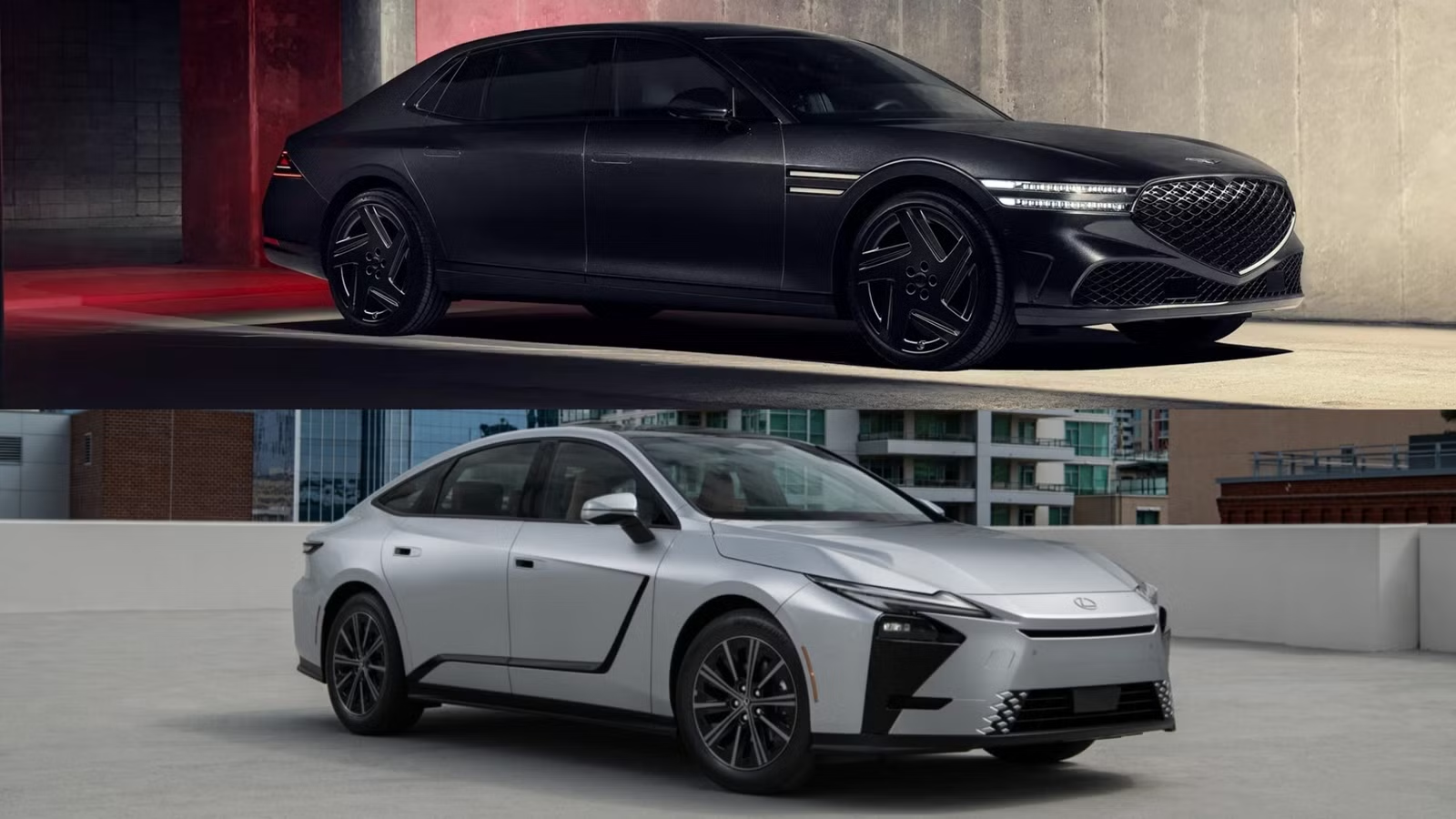
It is within this defensible niche of physics-driven refinement that the Japanese and Korean approaches to modern luxury excel. Rather than chasing the sports-sedan lap times of European rivals, Lexus and Genesis have focused heavily on absolute cabin isolation and creeping electrification.
The Lexus ES: The Benchmark Of Efficiency And Isolation
Base Trim Engine
2.5-liter inline-4 hybrid
Base Trim Transmission
e-CVT
Base Trim Drivetrain
Front-Wheel Drive
Base Trim Horsepower
244 HP
Base Trim Torque
175 lb.-ft. @ 5000 RPM
Make
Lexus
Model
ES
Segment
Midsize Luxury Sedan
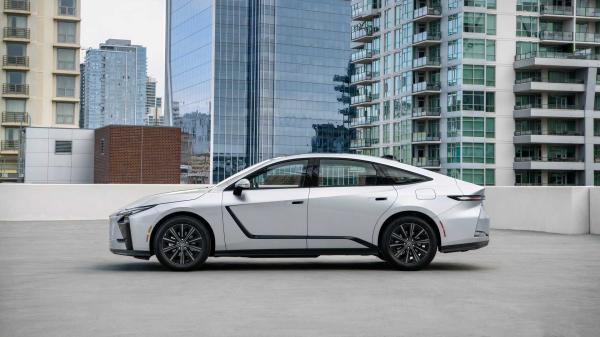
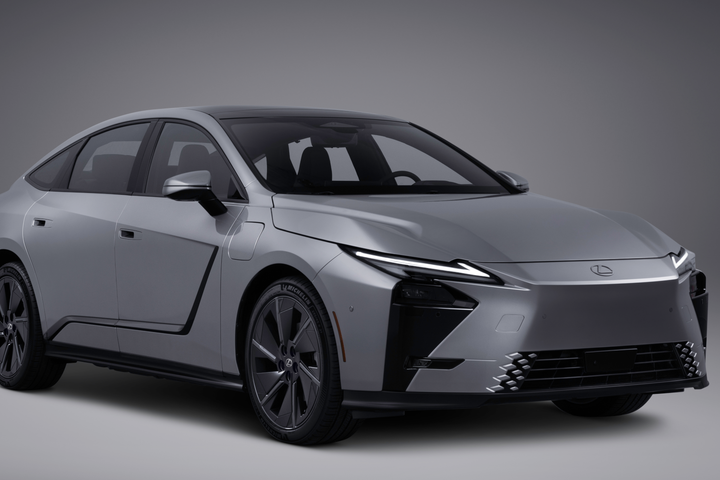
For decades, the Lexus ES has been the quintessential execution of the stress-free luxury car. In an era where SUVs dominate, market observers infer that the ES maintains a highly stable, loyal customer base precisely because it refuses to compromise on its core proposition.
By utilizing a highly aerodynamic profile and Toyota’s refined hybrid and fully electric architecture, the ES achieves a level of efficiency that a midsize luxury SUV cannot match without carrying a massive, heavy battery pack. The low-slung hybrid powertrain operates seamlessly in the background, while the cabin benefits from Lexus’s meticulous attention to NVH, utilizing fluid-filled engine mounts, extensive underbody fairings, and noise-reducing wheels that feature built-in Helmholtz resonators to cancel out tire cavity noise. It delivers an ultra-quiet, highly efficient premium experience that avoids the aerodynamic and weight penalties inherent to high-riding crossovers and SUVs.
The Genesis G90: The Executive Flagship Out-Gapping The SUV
Base Trim Engine
3.5L V-6 ICE
Base Trim Transmission
8-speed automatic
Base Trim Drivetrain
All-Wheel Drive
Base Trim Horsepower
375 HP @5800 RPM
Base Trim Torque
391 lb.-ft. @ 1300 RPM
Base Trim Fuel Economy (city/highway/combined)
18/26/21 MPG
Base Trim Battery Type
Lead acid battery
Make
Genesis
Model
G90
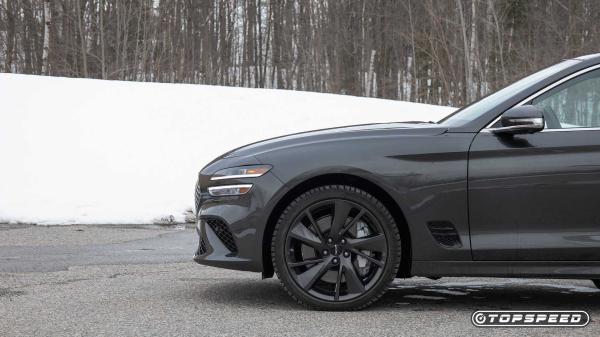
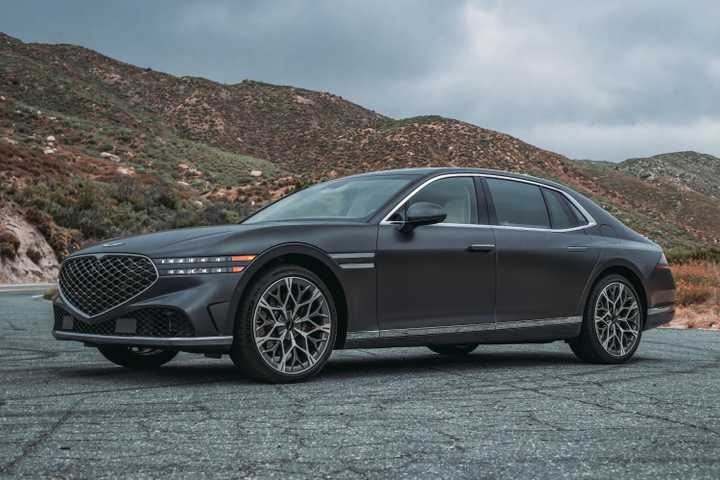
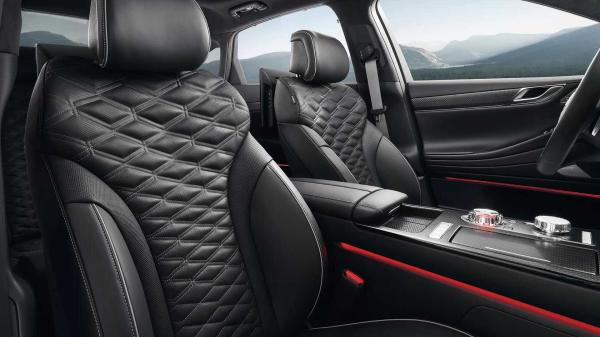
At the pinnacle of the survivor bracket sits the Genesis G90. While Genesis’s own SUVs, like the GV80, bring in the volume, the G90 serves as the brand’s technological and engineering halo. The G90 is consistently recognized by leading automotive authorities for its world-class cabin refinement, frequently comparing its interior serenity to flagships costing twice as much.
The G90 tackles the luxury equation with an uncompromising engineering layout. It utilizes a multi-chamber air suspension coupled with a forward-looking camera system that reads the road ahead, prepping the dampers for potholes before the wheels ever strike them. Because it sits low to the ground, this predictive suspension doesn’t have to constantly battle top-heavy body roll; instead, it focuses entirely on erasing the road surface. Combined with an incredibly stiff architecture, active noise cancellation, and an available mild-hybrid supercharged powertrain, the G90 delivers a level of vault-like isolation that simply cannot be achieved in a tall SUV without breaking the laws of physics, or physics breaking the budget.
Metric
Genesis G90 (Flagship Sedan)
Genesis GV80 (Luxury SUV)
Coefficient of Drag
0.27
0.33
Overall Width
76.0 in
77.8 in
Overall Height
58.7 in
67.5 in
Overall Length
207.7 in
194.7 in
Wheelbase
125.2 in
116.3 in
Ground Clearance / Ride Height
5.8 in
8.1 in
The Korean Luxury Sedan Built For Long-Term Ownership
This Korean luxury sedan combines supple luxury with athleticism, offering low ownership costs and industry-leading warranties.
The Electrified Future Favors The Low Profile
Rear 3/4 shot of 2026 Lexus ES 350h parkedLexus
As the luxury segment marches toward an electrified future, the engineering advantages of the sedan are poised to become even more pronounced. McKinsey’s luxury automotive insights highlight a sharp trajectory toward battery-electric vehicles dominating the high-end market over the next decade. In the EV era, efficiency is no longer just about fuel economy; it is the gatekeeper of driving range, charging speed, and vehicle weight.
Because a battery-electric vehicle’s range is heavily dictated by aerodynamic drag at highway speeds, a tall luxury electric SUV requires a massive, incredibly heavy battery pack to achieve a competitive driving range. This creates a vicious engineering cycle: a heavier battery requires a beefier suspension, larger brakes, and structurally reinforced platforms, pushing vehicle weights well past three tons. An electrified sedan, however, enters the equation with a massive head start. Its clean aerodynamics and smaller frontal area mean it requires less energy to pierce the air at 70 mph. Consequently, it can achieve the same driving range as a massive SUV while utilizing a smaller, lighter, and more compact battery pack.
Rear 3/4 shot of 2026 Genesis G90 e-SC Prestige Black parkedGenesis
By pairing creeping electrification with an inherently superior low-center-of-gravity form factor, the modern luxury sedan is securing its future. The sales charts may tell a story of SUV dominance, but models like the Lexus ES and Genesis G90 prove that the traditional sedan isn’t facing an entry into oblivion. It is simply operating in a tier where engineering truth triumphs over market trends.
Sources: Persistence Market Research, Fortune Business Insights, Lexus, Genesis, Mckinsey & Company













No Comments