
How A 35-Year-Old Roadster Formula Is Quietly Crushing The GR86 And BRZ

With every passing year, there is an expectation in the sports car market that the newest thing should always be better. What does better mean? Usually, it means more power, technology, and practicality. However, the cars built around that exact assumption are losing ground in the current market. The fact is that engineering is not magic—there always must be some compromise.

Meanwhile, a sports car that quietly ignores the status quo is gaining momentum. Its rivals continue to widen their appeal to capture a larger audience, but dilute their authenticity in the process. This two-seat convertible, however, has spent decades refusing to evolve, choosing instead to stay true to its original formula. The interesting detail is not just its longevity, but that its demand is accelerating while rivals engineered to replace it are stalling out.
Every Sports Car Has Been Forced To Evolve—Except One
The current enthusiast market is constantly shifting to follow trends. Yet, at a certain point, even the rawest sports cars following this strategy will lose their edge by diluting what originally made them special.
The Complicated Reality Of The Modern Sports Car


Affordable sports coupes are a rare breed nowadays, but the few that remain have only gotten more complex and expensive over time. The dream of a one-size-fits-all sports car is more present than ever before, with automakers compromising performance for the sake of livability. Enthusiasts also demand more power even when the added output would do little to improve the car’s everyday driving experience.

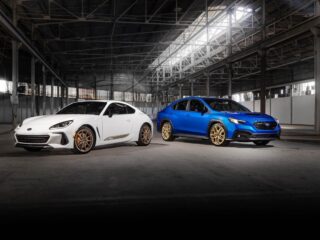
The Toyota GR86 and Subaru BRZ are the living proof of this evolution. Both have grown more refined and daily-drivable, with the focus shifting toward being all-around sports cars rather than raw, analog track toys. Indeed, the Toyobaru twins have never felt better than they do now, but they lost a bit of their visceral nature as a result.
This Roadster Never Abandoned Its Original Ideals

So how could a sports car maintain long-term success while not submitting to the constantly increasing demands of consumers? Its core philosophy needs to be clear and distinguishable. One particular sports car in this conversation has thrived despite being essentially unchanged across four generations. Its success has come from trimming the fat: keeping curb weight as low as possible so that the chassis does the talking instead of flashy numbers on a spec sheet. The open-top driving experience became an integral part of the car, as did the standard manual transmission. The amazing part is that the basic formula is still identical to the original version that debuted decades ago: two seats, a folding roof, and a chassis that perfectly communicates its intentions.

5 Cars From Fast & Furious You Can Get For Dirt Cheap
Want a Fast & Furious car without the Hollywood price tag? These 5 iconic rides are shockingly affordable on today’s used market
Current Sales Figures Suggest Buyers Are Rewarding Consistency

If you haven’t figured it out yet, the vehicle in question is the Mazda MX-5 Miata. This Japanese roadster has stayed true to its roots, and the sales data backs up the idea that buyers are rewarding its refusal to change.
Miata Demand Is Growing Rather Than Fading

The Miata sold 8,727 units in the U.S. in 2025, a 16.5 percent jump year-over-year. Notably, that momentum has carried into 2026, with Mazda selling 3,911 additional units through May, up from 3,528 units over the same five-month stretch in 2025. In May of this year alone, 1,053 units were sold.

Global MX-5 production climbed 28 percent in the first two months of 2026 when compared to the same period the previous year, which means Mazda has recognized and met continued demand rather than just clearing old inventory. A big component of this ramp-up is that Mazda’s overall U.S. sales rose 35 percent in May 2026 versus the prior year, demonstrating the brand’s momentum in 2026.
The GR86 And BRZ Are Discovering The Limits Of The Sports-Coupe Formula

Let’s take a quick look at the bigger picture in the entry-level sports car market. The GR86 still outsold the Miata on a full-year basis in 2025, with 9,940 units compared to 8,727 units. However, we have to consider that the GR86 figure already reflects a 13 percent year-over-year decline. The decline continued into 2026, with GR86 sales dropping to 2,046 units through March, down from 2,777 units over the same period in 2025.

The BRZ tells a similar story with year-to-date sales through May 2026 dropping to 1,341 units from 1,459 units a year earlier. Both of the Toyobaru twins are losing ground while the Miata is gaining traction. The problem is a philosophical one: how do you create both an affordable enthusiast toy and a genuinely practical daily driver?

The Premium Japanese Sport Compact That Just Out-Sipped The Miata And GR86
This fastback sedan returns the best fuel consumption in the compact sports segment.
The Real Competition Isn’t Another Sports Car

While head-to-head comparisons of segment rivals are all well and good, focusing on this exclusively makes you lose sight of the bigger picture. The more interesting story is about who is buying these cars, and how little those buyers actually have in common.
Miata Buyers Are Fundamentally Not The Same As GR86 Buyers

On paper, the Toyobaru twins and the Miata seem like direct rivals that are undoubtedly going to be cross-shopped. Yet, in reality, the owner demographics between the two two-door sports cars couldn’t be more different. The Miata skews toward an older buyer, typically over 40, with a household income that starts in the six-figure range. For most new Miata shoppers, the Miata is not going to be their sole vehicle—it’s a second or third car, bought purely for the experience. No matter how you look at it, the Miata is something like a toy—unnecessary, but a lot of fun to play with.
The GR86 and BRZ instead occupy the opposite end of that spectrum. These sports coupes are built to be the do-it-all entry-level sports car for a younger buyer who wants a fun car that can also serve as a daily driver. The Miata is largely an emotional purchase, with no prerequisite for practicality, while the GR86 has to earn its keep as someone’s only car. These are two fundamentally different ideologies, despite the two sports cars having seemingly identical ideals—and it is the sales data that makes this distinction crystal clear.
Why New Alternatives Like The Prelude Haven’t Replaced The Miata

When the Honda Prelude initially stepped onto the scene earlier this year, it looked like it could challenge the status quo of the sports car market. The hybrid coupe sold 1,470 units through May 2026 and only 318 units in May alone. Those figures put it somewhere around the BRZ’s year-to-date total, signifying the demand simply isn’t there despite being an all-new model. The Prelude, at best, provides shoppers with a new alternative, but to say it could replace a segment staple like the Miata would be an overstatement.

The Prelude is a CVT-only, FWD hybrid with a coupe body, built for efficiency and comfort rather than all-out driving pleasure. The Miata and Toyobaru twins are manual-first, RWD sports cars built around the sensation of tactile feedback. The only real overlap between the Prelude and the Miata is the demographic profile: Prelude owners lean toward the same older, comfort-minded shopper the Miata attracts, but for different reasons. If anything, the Prelude’s lukewarm introduction is a sign that the roadster formula is alive and well, and that diluting a strong concept to appease a wider audience doesn’t necessarily result in sales success.

The Most Sensible Performance Car You Can Buy Today
Big space, big luxury, and even bigger power make this pricey super sedan a sensible daily driver.
The Miata Refuses To Chase Trends

The Miata didn’t become the quintessential Japanese roadster by trying to one-up or undercut its rivals. Its staying power comes directly from the fact that it never tried to be something it wasn’t, even decades after its original blueprint was proven a success.
Most Sports Cars Lose Their Originality Over Time

The BMW 3 Series was once the go-to sports sedan for a perfect blend of driving enjoyment and four-door luxury. In many ways, it still is. However, the current generation 3 Series is so watered down compared to previous generations that it almost doesn’t even feel like the same car anymore. BMW succumbed to market pressure to appeal to a larger audience and, as a result, bloated its cornerstone product with supposed innovations that only diluted its original idea further. The 3 Series may be faster, more capable, and more comfortable than ever before, but it lost a large part of its soul along the way.
The Miata Wins Because It Has Stayed True To Its Core Values

The common assumption is that an automaker needs to be flexible and dynamic to stay relevant in the trend-driven automotive market. If you don’t adapt, you die. However, the Miata’s 2026 sales figures suggest the exact opposite. Mazda accepted that this particular vehicle had a natural ceiling, and as long as it stays within its confines, it can be incrementally improved. That’s why the Miata has never featured a high-horsepower configuration and likely never will, as long as it’s around. A change like adding power would fundamentally alter the vehicle’s core character. Sometimes, restraint is what gets rewarded, not innovating for the sake of innovation.

The practical takeaway is that if your goal is a one-size-fits-all sports car, the Toyobaru twins remain the best option on the market. If your goal is the purest, most analog driving experience you can buy without spending an arm and a leg, the Miata isn’t just a sensible choice—it’s the clear favorite.
Sources: Mazda, Toyota, Subaru, Honda

Related posts



Latest Post


No Comments