
The Adventure Bike That Makes National Parks Easier To Explore
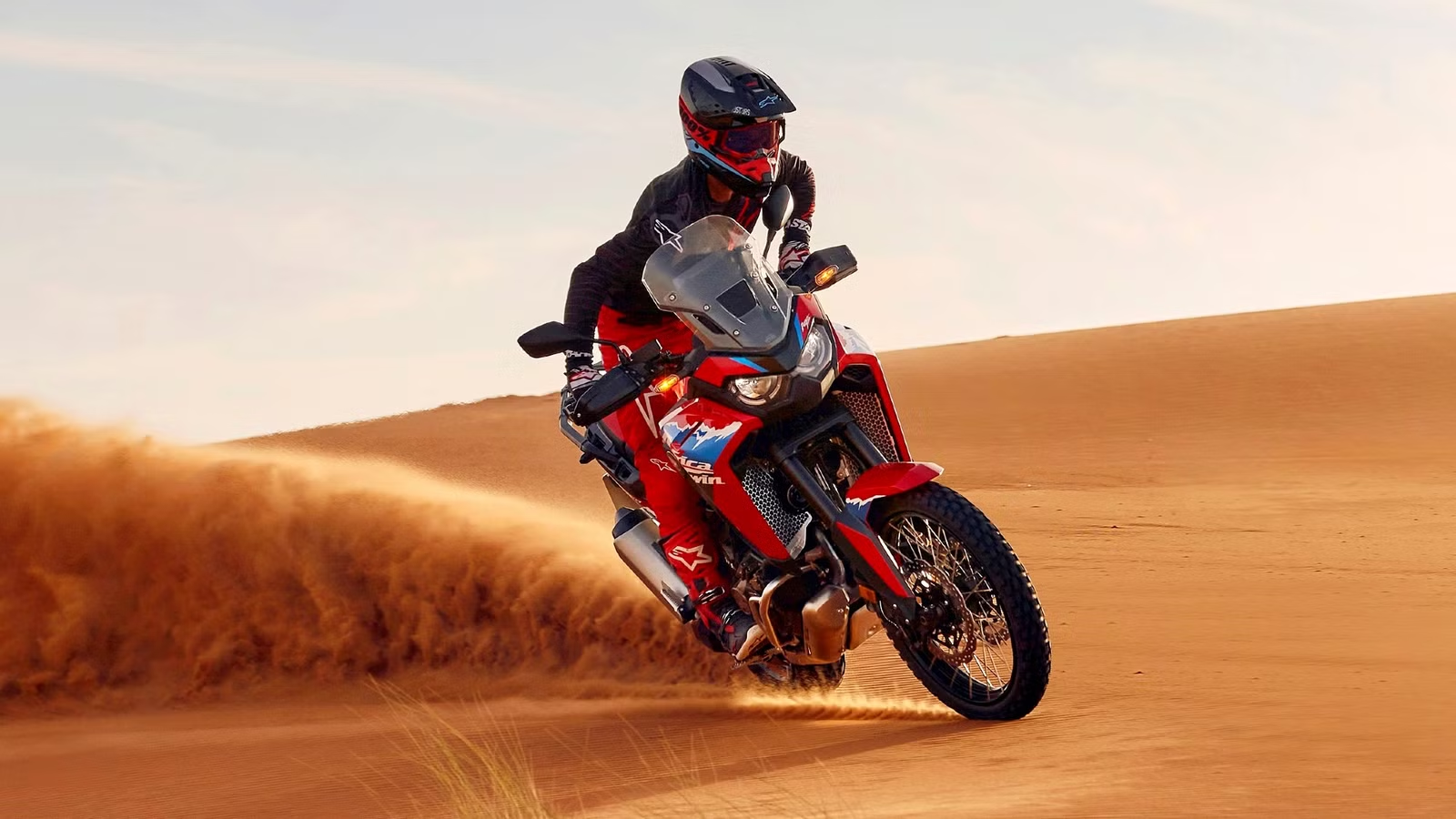
Picture the ride that sells the entire fantasy. A two-lane road unspooling through a national park at golden hour, canyon walls on one side, a river working its way through the valley on the other, an empty overlook waiting a few miles up. That is the postcard. Then there is the part the postcard leaves out. Parks funnel every visitor onto the same handful of scenic loops, which in peak season means crawl, stop, crawl again, usually on a grade, often in the heat, frequently behind a motorhome doing fifteen under. On a big adventure bike, every one of those stops turns into a small piece of work.
Why A Large ADV Can Become Painful After A While

Clutch in, hold the friction zone, balance a few hundred pounds of machine on one boot, then ease back out without stalling in front of a line of impatient SUVs. Do that a hundred times before lunch and the romance starts to curdle. At one point, then, the bike is the obstacle for a lot of riders, not the ticket in. The prospect of wrestling a tall, heavy machine through exactly the low-speed, stop-and-go conditions a national park specializes in is enough to keep them in a car.

What do you do then? Give up on your national park touring hopes? Well, no. You just need to pick a specialized tool that promises to make your life easier than ever and solve most of the above-mentioned problems. One adventure bike promises to do just that in 2026, and unsurprisingly, it hails from the world’s most practical bikemaker: Honda.
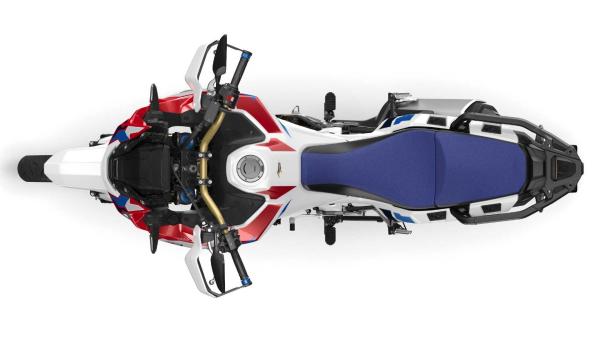

The Japanese Adventure Bike That Quietly Outperformed Its Rivals
Unmatched features and unbeatable value help this Honda beat its rivals effortlessly and even punch above its weight
The Honda Africa Twin DCT Makes National Park Trips Easier Than Ever

That bike is the Honda Africa Twin, and the version that matters here is the one fitted with Honda’s Dual Clutch Transmission, badged simply as DCT. The Africa Twin name has carried real desert-racing weight since the 1980s, and the current 1,084cc machine is one of the bikes the rest of the segment gets measured against. But the DCT is what turns it from another capable big adventure bike into the easiest way into this kind of riding.
A Genuine Heavyweight, Minus Two Controls

Make no mistake about what this is. The Africa Twin runs a 1,084cc parallel twin making 101 hp at 7,500 rpm and roughly 83 lb-ft of torque at 5,500 rpm, with a 21-inch front wheel, 9.8 inches of ground clearance, and the kind of long-travel suspension that wants to be pointed at a fire road. This is not a soft, road-only crossover wearing knobby-look tires. It is a proper adventure bike with the credibility to back the styling. What it does not have, in DCT form, is a clutch lever or a shift pedal. That is the whole trick. Everything else stays exactly as serious as you want it to be.
What DCT Actually Does

Dual Clutch Transmission is not a slushy automatic borrowed from a rental car. It is a real six-speed gearbox with two clutches that swap gears for you, faster and smoother than most riders manage on their best day. Leave it in full automatic, and it reads your throttle, speed, and lean to pick gears on its own. Want control back on a technical climb? Tap the paddle shifters and run it like a manual without ever touching a clutch. Honda has been refining this system for years, and the latest low-speed logic is noticeably smoother pulling away and creeping along.
Why Deleting The Clutch Changes Park Riding

National park riding is not a track day. It is a long string of low-speed moments. Hairpin switchbacks climbing out of a valley, a creeping line of cars at an entrance gate, a gravel parking lot at a trailhead with loose stones under your boots. These are exactly the situations that punish a tired clutch hand and an unsure throttle, and exactly where the automatic gearshift setup quietly takes over.
There is no stalling at the gate. No clumsy friction-zone balancing act on a steep, off-camber switchback. No fatigue building in your left hand across a six-hour day. The bike simply creeps, holds, and pulls away cleanly while you keep your attention on the road and the view instead of your feet and hands. What this really means is that the most stressful parts of the ride become the parts you stop thinking about.
Weight is the honest counterpoint, so let’s deal with it. The standard Africa Twin DCT comes in around 535 pounds with a full tank, and the DCT hardware adds about 24 pounds over the manual. That is not light. But Honda built the seat deliberately narrow so you can actually reach the ground; the standard 34.3-inch seat drops to 33.5 inches in its low position, and the heavy components sit low and close to the center of gravity. The result is a bike that carries its mass better than the number suggests, especially once you take the clutch juggling out of every stop.
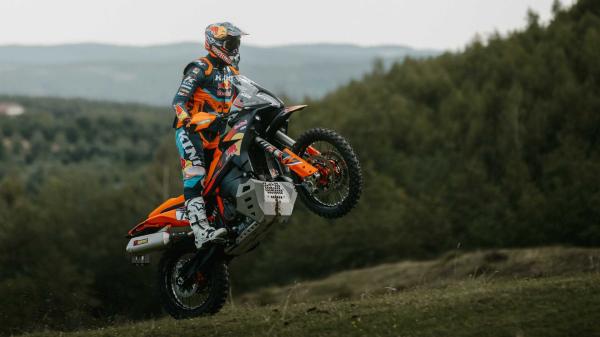
The Adventure Bike Built For Riders Who Push Limits
The quickest way to live out your rally raid dreams.
Built To Disappear Under You For Three Days

A bike that makes parks easier has to make the miles between them easier too, and this is where the Africa Twin stops feeling like an off-roader and starts feeling like a tourer. Cruise control is standard across the range, which matters more than it sounds on a long, straight stretch of park highway. A 6.5-inch TFT touchscreen runs the show, with Apple CarPlay and Android Auto built in, so your navigation and music live right in front of you without a phone clamped to the bars.
Range And Electronics Are Impressive, Too

The standard bike carries 5.0 gallons of fuel, enough to cover the long, gas-station-free stretches that define a lot of park country. Underneath the comfort kit sits a six-axis IMU feeding cornering ABS, traction control, wheelie control, and rear-lift mitigation, plus selectable ride modes. None of it shouts at you, and you can dial most of it back when the road turns to dirt. It is there as a safety net for the moment a corner tightens unexpectedly or a patch of gravel appears mid-bend, which in a national park it eventually will.
The Africa Twin Excels In The Tough Terrain, Too

*Adventure Sports shown
Be honest about how national park exploring actually plays out. The overwhelming majority of it happens on paved scenic loops and the highways that connect one park to the next. Here the Africa Twin is flatly excellent. The 101 hp twin has easy, torque-rich punch for overtaking that motorhome, the DCT should make long-haul cruising effortless, and the upright seating position keeps you fresh for the kind of all-day, big-mileage riding these trips demand.
The good stuff often starts where the asphalt stops. This is where the standard model’s 21-inch front wheel, generous ground clearance, and long suspension earn their keep, and where the off-road-focused setup pulls ahead of the road-biased Adventure Sports version. Just keep it honest. This is a 535-pound bike, not a dirt bike, and tight, technical, deep-sand single-track will remind you of that quickly. For the graded gravel and fire roads that make up the realistic version of park exploring, though, it has all the capability you actually need.
This Might Be The Only ADV You’ll Ever Need

So is the Honda Africa Twin DCT the adventure bike that makes national parks easier to explore? For most riders, yes, and the reasoning is refreshingly simple. It does not win by being the lightest or the cheapest, because it is neither. At roughly $15,600 to start and around 535 pounds, there are smaller, simpler, more affordable ways into adventure riding, and the purists will tell you to learn a clutch and buy something lighter.
But that misses the point of this specific bike. The Africa Twin DCT removes the two biggest sources of friction between you and the scenery, which no other bike does in this price ballpark. At the same time, Honda also sells an Adventure Sports variant with more focus on the touring side of things. That is thanks to electronic suspension, an even bigger fuel tank, and a 19-inch front wheel.
Source: Honda Powersports

Related posts




Latest Post


No Comments