
Kia’s EV3 GT Could Be The Sporty Affordable Electric SUV That Changes The Entry-Level EV Conversation
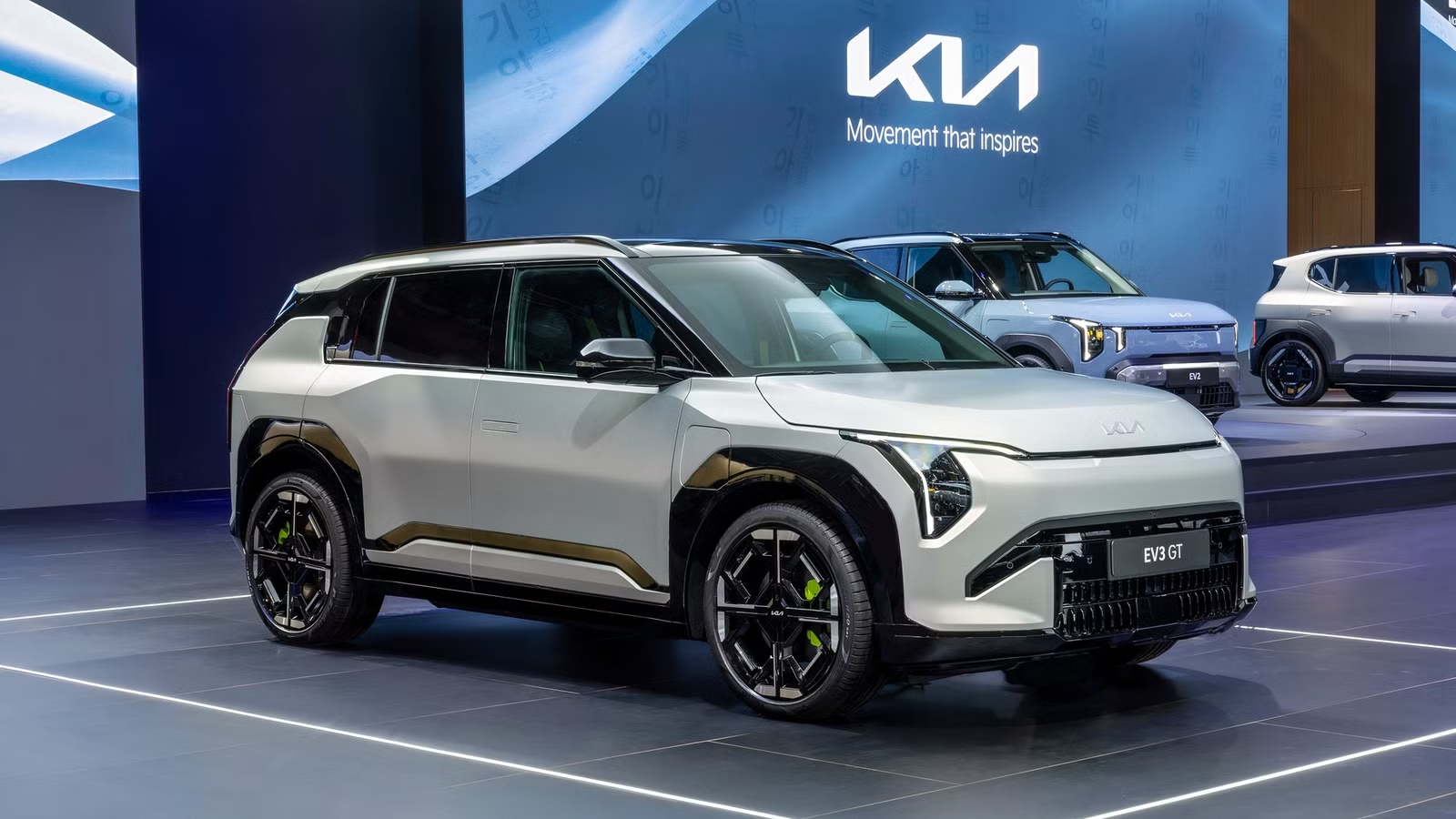
Kia has confirmed it is launching a GT version of the EV3, its compact electric SUV, marking the brand’s clearest move yet into the affordable performance-EV segment. The announcement, made on July 23, 2026, positions the EV3 GT as a direct answer to a corner of the market that has remained surprisingly thin — sporty, attainably priced electric crossovers with genuine performance intent.

For buyers who want something beyond a standard EV but can’t stretch to the Hyundai Ioniq 5 N’s price tier, the EV3 GT arrives at an interesting moment. Whether the GT badge signals a meaningfully tuned machine or a trim-level upgrade dressed in sportier clothes is the question worth asking — and the answer will determine how seriously rivals need to take it.
What the GT Badge Means for the EV3
Kia’s GT designation has carried real weight before. The EV6 GT — the brand’s first GT-badged electric vehicle — arrived with a dual-motor setup producing 576 horsepower and a 0-60 time under 3.5 seconds, backed by a purpose-tuned suspension, larger brakes, and dedicated cooling for its battery and motors. That car wasn’t a cosmetic exercise.

The EV3 GT carries that lineage into a smaller, more accessible package. While full specifications have not been detailed in the available announcement materials, the GT designation within Kia’s EV lineup has consistently implied hardware changes beyond aesthetics — upgraded powertrains, recalibrated chassis tuning, and thermal management suited to sustained performance driving. The EV3 platform itself is built on Kia’s dedicated EV architecture, which provides the structural foundation to support meaningful performance variants rather than badge-only upgrades.
How It Lines Up Against the Competition

The affordable performance-EV crossover space is less crowded than it might appear. Volkswagen’s ID.4 GTX offers dual-motor all-wheel drive and around 295 horsepower in a practical compact SUV package, but its performance credentials are modest — it’s more composed than quick. The Hyundai Ioniq 5 N-Line, meanwhile, is a visual and handling package rather than a full performance variant; buyers wanting genuine Ioniq 5 performance have to step up to the full N model, which starts above $60,000 and produces 641 horsepower — a significant jump in both price and intensity.
That gap between the ID.4 GTX’s mild performance positioning and the Ioniq 5 N’s supercar-adjacent output is exactly where the EV3 GT appears to be aiming. A compact EV crossover with genuine GT-spec hardware, priced below the full-N tier, would address a real hole in the market. Volkswagen’s recently revealed ID.Cross also targets the affordable EV crossover space, but without a performance variant announced, the EV3 GT faces limited direct competition at launch.
What This Move Says About Kia’s EV Ambitions

Kia extending the GT nameplate to the EV3 is a deliberate signal. The brand is not content to let performance EVs remain the exclusive territory of flagship models and luxury nameplates. By bringing GT-level intent to a compact, mainstream-priced platform, Kia is testing whether entry-level EV buyers will pay a modest premium for verifiable performance credentials over a purely cosmetic sport trim.
If the EV3 GT delivers on the hardware side — tuned dampers, stronger braking, a powertrain that earns its acceleration claims — it could shift expectations across the segment. Buyers cross-shopping compact electric SUVs would have a clearer reason to choose performance over range optimization, and rivals would face pressure to respond with something more substantive than a GTX badge or an N-Line bodykit. Kia has shown with the EV6 GT that it takes the GT designation seriously. The EV3 GT suggests that philosophy is moving down the lineup.
Full specifications, pricing, and availability markets for the EV3 GT are expected to follow as Kia rolls out the launch details. What’s already clear is the intent: a performance-focused compact EV at a price point that doesn’t require a supercar budget. That alone makes it worth watching.

Related posts

Latest Post


No Comments