
Honda Will Now Sell You The Legendary Cars It Kept Hidden Away, If You Can Afford It
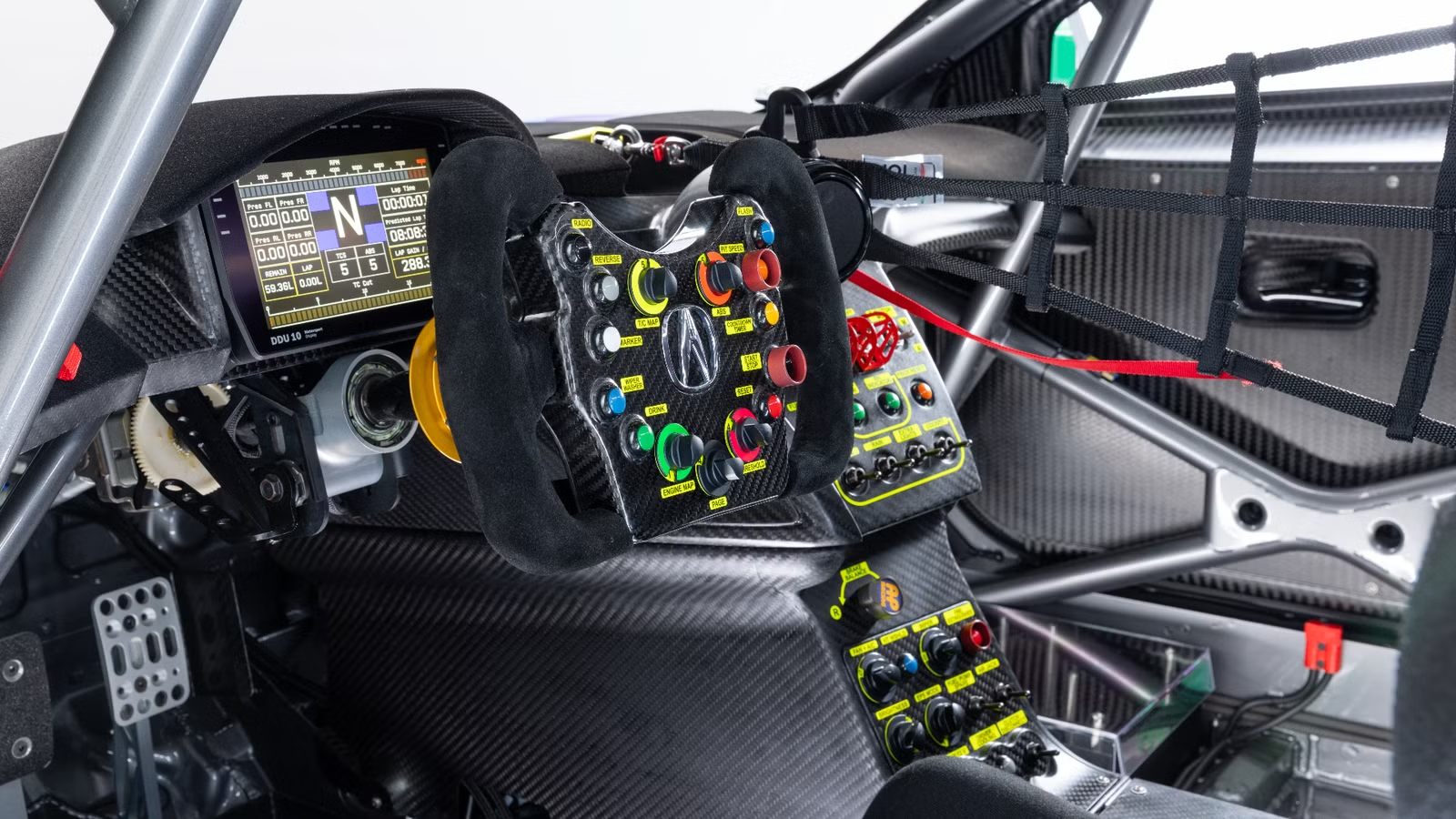
Honda fans can already fill a dream garage with some incredible machinery. An original NSX, an S2000, a screaming Integra Type R, and perhaps a Civic Type R. But, now, Honda has just opened the door to an entirely different level of obsession.

Forget buying another road car with a famous racing livery and pretending it conquered Sebring. Honda Racing Corporation USA is preparing to sell the genuine article. Its new Heritage Racing Program will restore historic Honda and Acura competition machines, place them in private hands, and even help their new owners take them racing again. The first offering is not some forgotten support car, either. It’s a V8-powered prototype that won one of America’s greatest endurance races on its very first attempt.
Honda Is Selling A Sebring-Winning Acura Race Car
The first machine offered through the HRC Heritage Racing Program is the No. 26 XM Satellite Radio Andretti Green Racing Acura ARX-01a. That mouthful of a name belongs to the first purpose-built Acura endurance racer and the first complete car and engine designed and developed by HRC in the United States.

It made one hell of an entrance. During its competition debut at the 2007 12 Hours of Sebring, the V8-powered prototype won the LMP2 class with Dario Franchitti, Bryan Herta, and Tony Kanaan sharing driving duties.
This was not a race car that needed several seasons to work through some embarrassing teething problems. It showed up, survived 12 hours of punishment, and immediately took home a trophy.

Franchitti remembers the ARX-01a as a machine that made its driver feel like a hero. According to the four-time IndyCar champion, it encouraged drivers to push harder and simply kept giving them more. That is considerably more exciting than telling people your collectible Honda has never left its climate-controlled garage.
HRC will display the Acura at The Quail during Monterey Car Week on August 14. Honda has not revealed its price, presumably because anyone seriously considering a Sebring-winning prototype understands that “How much?” may be a dangerous opening question.
HRC Will Restore It And Help You Go Racing

This program involves considerably more than wiping off the dust, changing the oil, and handing the buyer an enormous folder of waivers. HRC plans to completely tear down each historic machine and rebuild it using new or reconditioned components.
The restoration team will have access to original homologation documents, technical archives, period photographs, engineering notes, and knowledge from people involved in developing the cars. Engines will be rebuilt at HRC US headquarters in Santa Clarita, California, while outdated electronics will be modernized and certain materials upgraded for safety.
HRC says the goal is to preserve the original design and driving experience while making these temperamental old warriors safer and more manageable for their new owners. Every completed car will also undergo track testing before delivery.
Better still, HRC engineers can provide trackside support and help owners enter historic racing events. That means the buyer will not be abandoned in a paddock with a mysterious warning light, an angry V8, and an instruction manual written for a professional racing team.
HRC has already restored four Acura ARX-05 DPi racers and the Strakka Racing ARX-01c that won its class at Le Mans in 2010. It also helped Zak Brown return Gil de Ferran’s Honda-powered 2001 Reynard CART car to running condition.
Honda Fans Can Even Buy The Winningest NSX GT3

The Heritage Racing Program is currently concentrating on endurance racers, but HRC plans to offer historic Honda-powered Indy cars in the future. That could eventually place some seriously significant open-wheel machinery within reach of private collectors.
Another restored car already available is Acura NSX GT3 Chassis No. 5, wearing its spectacular Lady Liberty livery. Honda describes it as the winningest NSX GT3 ever, and the broader NSX GT3 program accumulated 38 class victories, two manufacturers’ championships, five drivers’ titles, and four teams’ championships between 2017 and 2023. More than 20 historic Honda and Acura racing machines will appear across Monterey Car Week, representing Formula One, IndyCar, IMSA, SCCA, Baja, MotoGP, Dakar, and the Isle of Man TT. Apparently, Honda decided one motorsport discipline was never enough.
Fans without race-car money will still have options. HRC is selling components from the Honda V10 used in Gerhard Berger’s McLaren MP4/5B at the 1990 German Grand Prix, including pistons, connecting rods, camshafts, valves, and a cam cover. Each comes inside a display case with a certificate of authenticity. There will even be jewelry made from smaller engine components and detailed scale models of Honda’s 1965 Mexican Grand Prix-winning RA272.
The memorabilia is cool, but the real headline is that Honda no longer wants all its greatest competition machines sitting silently in museums or warehouses. These cars were built to scream down straights, attack corners, and frighten anyone brave enough to climb aboard.

Related posts
Latest Post


No Comments