
Porsche Models That Quietly Hold Their Value For Decades

Porsche has been experiencing increased popularity across both American and global markets. This growth has been exponential since the COVID-19 pandemic, but profits have been down in recent months. Regardless, global deliveries consistently break records and North American sales serve as a primary pillar of the brand’s financial strength. Central to this success is the 2026 Porsche 911. The German marque’s premier sports car benefits from a global demand that continues to outpace production capacity year after year.

As allocation slots become harder to secure, showroom prices continue to escalate. This means that the overall supply of premium, analog sports cars shrinks, and secondary market values climb to unprecedented heights. Consequently, many buyers are recognizing that strategically investing in a classic or low-volume, modern-classic Porsche can be a far more viable financial decision, transforming what looks like an emotional splurge into a rock-solid store of wealth.
The models on this list have been extensively researched with all information verified to the best of our ability. Models are ranked from the lowest estimated value to the highest estimated value.
1988 Porsche 944 Turbo S
Estimated Value: $55,000

944 prices are steadily rising in the U.S., as more enthusiasts want to get into the Porsche sports car ownership experience at an affordable price. However, the low-volume 944 Turbo S is a true collector anomaly. This is specifically true for 1988 examples, before its components were integrated into standard Turbo production. Its original MSRP in 1988 was $48,000. Hagerty condition-value data reflects an aggressive upward swing for verified Turbo S examples. Good-condition examples currently sell for $45,000 to $55,000. This is anchored by recent Bring a Trailer sales, such as a Silver Rose edition that sold for $45,500, verifying its credentials against cheaper standard 944 variants.

Under the hood sits a 2.5-liter turbocharged inline-four cylinder engine matched to a reinforced five-speed manual transaxle. The Turbo S upgraded the base Turbo’s output to 247 horsepower, resulting in a 0 to 60 MPH time of 5.5 seconds and raising the top speed to 162 MPH. Maintenance is manageable but requires vigilance regarding the timing belt and water pump replacements every few years. You can expect an annual upkeep baseline between $1,500 and $2,500.
2011-2012 Porsche Boxster Spyder (987 Generation)
Estimated Value: $80,000

The 987 Boxster Spyder was produced in limited numbers over two years. This is a specialized variant that focuses on extreme weight reduction and mechanical purity. The original MSRP for the final 2012 model year was $61,200. Standard Boxsters have been subject to significant depreciation, but the 987 Spyder’s smaller production run results in exceptional long-term retention. Hagerty and Bring a Trailer transaction data show these cars regularly selling between $65,000 and $80,000, meaning they have effectively appreciated past their original retail prices over the last decade and a half.

The 987 Spyder relies on a mid-mounted 3.4-liter naturally aspirated flat-six engine delivering 320 hp. Buyers could choose between a six-speed manual or a seven-speed PDK dual-clutch transmission. It sprints from 0 to 60 MPH in 4.6 seconds and maxes out at 166 MPH. Because it lacks a complex motorized convertible top mechanism, it avoids expensive roof failures. Annual maintenance is highly affordable for an exotic variant, averaging $1,200 to $1,800.
2015-2016 Porsche Cayman GT4 (981 Generation)
Estimated Value: $115,000

Built between 2015 and 2016, the 981 Cayman GT4 introduced a genuine GT-department product in a mid-engine package. The original MSRP for the final 2016 model year was a relatively accessible $84,600. Modern market signals reflect incredibly strong value retention. Well-kept examples currently trade between $95,000 and $115,000 on Bring a Trailer, meaning most original owners have driven the car for years practically for free, bypassing the steep drop that typical mid-engine luxury sports cars suffer.

The 981 GT4 features a mid-mounted, naturally aspirated 3.8-liter flat-six sourced from the 911 Carrera S, paired strictly with a six-speed manual transmission. It delivers 385 hp to the rear wheels, achieves a 0-60 mph time of 4.1 seconds, and boasts a top speed of 183 mph. Because it shares heavily with standard production components rather than bespoke racing blocks, annual maintenance estimates are highly palatable, generally running between $1,200 and $2,000 for standard fluid flush intervals, filters, and brake pad wear checks.
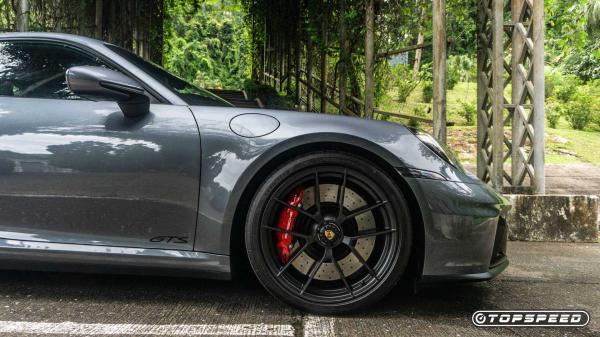
5 Porsche Models That Hold Their Value Exceptionally Well
These five Porsche models defy typical depreciation patterns through their combination of performance, desirability, and enduring enthusiast appeal.
2020-2023 Porsche 718 Spyder
Estimated Value: $135,000

The Porsche 718 Spyder was sold between 2020 and 2023, making it a more recent addition to the Porsche collector’s catalog. Its final-model-year MSRP in 2023 was $103,400 before options. Due to its youth, it does not possess a multi-decade track record. However, it shows an immediate, defensive appreciation trajectory. Current secondary market values consistently sit between $115,000 and $135,000, making it a prime example of strong current retention where demand heavily outstrips the final production run.

The 718 Spyder is equipped with a bespoke, naturally aspirated 4.0-liter flat-six engine and comes with either a six-speed manual or a seven-speed PDK dual-clutch transmission. Producing 414 hp, Porsche’s high-revving roadster accelerates from 0 to 60 MPH in 3.7 seconds with the PDK applied. It’ll hit a top speed of 186 MPH, even with the roof down. Its annual maintenance costs are predictable, averaging $1,000 to $1,800 to cover routine intermediate Porsche dealership services.
2007-2011 Porsche 911 GT3 (997 Generation)
Estimated Value: $185,000

The 997-generation GT3‘s production spanned from 2007 to 2011, including the highly coveted Gen 2 3.8-liter cars. These models have proven to hold value across multiple eras. The final 2011 model year carried an original base MSRP of roughly $115,700. In the current market, Hagerty data and Bring a Trailer sales indices show that the 997 GT3 has completely bypassed its depreciation curve. Average transaction prices range from $140,000 to $185,000 depending on mileage and specification. Rare 997.2 RS variants, meanwhile, routinely breach $250,000 at Mecum and RM Sotheby’s auctions.

At the heart of the 997 GT3 is the legendary, motorsport-derived Mezger flat-six engine. Measuring 3.8 liters in its final model year, this naturally aspirated powerplant produces 435 hp to the rear wheels via a six-speed manual gearbox. The engine hits an 8,200 rpm redline, covers 0 to 60 MPH in 4.0 seconds, and maxes out at a top speed of 194 MPH. Because the Mezger engine is remarkably robust, routine annual maintenance is relatively reasonable for a track-focused car, averaging between $1,500 and $2,500, primarily covering high-performance fluids, spark plugs, and rear main seal inspections.
1975-1989 Porsche 911 Turbo (930 Generation)
Estimated Value: $200,000

The original Widowmaker 930-generation 911 Turbo was built from 1975 to 1989. The final 1989 model year is the most desirable model due to its upgraded gearbox. It featured an original MSRP of $71,000. After experiencing a massive surge over the last decade, Hagerty data and Mecum auction results demonstrate that the 930 has cemented its value. Standard, well-maintained models command between $130,000 and $180,000, while flawless 1989 models equipped with the factory G50 transmission frequently push past $200,000.

The final iteration of the 930 Turbo features a 3.3-liter turbocharged flat-six engine. For 1989, this was mated to a five-speed G50 manual transmission, replacing the older four-speed units. It generates 282 hp in US emissions trim. This achieves a 0 to 60 MPH time of 4.9 seconds, and hits a top speed of 162 MPH. Keeping a 930 in peak operational condition demands an annual maintenance budget of $2,000 to $4,000, as specialized care is required to monitor vintage turbo boost components, valve adjustments, and aging fuel lines.

The Most Reliable Used German Sports Cars Under $20,000
If you only have $20,000 to spend, but you want to enjoy the driving pleasure of a reliable used German sports car, this is the list for you.
1992-1995 Porsche 928 GTS
Estimated Value: $275,000

The Porsche 928 GTS was the ultimate evolution of Porsche’s front-engine V-8 grand tourer, built in limited numbers from 1992 to 1995. In 1995, it carried a princely final MSRP of $82,000. The 928 platform has been a long-overlooked one, but the GTS has emerged as an underrated classic with a soaring valuation history. Recent market data from Hagerty indicates that manual-transmission GTS models are highly prized; a 1994 manual example recently fetched an astonishing $275,575 on Bring a Trailer. RM Sotheby’s data confirms that even automatic variants routinely command over $100,000 in excellent condition, though manuals carry a massive premium.

The GTS employs a 5.4-liter naturally aspirated V-8 under its hood, paired with either a five-speed manual or a four-speed automatic transmission. Generating 345 hp, it sends the heavy tourer from 0 to 60 MPH in 5.6 seconds and reaches a top speed of 171 MPH. Prospective buyers must note that the 928 GTS features highly complex electronics and a tightly packed engine bay. Consequently, annual maintenance estimates are high, typically averaging $3,000 to $5,000 to manage delicate timing belt adjustments, electrical ground connections, and old fluid lines.
1995-1998 Porsche 911 Turbo (993 Generation)
Estimated Value: $300,000

Produced from 1995 to 1998, the 993 Turbo represents the absolute pinnacle of air-cooled engineering. When new in 1998, the final-model-year MSRP sat at approximately $105,000. Today, documented decades-long appreciation has firmly established the 993 Turbo as a premier collector vehicle. According to Hagerty valuation tools and recent high-profile sales at RM Sotheby’s, excellent examples sell for between $220,000 and $280,000. Pristine, low-mileage versions frequently cross the $300,000 mark on Bring a Trailer.

The 993 Turbo is powered by a 3.6-liter twin-turbocharged flat-six engine mated exclusively to a six-speed manual transmission. This setup sends 400 hp to all four wheels, enabling a 0 to 60 MPH sprint of just 4.3 seconds and a top speed of 180 MPH. Upkeep is a predictable but premium financial commitment. Annual maintenance estimates typically hover around $2,500 to $4,000, driven largely by specialized air-cooled mechanics and the necessity of preventative oil leak mitigation.
1993-1994 Porsche 968 Turbo S
Estimated Value: $500,000

The 968 Turbo S represents a fascinating bridge-era collectibility phenomenon. Produced in low numbers between 1993 and 1994, with only around 14 units ever created for global markets, it originally cost roughly $95,000. Because of its extreme scarcity, examples almost never trade publicly. When they do appear at elite RM Sotheby’s or Mecum events, values are astronomical, with estimates and reserves easily crossing the $300,000 to $500,000 mark. It is one of the rarest water-cooled production cars Porsche ever built.

The 968 Turbo S utilized an unusual 3.0-liter inline-four engine fitted with an eight-valve cylinder head and a turbocharger, mated to a six-speed manual gearbox. This rare setup generates 305 hp, pushing the car from 0 to 60 mph in 4.7 seconds up to a top speed of 175 MPH. Maintenance on a vehicle this rare is highly subjective; while mechanical consumables match standard 968 items, bespoke turbo components or body panels are virtually non-existent, pushing specialized annual maintenance budgets to $2,500 to $4,000.

The Rare Gemballa Mirage GT Is A Carrera GT With No Filter
The Gemballa Mirage GT may be based on the Carrera GT, but they are totally different beasts. The Mirage GT has zero chill.
1973 Porsche 911 Carrera RS 2.7
Estimated Value: $1,000,000

As the ultimate air-cooled benchmark, the 1973 911 Carrera RS 2.7 is the blue-chip anchor of the vintage Porsche market. Its original purchase price when new was approximately $11,800. Today, it operates in a completely different financial stratosphere. Hagerty and RM Sotheby’s sales histories show that even a standard Touring version commands between $500,000 and $700,000. True Lightweight iterations routinely exceed $1,000,000 at elite auctions worldwide, representing one of the safest historical automotive investments ever recorded.

The Carrera RS 2.7 is powered by a naturally aspirated 2.7-liter flat-six engine using mechanical fuel injection, paired with a five-speed manual transmission. It outputs 210 hp, which, when combined with an incredibly light curb weight, delivers a 0 to 60 MPH time of 5.5 seconds and a top speed of 152 MPH. Preserving this piece of history requires specialist attention. Annual maintenance estimates range from $3,000 to $6,000, heavily dependent on vintage fuel system tuning and meticulous corrosion prevention.
Sources: Porsche, Mecum, Hagerty, and Bring A Trailer.

Related posts

Latest Post


No Comments