
Genesis GV60 Magma: 641bhp performance SUV driven
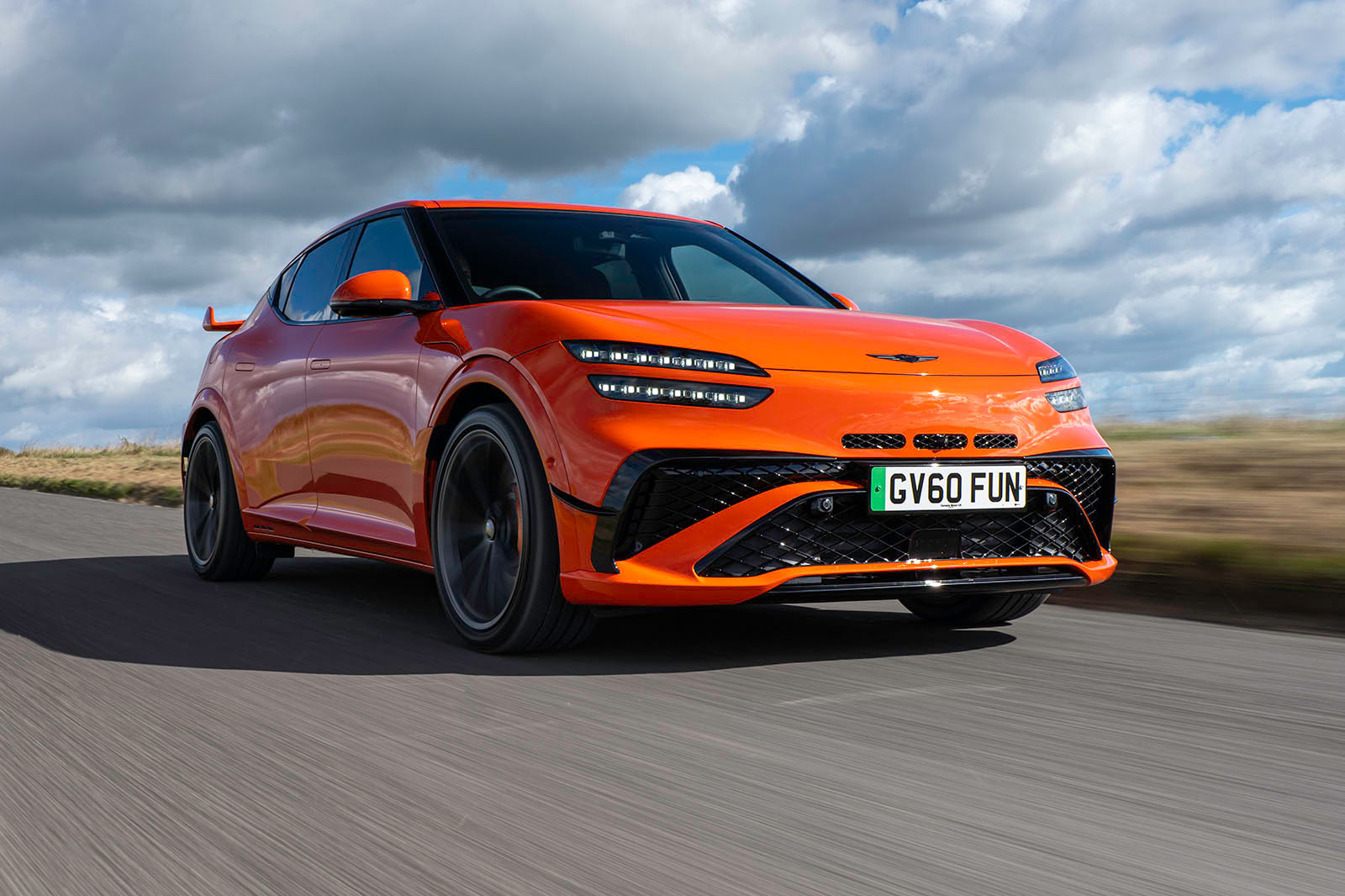
So what’s it like to drive? Initial impressions suggest the Magma is every bit as fun and engaging as its N-badged cousins.
Naturally it’s quite firm-riding, and this can grate the most around town. There’s noticeable head-toss over broken Tarmac and the occasional thunk when you hit a sharp pothole. However, a bit of urban jitteriness is a small price to pay when you uncork full performance on a track.

Around the undulating Knockhill circuit it was taut, poised and seriously quick. Meaty, communicative steering, tight body control and indefatigable pace made it genuinely entertaining to drive. You do notice its 2240kg kerb weight through tighter corners, but it remains predictable and composed.
The brake pedal was a bit soft for my liking, with too much dead travel at the very top. It was actually more rewarding to stamp on the brakes hard into a corner, and even after sustained hot laps the brakes didn’t fade.
Equally impressive is the calibration of the virtual gearbox and exhaust note. Genesis claims the soundtrack mimics a V6, but at lower revs it has the burble of a Porsche 911 Turbo S and the free-revving zing of a BMW M3 as you approach the 9000rpm redline.

On rural Scottish roads, the virtual transmission and engine note helped provide a greater sense of road speed while also boosting driver engagement. Short, sharp undulations can upset the vertical body control at speed, but through long, sweeping bends it maintains a nice neutral cornering stance.
If I’m being picky, the steering feels quite heavy for road use. If you’re neat and tidy and opt for more progressive, measured steering inputs, however, you can find a good rhythm on a B-road. Flick the car back into Comfort mode (with the virtual gearbox and engine off) and it reverts to being an amiable, easy-going EV.

Related posts




Latest Post



No Comments