
Ford Barra 4.0L: The Inline-Six That Beats the 2JZ and RB26
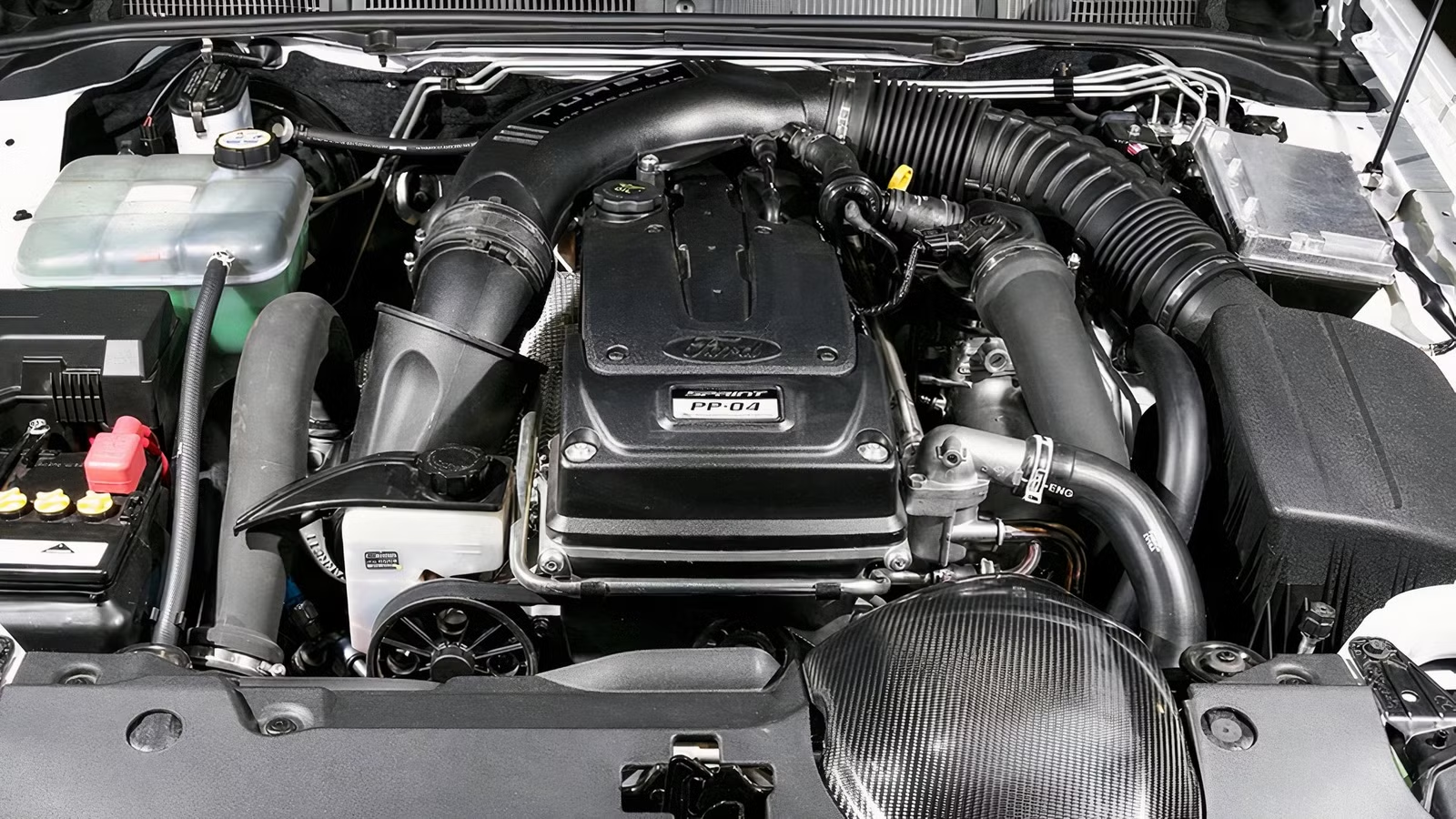
For more than two decades, the turbocharged straight-six has been ruled by two engines: the Toyota 2JZ-GTE and the Nissan RB26DETT. These twin pillars have been the undisputed kings of the JDM tuning world and, with that, command astonishing premiums. Meanwhile, the American tuning community spent a small fortune importing and rebuilding these 2.6-liter and 3.0-liter Japanese classics.

A heavy-hitting alternative was hidden from American enthusiasts in the Southern Hemisphere. An engine built with the absolute durability of an industrial workhorse and the sophisticated double-overhead-cam (DOHC) design of a race car, with a displacement advantage that leaves its Japanese rivals scrambling for torque—and one that took those Japanese rivals head-on.
 98 autotech
The Inline-Six Engine That Became A Global Legend
From the big screen to the drag strip, this over-engineered masterpiece still rules the tuning world.
When Bulletproof Engineering Disappeared From Showroom Floors

The early 2000s were a turning point for enthusiasts, with tightening global emissions and the push toward lightweight modular architectures forcing manufacturers to change how they engineered engines. Aluminum blocks, thinner casting, and overly complex, fragile components slowly replaced the heavily built cast-iron powerplants of the 1990s.
It was the legendary era of over-engineering, when a passenger car straight from the factory could produce triple its original output with simple modifications. Performance fans were increasingly left without affordable, bulletproof mechanical platforms built to survive pure, unadulterated street abuse. Yet when the rest of the world began to downsize and compromise on pure mechanical output, engineers at Ford in Australia were creating something totally uncompromised.
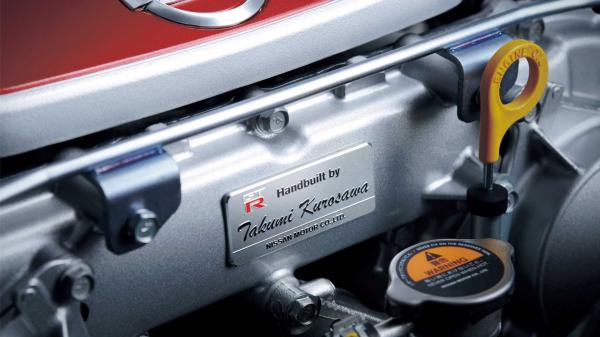
Japan’s Twin-Turbo Engine That Made 1,000 HP From The Factory
Hand-built, over-engineered, and capable of 1,000 hp on stock internals: this is the engine that rewrote the rules of the street.
Ford Australia’s Secret Weapon Against The Global V8 Downsize

Ford Australia in the late 1990s and early 2000s was locked in an unending tribal war with General Motors’ local division, Holden. This wasn’t just a competition for sales; it was a battle for national identity, fought on the streets and on the legendary Mount Panorama circuit at Bathurst.
When Holden began using imported, high-displacement GM LS V8s in their Commodore sedans, Ford Australia found themselves outgunned. So rather than throwing a generic global engine from Detroit into their flagship Falcon sedan, Ford’s Australian engineers made a bold, defiant decision: they would radically re-engineer their traditional, home-grown straight-six architecture.
Code-named “Barramundi” after the Australian predatory fish known for aggressively devouring everything in its path, the final engine name was shortened to Barra. Introduced in 2002 for the Ford Falcon BA series and the Territory SUV, the Barra was Ford’s secret weapon. It wasn’t a high-strung racing engine; it was designed from day one to handle the non-stop, grueling Australian conditions and also serve as a high-performance, turbocharged platform capable of humiliating factory V8s.
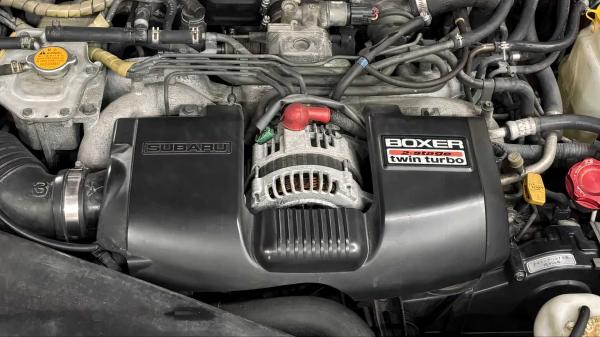
The Only Twin-Turbo Flat-Four Ever In A Production Car
Subaru built a twin turbo flat four no other automaker dared. Learn how it worked, why it lagged, and why gearheads still chase this oddball setup.
The Ford Barra 4.0L: Australia’s Overbuilt Weapon Hiding In Plain Sight.

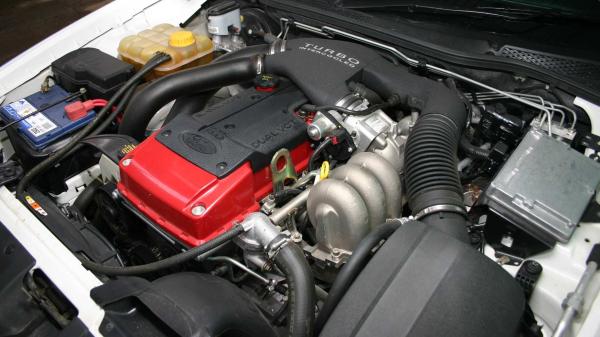
At its core, the Barra is a 4.0-liter DOHC inline-six featuring a deep-skirt, high-nickel cast-iron cylinder block and a 24-valve aluminum cylinder head. Turbocharged variants found in the Falcon XR6 Turbo and Ford Performance F6 models produced anywhere from 322 to 436 hp in the final limited run, while Barra 325T variants produced a massive 425 lb-ft of torque.
But factory ratings only tell half of the story. The magic of the Barra lies in its indestructible and robust internal construction. The main girdle cap was massive, which helped tie the bottom end together with incredible rigidity; the factory crankshaft was a stout, balanced piece of steel. And strong cylinder walls right out of the box. Because of this massive structural integrity, the Barra could handle roughly 800 horsepower on the stock bottom end before ever needing to open the block for forged pistons or connecting rods.
The extreme limits of the Barra are well documented by tuning houses. Australian tuning houses have pushed the tuning limits of the straight-six platform extensively. Australian tuning shop Monsta Torque took a 2010 Falcon FG F5 Ute, bolted on a massive Garrett G-Series G42-1450 turbocharger, and fed it E85. The result? A massive 1,033.9 rear-wheel horsepower on a stock-bore-and-stroke block, all while being a functional street machine. At that level, the Barra isn’t just competing with the finest JDM platforms ever built; it routinely outmuscles them.
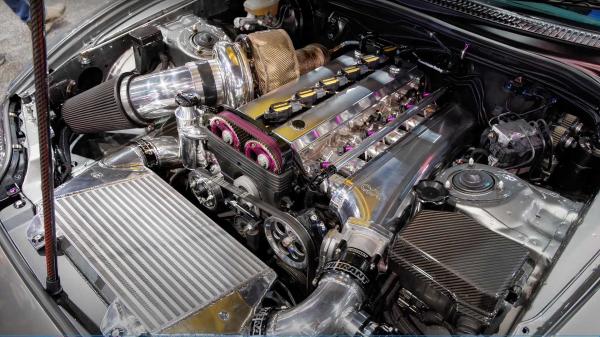
Ultimate Toyota Supra Engine Showdown: How The B58 Compares To The 2JZ
Both the B58 and 2JZ are known for their impressive power and durability, but which is the better Supra engine?
Why The Barra 4.0-Liter Completely Rewrites The Turbo Rulebook

The most significant advantage the Barra had over its Japanese rivals was its physical size, with a displacement of 4.0 liters. The Barra had a 33% size advantage over the 3.0-liter 2JZ and a whopping 53% advantage over the 2.6-liter RB26. In the forced-induction world, displacement dictates everything: an RB26 or 2JZ requires massive boost and high revs to spool up a large turbocharger, resulting in notorious light-switch-like turbo lag.
But the Barra uses a 4.0-liter displacement to deliver effortless V8-like low-end grunt that can spool massive, high-flowing turbos off the line almost instantly. That being said, with the large displacement comes a weight penalty, and that was a common critique of the Barra, which tipped the scales at roughly 525 pounds. That made it noticeably heavier than the 2JZ, which was around 440 pounds.
However, in the world of performance tuning, this weight penalty is mitigated by two factors: the torque-to-weight ratio and the cost-per-horsepower ratio. The massive torque curve created by the extra 1,000 cubic centimeters of displacement completely erases the extra 85 pounds on the front axle. More importantly, the cost math favors the Barra. In today’s market, a clean 2JZ-GTE or RB26DETT can easily command five-figure sums just for the engine itself. Conversely, the commercial-spec Barra was produced for standard Australian passenger cars; as a result, the base architecture was more affordable, in turn giving enthusiasts an affordable choice.
The Ford That Was Too Advanced For America… But Sold In Australia Anyway
It was a sports sedan with a notoriously reliable and capable engine.
Why This Forbidden Fruit Ford Has Earned Global Inline-Six Royalty

If the Barra engine was genuinely this magnificent, why didn’t it take over the American drag racing and drifting scene twenty years ago? The answer came down to geography and not engineering, because the Ford Falcon and Territory were strictly right-hand-drive vehicles built specifically for domestic use.
Ford never officially exported the Barra to North America. It remained a highly guarded secret from American enthusiasts, protected by Australian street and drag racers who knew exactly what they had. Ford ultimately ceased all Australian automotive manufacturing in 2016. The death of the Falcon didn’t diminish Barra’s reputation; it instantly transformed it into a limited, highly sought-after masterpiece.
The global supply of clean 2JZs and RBs is going out of reach for enthusiasts. The Barra remains the definitive solution from down under, now that the secret is out. The Ford Barra 4.0 is no longer an Australian exclusive. It is the new, more powerful, and affordable challenger to the Japanese dynasty. The Barra has rightfully claimed its throne as a true heavy hitter in the world of straight-six engines.
Source: Garrett Motion, Ford Barra engine, Wiki commons.

Related posts




Latest Post


No Comments