
Ford Patents Self-Relocating Car To Dodge Theft And Floods
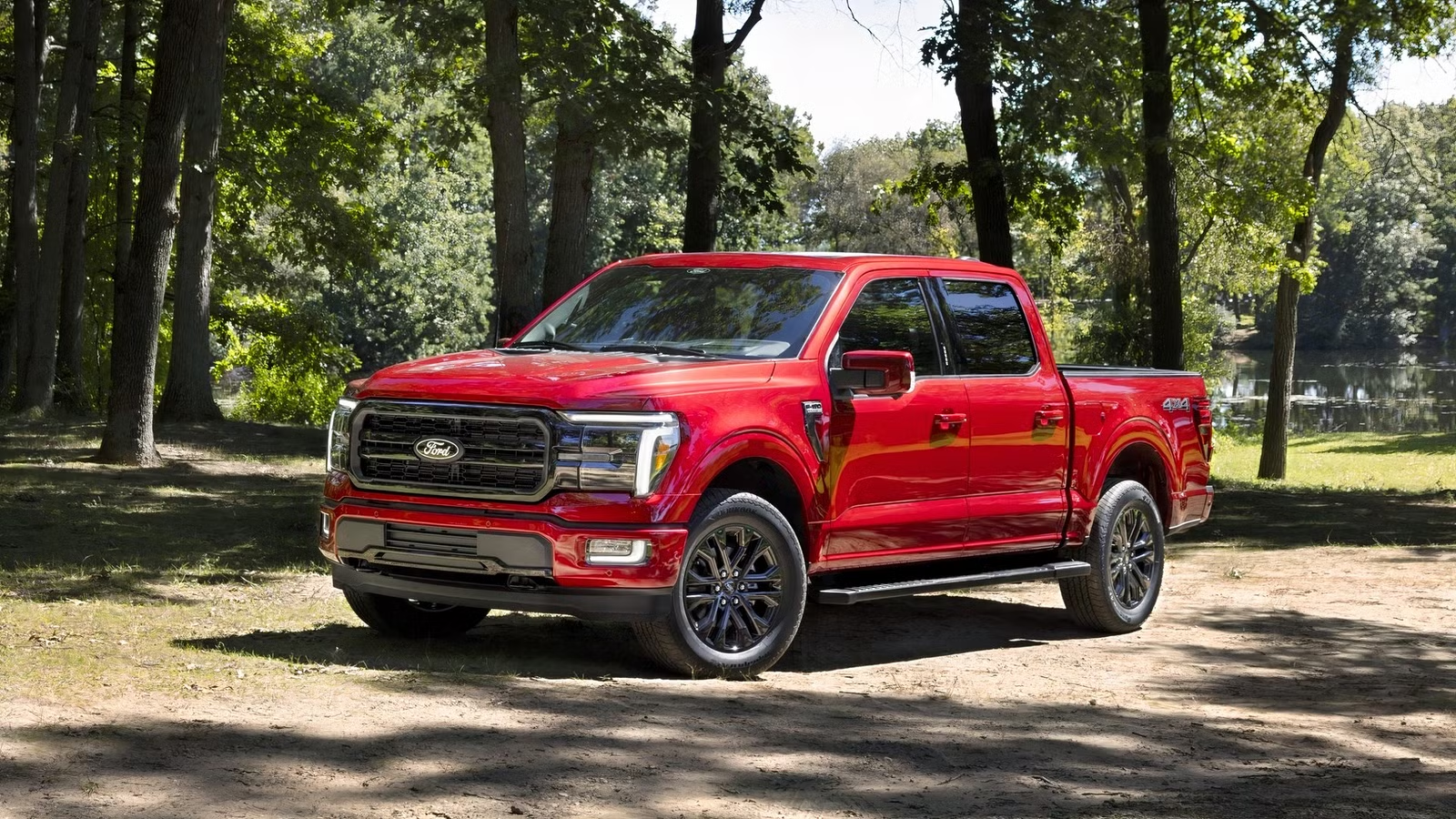
Ford has filed a patent application with the U.S. Patent and Trademark Office describing a vehicle that can detect danger while parked and move itself somewhere safer, no driver required. The filing, published this week, covers everything from a car sensing rising floodwater and relocating to higher ground, to a parked truck noticing someone casing it and repositioning itself defensively.

The idea builds on autonomous-parking systems already in use across the industry, just pointed at a different problem. Instead of parking itself to save you a parallel-parking headache, the system in Ford’s patent parks itself to save your wheels, your cargo, or the car itself from a threat it detects on its own.
How The Car Would Know Something Is Wrong
According to the patent application, the vehicle would watch for “suspicious activity” using its existing sensor suite. That includes someone repeatedly peering into the windows, a car circling the block more than once, or the vehicle finding itself alone in a lot that was crowded when the driver walked away. Any of those triggers could prompt the car to quietly relocate itself to a spot it judges less risky.

Ford’s filing doesn’t require the system to act entirely on its own, either. A lighter version would have the car recommend a parking spot or orientation to the driver, who then parks it manually. That matters for anyone skeptical about an autonomous car making unsupervised decisions in a parking lot. The patent covers both the fully autonomous version and the driver-approved version.
Parking Like It’s Got Something To Hide

The more detailed part of the patent is about defensive positioning, and it reads like a thief’s worst day. The car could back itself between two parked vehicles or tight against a wall, so there’s no room to jack it up, since wheel theft is one of the fastest-growing forms of vehicle crime right now, with reports of entire sets of wheels disappearing in under ten minutes using nothing more than a jack and a lug wrench. The patent also describes parking on an incline or soft, uneven ground, terrain that makes using a jack inconvenient enough to send a thief looking for an easier target elsewhere.
For vehicles with air suspension, the system could drop itself to its lowest ride height, which would make it harder to slide underneath and cut off a catalytic converter. Pickups and SUVs with factory catalytic converters have been frequent targets for exactly that kind of theft. The car could also nose or back itself up against a wall to block the tailgate or hatch, protecting whatever’s in the cargo area and making it tougher to pull the head- or taillights, which the patent calls out as another target. Ford’s filing even allows the owner to choose what gets prioritized, wheels or cargo, before walking away.
Floodwater Is The Scenario That Gets Attention

The most dramatic use case buried in the filing is a car sensing rising water and relocating itself before it becomes a flood-damage insurance claim. It’s a smaller piece of the patent than the anti-theft positioning, but it’s the one that sticks, since it means a parked, empty vehicle could theoretically save itself from a scenario that currently just totals the car.
None of this is confirmed for production. Patent applications describe what a company has the right to build, not what it’s building. Ford hasn’t said whether any of this is headed for a future Explorer, F-150, or Mustang Mach-E, and plenty of patents never leave the filing cabinet. But with wheel theft and catalytic converter theft both climbing, it’s easy to see why Ford is at least drawing up the paperwork for a car that can see trouble coming and leave before it happens.

Related posts


Latest Post


No Comments