
Dodge’s Viper V10 Pickup Came In A Version Built To Tow Vipers
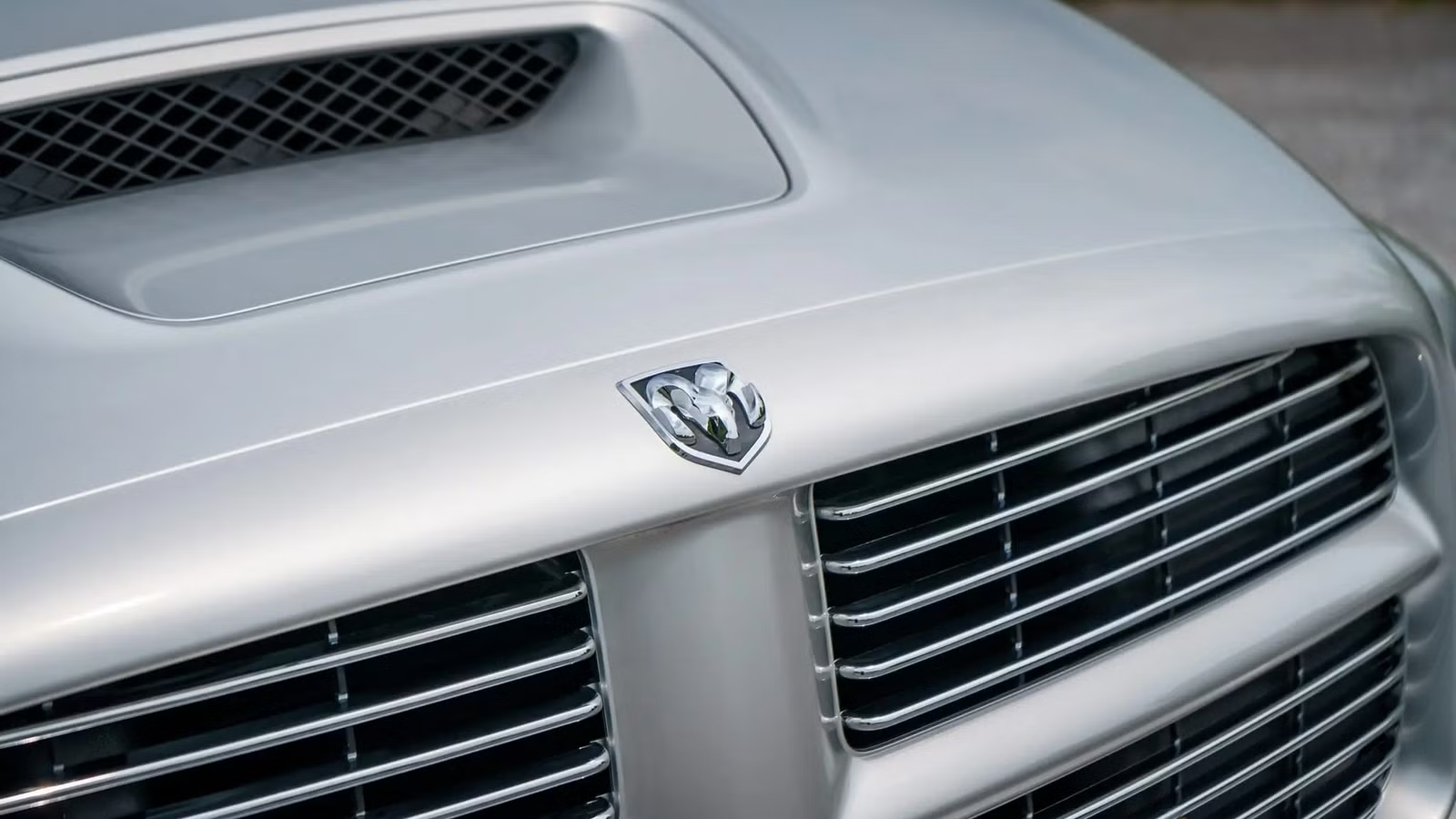
In the early 2000s, Dodge set out to build a high-performance truck. To create a truck truly worthy of the high-performance label, they dropped the 8.3-liter Viper V10 into a full-size pickup frame, creating a mechanical masterpiece. But there’s an irony. Dodge later built a second version of the truck, designed specifically to tow the very supercar whose engine it borrowed. This truck’s story is a tale of two trucks, defined by two vividly different body shapes sharing one iconic heart.
Supercar In A Single Cab

Dodge planned and engineered the supertruck around the Viper supercar powertrain. Dodge’s Performance Vehicle Operations (PVO) used the massive 8.3-liter, all-aluminum V10 engine, which delivered tremendous torque across the rev range. They channeled all that torque to the rear wheels. And to handle the output, engineers dropped the chassis height 1 inch up front and 2.5 inches in the rear, added Bilstein monotube shocks, installed a rear sway bar, anchored the rear axle with a heavy-duty Dana 60 differential, and mounted a fifth shock damper horizontally on the axle housing to prevent axle hop during hard launches.
The truck debuted as a single-bed short cab and came with a Tremec T-56 six-speed manual transmission and a long-arm Hurst shifter straight from the Viper. It weighed around 5,130 pounds and could go from 0-60 mph in just under 4.9 to 5.2 seconds, rivaling sports-car acceleration. It also covered the quarter mile in 13.6 seconds at 106 mph. However, because of its lower ride height, firm rear springs, and manual clutch setup, factory guidelines warned against heavy towing, as it couldn’t pull a heavy trailer without risking mechanical strain.
V10 Truck to Haul the V10 Supercar


Dodge recognized that performance buyers wanted true utility alongside V10 muscle, so for the 2005 model year, it introduced a larger six-passenger Quad Cab variant. To make the supertruck more practical, PVO swapped the six-speed manual gearbox for a heavy-duty 48RE four-speed automatic transmission from its Heavy Duty diesel line. Engineers strengthened the 48RE with a heavy-duty torque converter, a recalibrated valve body, and a high-capacity auxiliary fluid cooler to handle the V10’s 525 lb-ft of low-end torque safely. This transmission swap allowed a massive 7,500-pound tow rating.
The irony was that Dodge engineered the four-door pickup so owners could hook up a trailer and haul their Viper track cars to the circuit using the same V10 engine they would then use to conquer tracks around the country. The added weight of the four-door cab and automatic gearbox raised curb weight to 5,618 lbs and slowed 0-60 mph to 5.3-5.6 seconds. But the weight and speed penalty was negligible for the added practicality.
The Dodge Ram SRT-10: The Viper Truck

The Dodge Ram SRT-10 launched for the 2004 model year, two years after it debuted as a concept at the 2002 North American International Auto Show in Detroit. The SRT10 produced a massive 500 hp at 5,600 rpm and 525 lb-ft of torque at 4,200 rpm. It had a functional power-bulge hood scoop plastered with “Viper Powered” badges, massive 22-inch wheels, and a rear tonneau spoiler. The 2004 Regular Cab focused purely on performance and came with a manual transmission. In contrast, the 2005 Quad Cab swapped it for a four-speed automatic, increased seating to six passengers, and added 7,500 pounds of towing capacity, capping top speed at roughly 147 mph.
In February 2004, a stock Regular Cab Ram SRT-10 driven by NASCAR Craftsman Truck Series racer Brendan Gaughan set an official Guinness World Record for the world’s fastest production pickup truck on DaimlerChrysler’s Michigan proving grounds, hitting a certified two-way average top speed of 154.587 mph, topping the supercharged Ford SVT Lightning’s 147.54 mph record. To ensure high-speed stability across the 4.71-mile oval, engineers designed a unique underbody rear diffuser, functional front splitter, and a bed-mounted rear wing that reduced overall aerodynamic lift by 40 percent. However, while the Guinness run proved what the V10 could do on a controlled oval, period road tests noted the SRT-10 felt aerodynamically lively and unstable when nearing its top speed.
Buying and Owning a Used SRT-10 Today

Ram built about 9,527 SRT-10 units over its three-year run: 3,057 in 2004; 4,097 in 2005; 2,373 in 2006. Today, used market values present a compelling opportunity for buyers across a wide price spectrum. You can find a high-mileage example for under $20,000, while the Hagerty average for a good-condition example sits around the $30,000 mark. At the high end, a pristine, collector-grade example with low mileage has sold for over $80,000 at auction in recent years.
For about $30,000, it’s good value: you get an 8.3-liter, supercar-powered muscle truck for the same price as a new modern four-cylinder base truck. Naturally, the fuel economy matches a supercar with its thirsty V10: the SRT-10 was rated at 9 mpg city and 12–15 mpg highway, with real-world combined driving hovering around 11 mpg.
Analog Muscle vs. Modern Power: SRT-10 vs. 2027 TRX

The Ram SRT-10’s lasting appeal comes from its pure “analog” feel, lost in today’s world of electronics and safety nets. It was a pure rear-wheel-drive experience with no electronic stability control, relying on mechanical traction, a limited-slip differential, and driver skill to put all that power to the pavement like the muscle cars of the past.
By contrast, modern hyper-trucks represent a digital revolution. With its 2027 TRX, Dodge promises a supercharged 6.2L V8 with 777 hp, full-time all-wheel drive, launch control, active dynamic shocks, and hands-free driving assist to keep that power usable on the street.
Where future hyper-trucks rely on computer software to manage extreme horsepower, the Dodge Ram SRT-10 offered pure, unfiltered mechanical muscle. Whether you choose the manual short bed for raw driver involvement or the Quad Cab to haul a weekend track car, the Viper-powered Ram stands out as the last honest factory engine-swap pickup ever built.
Source: Dodge, Bring a Trailer, Ram, RalphsRapidTransit.

Related posts


Latest Post


No Comments