
Premium by design: The allnew interior of the 2027 Volkswagen Atlas
• Real wood décor is featured, along with innovative ambient lighting and an available 15-inch infotainment screen
• The all-new 2027 Atlas arrives in U.S. dealerships this fall
Reston, VA — Volkswagen designers had a clear aim when they reimagined the interior for the 2027 Volkswagen Atlas: bring it up a notch and make it even more premium than previous models without losing any of the vehicle’s spaciousness or seating flexibility. The result is a contemporary and inviting interior that combines space for up to seven adults, a high level of craftsmanship, upscale materials, and sophisticated technology.
Two teams collaborated to bring the 2027 Atlas to life, visually. The Volkswagen Design team based in Wolfsburg, Germany, shaped the technical design from the exterior to the interior, establishing a clean, confident foundation. Then the North American Region Color, Material and Finishes design studio, based in Puebla, Mexico added depth and character to the appearance through thoughtfully curated materials, colors, and finishes tailored to the North American market.

The design philosophy started with the third-generation Tiguan continues with Atlas: a focus on rounded organic shapes, earthy colors and comfortable textures. This nature inspired theme ties the key elements together to deliver what color and trim designer Maria Luisa Reyes Sanchez from the NAR design studio calls ‘an unconscious comfort—you know you like it, but you don’t know why.’
‘The interior feeds off the very strong and robust exterior,’ says Dimitry Panov, an interior designer in Wolfsburg. ‘The interior also reflects our Volkswagen DNA which is basically very clean and very understandable design that basically any kid can look at and sketch with a few lines.’
A key element in the redesign is the bold dashboard loop that unifies the cockpit in one strong, architectural statement. According to interior designer Nuretdin Seker, also of the Wolfsburg interior design team, ‘the loop makes the car feel even more spacious because it visually stretches the width of the vehicle.’ Panov notes: ‘The loop also allows us to combine all the functional elements, like the driver display, in one single volume. We brought the double air vents from the previous Atlas back but integrated them into the loop.’ The double stacked air vents mirror the double stacked headlights on the exterior.

Moving two elements—the door handles and the gearshift—had both visual and functional benefits. ‘We decided to bring the door latch lower and integrate it into the armrest,’ says Panov. ‘This is ergonomically more comfortable than at the top, where you must twist your wrist to open the door. It also allowed us to bring a lot of high-quality materials to the top of the door. It follows the philosophy of reducing and combining elements to make the interior more premium, cleaner design, and more recognizable.’
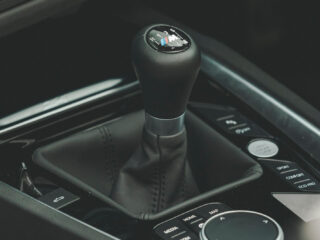
The gearshift move allowed designers to incorporate the Driver Experience Dial first seen on the third-generation Tiguan, as well as inductive charging for two cellphones side-by-side, and cupholders with a rounded, organic-inspired shape. ‘Moving the gearlever up on to the steering column is the feature that allowed us to generate more space here,’ says Seker. ‘It created space for both the phones and the new mode selector that can also be used as a volume knob. It has allowed us to give the customer a benefit both in terms of space and the usage of that space.’
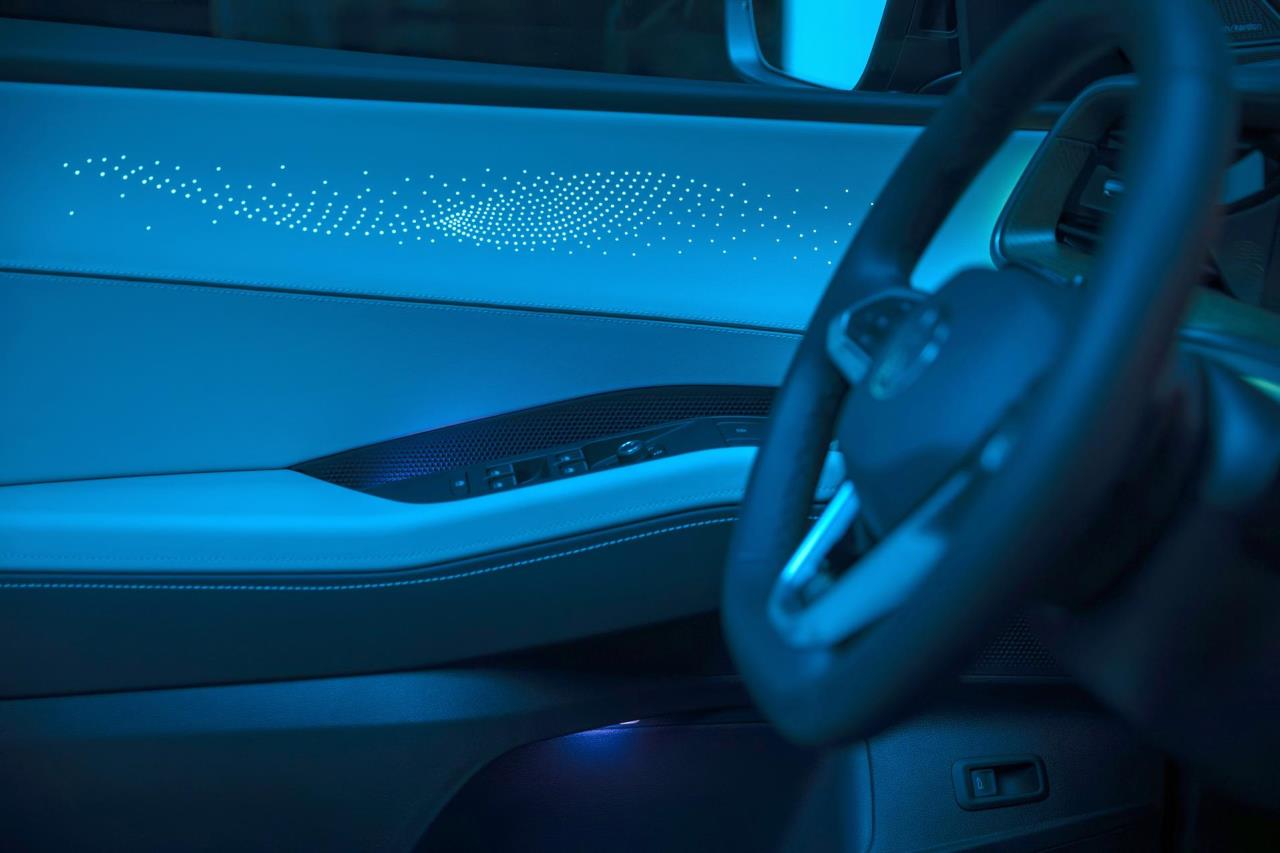
One of the most dramatic features of the new interior is best seen at night: the ambient lighting that flows, depending on trim level, around the dashboard loop, into the center console and door panels, and even into the footwells. It’s most apparent on the SEL R-Line trims, where there is an organic spiral pattern on the dash that twists and morphs though innovative perforated backlit door panels in the first and second rows.
‘The lighting around the loop supports and separates its volume from the background and to continue this we implemented the lighting through the doors,’ says Panov. ‘We use a light source that shines through the perforated material on the doors, creating a transition from the front to the back of the vehicle.’ The backlit door panels help ‘give the Atlas a tech-y feeling inside,’ says Seker.
The illuminated panels pushed the envelope of what was possible, according to José Luis Ibàñez, Head of Color, Material and Finishes NAR design studio. ‘This was the very first time in the region that backlit technology was implemented using perforated vinyl. We faced several technical challenges, which we addressed by working closely with the supplier and our R&D colleagues.’
Reyes Sanchez draws inspiration from the fashion and home design worlds for the selection of materials and colors. ‘As a global company,’ she says, ‘Volkswagen is not only connected to what is going on in the car industry, but also to new trends in the fashion and design worlds, which are always evolving. Since these worlds are intertwined, the inspiration goes back and forth from one world to another. We are always keeping in mind new trends and the constant evolution of the market.’
The color and trim concept for the 2027 Atlas reinforces the premium character of the model through carefully selected materials, precise detailing, and a high level of craftsmanship. ‘We use colors, materials, and textures to uplift the aesthetic experience of the passengers and were inspired to create a warm interior and colors that feel like being at home,’ says Ibàñez.
Real wood trim was chosen to add warmth and a more authentic material and to give the cabin an added sense of quality. Paulina Zamudio from the NAR studio says: ‘In the entry line we have Classic Straight wood which has an appealing unique appearance with different tones inspired by the experience of walking in nature under the sunlight. On the top trim, Coffee has a special burl grain that evokes the natural textures in a northern forest.’
Entry trims offer leatherette seating surfaces that are designed to be durable for everyday use and easy care, while offering a refined appearance. The top trims offer leather to further enhance comfort, tactility, and perceived quality. Both Varenna and Nappa leather are offered—this being the first development of Nappa in the region. There are three available interior color palettes—an airy pebble grey, moody black, and an all-new deep wine seat color—and at each trim level the seats have a different design pattern.
According to Reyes Sanchez, ‘all our lines have Mistral (grey) and Soul (black) as neutral base colors that layer up with different elements as we move up each trim. The creative contrast achieved between color, shape, materials, and texture leads to surroundings that are harmonious but with an unexpected accent or subtle change that captures the eye, always making the interior interesting without being overwhelming.’
Even the seats have been changed in the new Atlas, rounded to give more of a performance feel. Ibañez says both the new seat designs and the creative use of contrasting trim and color ‘influence the sportier style. On one hand, we have a new, modern looking seat with organic lines that brings to mind this sporty feeling; and on the other hand we also have organic stitching and embossed patterns that add depth and give the seat a natural flow that connects all the lines together, giving a powerful visual aspect.’
Photo credit: Volkswagen
posted on
Related Posts


Related posts

Latest Post


No Comments