
Diesel Prices Just Hit A Record While Gas Stabilized, And Truck And SUV Owners Feel It Most
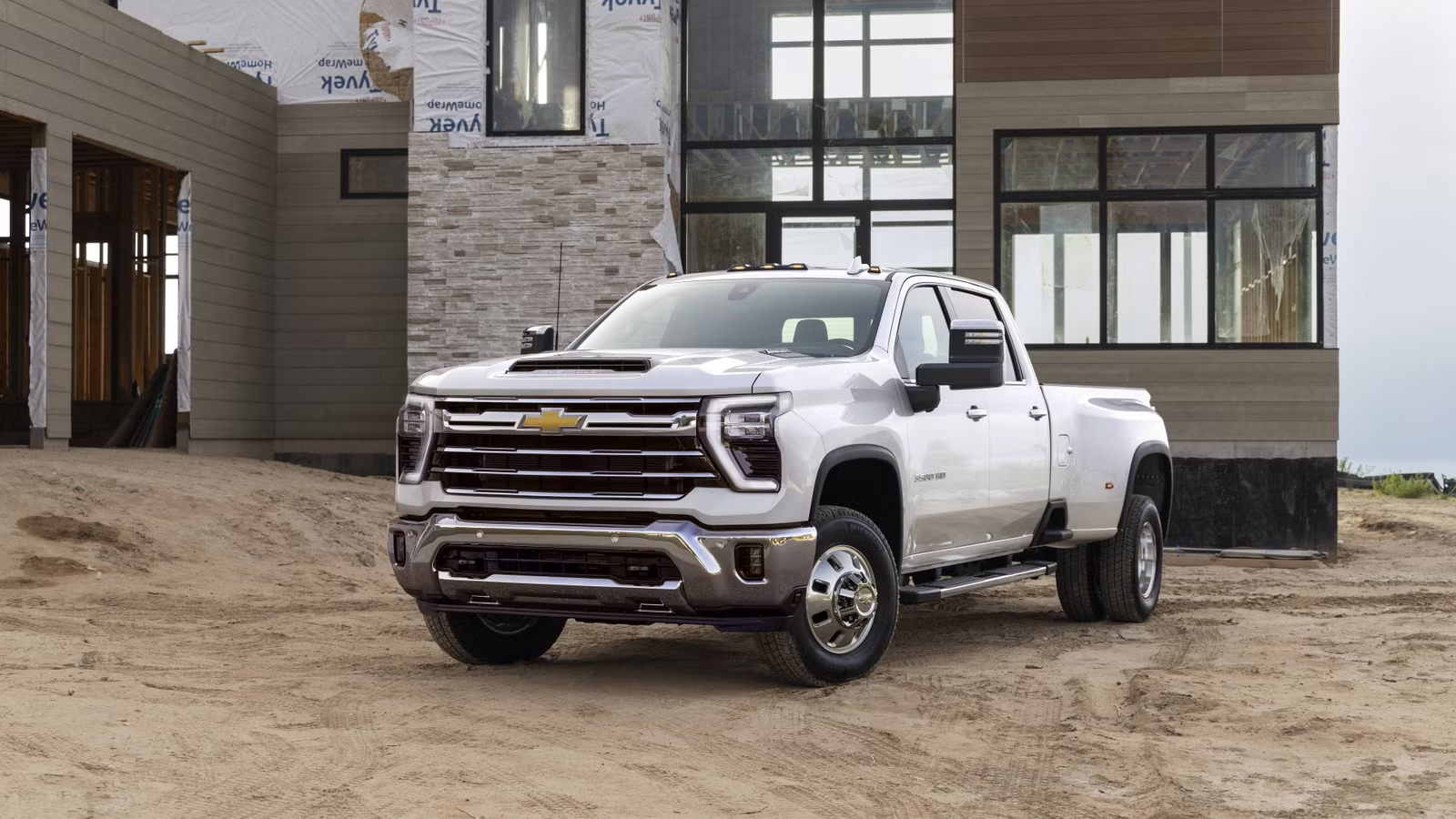
Diesel just set an all-time national average high of $6.51 a gallon as of September 24, according to AAA data, while gasoline is showing its first real signs of settling down. Regular unleaded sat at $4.48 a gallon this week, still 50 cents shy of the 2022 record, with only penny-level daily movement. For owners of diesel pickups, SUVs, and tow rigs, that gap isn’t a rounding error. It’s a structural shift in what it costs to keep a diesel truck on the road, and unlike a gas price spike, this one doesn’t come with an easy wait-it-out option.

The two fuels are refined from the same crude oil, but they’re no longer moving together. Diesel has surged nearly 77% compared to a year ago, when it averaged $3.69 a gallon. Gasoline, by contrast, is still trading below its all-time high. That divergence traces back to a refining bottleneck, geopolitical disruption in two critical shipping chokepoints, and a heating season that’s about to pile more demand onto an already tight diesel supply.
Why Diesel And Gas Have Split Apart
Crude oil is the raw material, but diesel and gasoline are separate manufactured products, and right now the world doesn’t have enough diesel-refining capacity to meet demand even as crude prices stay well off their historic highs. U.S. refineries have been running near 98% utilization, which is close to the ceiling of what the system can produce. There’s little slack left to absorb a shock.

That shock has come from multiple directions at once. Shipping through the Strait of Hormuz, which normally carries roughly 20% of the world’s oil, is running at about 10% of its usual tonnage after the U.S. launched attacks on Iran earlier this year. The Bab el-Mandeb Strait is also under blockade. Add Ukrainian drone strikes forcing Russian refineries offline and Russia restricting fuel exports to protect its own supply, and the world has lost an estimated 1.6 million barrels per day of diesel and gasoil exports. Gasoline demand runs on consumer driving habits; diesel demand is tied to freight, agriculture, and construction, and those sectors haven’t slowed down to make room for the shortfall.
The US Isn’t Sitting On A Cushion Anymore

Normally, the government can lean on the Strategic Petroleum Reserve to smooth out a supply crunch. Not this time. Reserve levels are now at their lowest point since 1982, the year the SPR was first being filled, sitting at roughly a third of historic levels after the drawdown from 2022’s price spike was never replenished. That leaves one less lever to pull just as heating season arrives, when demand for diesel and heating oil typically climbs and squeezes an already thin supply even further.
What The Math Looks Like For Truck Owners

Diesel climbed from $5.599 a gallon at the end of August to $6.285 by mid-September, a 12.3% jump in two weeks. At that pace, some estimates put diesel near $7 a gallon nationally by October. For a truck with a 36-gallon tank, like a diesel-equipped Ford F-150, that move alone adds roughly $25 to a single fill-up, and a full tank at $7 a gallon runs $252. Commercial rigs feel it worse: semi-trucks with 100- to 150-gallon tanks, often doubled up for long-haul routes, could be looking at fill-ups north of $2,000.
This is the part that separates diesel owners from gas owners during a price spike. A gas buyer can often delay a fill-up, shop around, or absorb a few extra cents per gallon without much strain. Diesel trucks and SUVs tend to have bigger tanks, get driven for towing and hauling work that doesn’t pause for fuel prices, and serve owners who don’t have the flexibility to simply drive less. The fuel cost isn’t discretionary in the way it can be for a commuter car.
GM’s New Duramax Arrives At An Awkward Moment

The timing has an ironic edge to it. GM unveiled its all-new 8.3-liter Duramax Turbo-Diesel V8 for the 2027 Chevrolet Silverado HD and GMC Sierra HD on September 22, the same week diesel hit its record high. The new engine makes a best-in-class 555 horsepower and 1,230 lb-ft of torque, with up to 20,000 pounds of conventional towing capacity and 38,000 pounds gooseneck on properly equipped trucks. GM says more than 60% of heavy-duty truck buyers choose the diesel option, and the automaker’s brands already hold the majority of diesel share in the segment.
That math hasn’t changed just because the fuel that powers these trucks got more expensive. Buyers shopping HD trucks for real towing and hauling work still need the torque and durability a diesel provides. But anyone cross-shopping a diesel HD truck against this new Duramax should factor a much higher cost per mile into the ownership math than they would have a year ago, at least for as long as the current supply disruptions persist.
None of the structural pressures behind diesel’s spike look like they’re resolving soon. Refinery capacity hasn’t recovered to pre-2020 levels, the Strait of Hormuz disruption shows no sign of easing, and heating season is just getting started. Diesel truck and SUV owners should plan their fuel budgets around current prices holding, or climbing further, rather than counting on a quick reversal the way gas buyers might.

Related posts






Latest Post




No Comments