
By The Numbers: Can The F30 328i Match The E36 M3?
3 Series
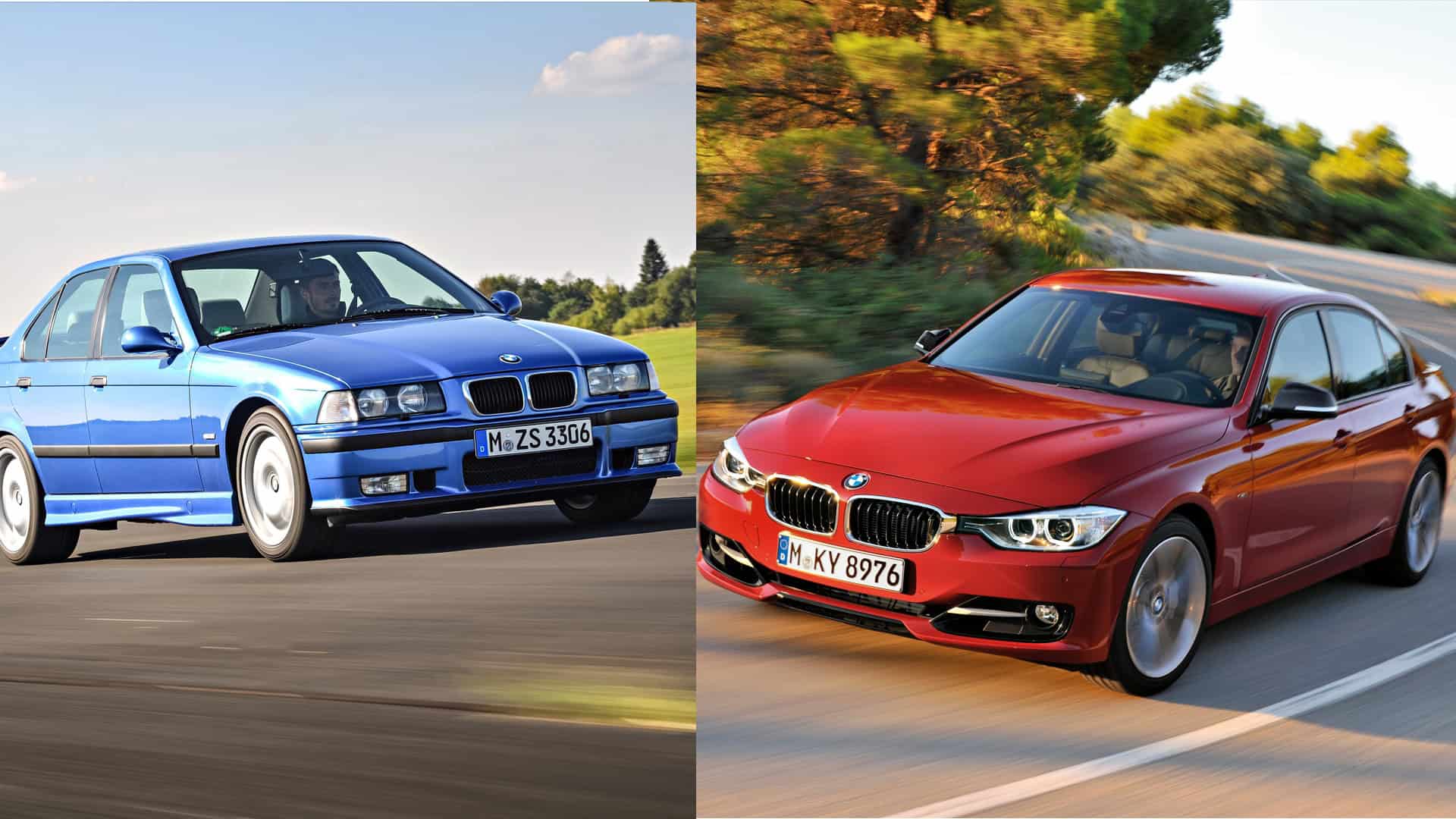
Both have 240 hp and the same claimed 0–60 time. The F30 makes daily driving easier, but the E36 M3 has a stronger pull.
Article Summary
- The E36 M3 and F30 328i each make 240 horsepower and share a BMW-claimed 5.7-second 0-60 mph time.
- The F30’s low-rpm torque, comfort, and everyday usability make it a compelling alternative to the older M car.
- The E36 M3 makes a case for itself via steering feel, engine character, classic styling, and its sense of occasion.
At some point, the regular 3 Series caught up with—and eventually passed—yesterday’s M3. Or at least, that’s what the numbers suggest. The U.S.-spec E36 M3 and F30 328i each make 240 horsepower. Choose a manual, rear-wheel-drive example of each, and BMW quotes an identical 5.7-second run to 60 mph. One is an M car people still seek out decades later; the other is a four-cylinder sedan most likely purchased as a daily driver. So, do the numbers tell the full story? Or can the wizened E36 M3 give you something that the 328i doesn’t?
The 328i Makes Its Power Easy to Use

The F30 has a clear advantage the moment you leave a stoplight. Its turbocharged four-cylinder makes 258 pound-feet of torque, 22 more than the M3’s naturally aspirated six. More tellingly, that torque is available from 1,250 rpm. The M3 doesn’t reach its 236-pound-foot peak until 3,800 rpm. You can drive the 328i briskly without thinking much about gear choice. It has useful shove any time you ask for it.
But predictability shouldn’t be mistaken for dullness. In our first drive of the F30 generation 328i, its strong engine, tidy body control, and willingness on a winding road left a good impression. The weakest point was steering feel. The car responded accurately, but the wheel didn’t say much about what the front tires were doing. Even in Sport+ mode, there was a lot to be desired. That’s problematic enough in a vacuum, but when the car across from it is an E36 M3…
The M3 Still Feels Like the Special One
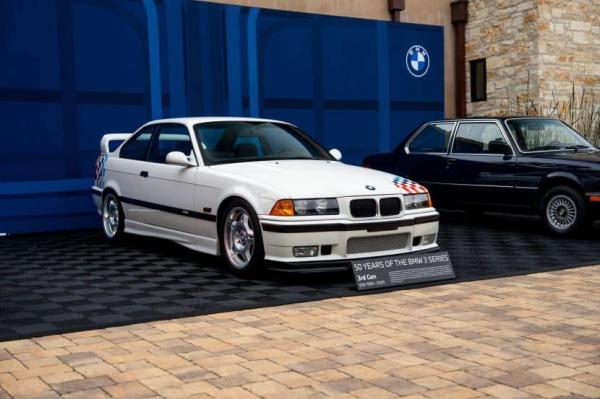

On paper, the M3 has a tiny edge in horsepower per pound. It weighs 185 pounds less, which ups the ratio to 0.075 horsepower-per-pound against the 328i’s 0.071. That very small advantage doesn’t even show up in BMW’s identical 0–60 mph claims. Perhaps predictably, you have to look beyond the launch to find the M3’s appeal.
The six-cylinder S52 engine is a far cry from the red-hot Euro S50 motor. But it still asks you to use the revs. Peak horsepower arrives at 6,000 rpm, and working through the five-speed manual is part of the experience. The F30’s turbo torque makes speed feel easy; the M3 makes getting there more involving. Its steering and chassis add to that sense that the car is paying attention to you. You don’t have to look far to find praise for the E36 M3’s feedback and precision.
A Tale of Two 3ers
| Specification | E36 BMW M3 Sedan | F30 BMW 328i Sedan |
|---|---|---|
| Engine | 3.2-liter naturally aspirated inline-six | 2.0-liter turbocharged inline-four |
| Horsepower | 240 hp | 240 hp |
| Torque | 236 lb-ft | 258 lb-ft |
| Transmission | Five-speed manual | Six-speed manual |
| Driven wheels | Rear | Rear |
| Curb weight | ~3,175 pounds | ~3,360 pounds |
| Horsepower per pound | 0.0756 hp/lb | 0.0714 hp/lb |
| BMW-claimed 0–60 mph | 5.7 seconds | 5.7 seconds |
| Length | 174.5 inches | 182.2 inches |
| Wheelbase | 106.3 inches | 110.6 inches |
| Seats | Five | Five |
| Trunk space | 10.3 cu. ft | 13.0 cu. ft |
The table above reveals the F30’s everyday advantage. The 328i sedan is 7.7 inches longer than the E36 M3, with a wheelbase 4.3 inches longer. It has four doors, albeit so can the E36 M3. Interestingly, adding two doors doesn’t change the length, weight, or wheelbase. We’ll contend that its fresher cabin is arguably a more pleasant place to spend a long commute. Neither car asks you to sacrifice a back seat, but your rear-seat passengers will be incrementally more comfortable in the 328i.
The 328i delivers the M3’s advertised horsepower and acceleration while asking far less of its driver in ordinary traffic. It’s a lot easier to live with, overall, as you’re dealing with a 15-year-old BMW instead of a 25+ year old one. An extra gear and more trunk space make it the clear choice if you want one BMW to handle the week’s errands. But what of the weekends?
But Which One Wins?
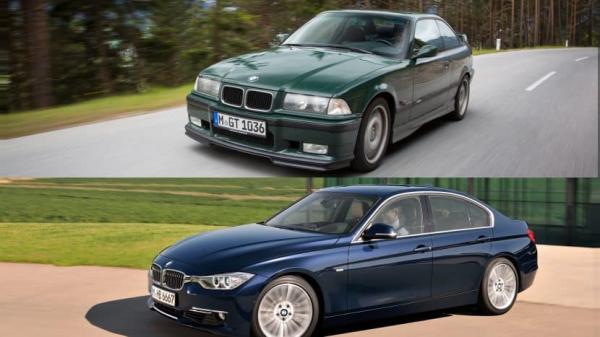
This is a tough one. I’m a shameless E36 apologist, but with any ounce of objectivity, it’s impossible to claim the 328i does anything insurmountably worse than the E36 M3. It’s cheaper to buy and maintain, it’s easier to live with day-to-day, it’s more comfortable, and better for those who plan to actually use all four doors. Or, for that matter, a trunk. That doesn’t mean it’s the winner, though.
Here’s my case. For a little more money, you’ll pick up a car that will likely continue to appreciate, or at least hold steady, year-over-year. All E36s are firmly in classic territory and there are, each year, fewer and fewer roadworthy examples out there. That’s to say nothing of the driving experience, which is measurably more enjoyable if you value steering feel and precision. I think the E36 looks classier—and will likely attract many more enthusiasts while you’re out and about (which is overall, I think, a good thing). The S52 six-cylinder sounds better (and today, more characterful) than the F30’s N20, which is a little industrial.
Are there trade-offs? Sure. Maintaining the E36 M3 won’t be a full-time job, but it will require some dedication; not having to worry about silly things like window regulators and collapsing interior trim pieces are frankly a huge boon to the F30’s case. And to some, the F30 is probably a better choice overall. But classic styling, steady values, and a greater sense of occasion crown the E36 M3 king of this 240-horsepower shootout. But it’s a lot closer than any E36 fan will ever admit.

Related posts


Latest Post


No Comments