
The Motorcycle That Feels Better The More Miles You Put On It
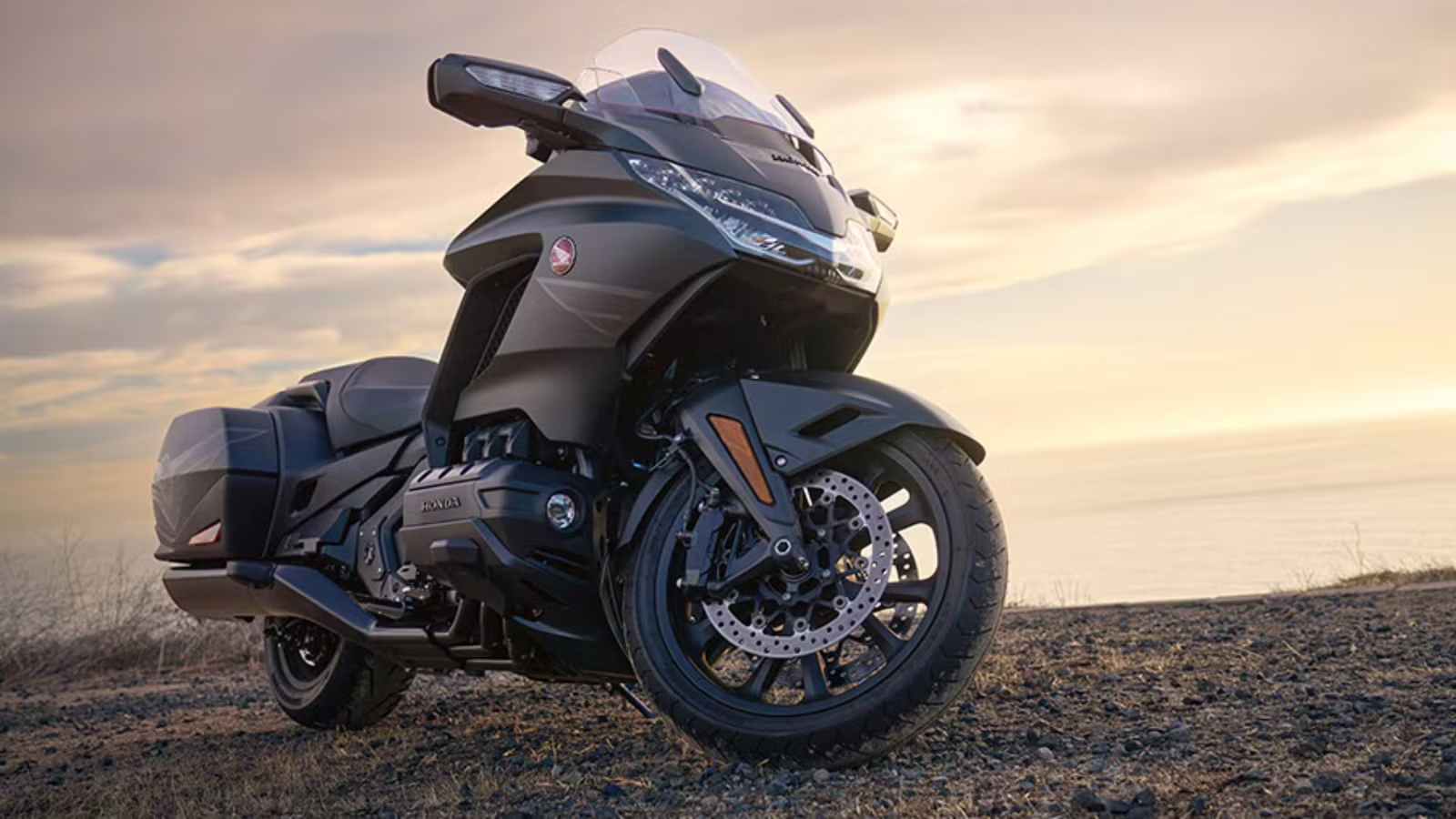
Touring motorcycles are designed to be ridden tens of thousands of miles, if not hundreds of thousands of miles, and as such, they need to be over-engineered. We’re not talking about just the reliability of the engine or the smoothness of the ride; it needs to be truly comfortable and remain that way over time, because the owners of touring motorcycles are quite liable to go across states for multiple days. So, a touring motorcycle cannot afford to have significant flaws, because those flaws will become a major impediment on a long ride.
There Is One Brand That You Can Trust To Get It Right

We know the Japanese are obsessed with getting it right the first time, but even by those standards, Honda is extremely particular. It makes very reliable products that are world-class and, at the same time, somehow have the lowest ownership costs in their respective segments. This is also true of the touring motorcycles that Honda makes.

The brand’s touring lineup starts from a crossover-type machine, called the NC750X, goes on with a crossover-type over-1000cc sport-tourer, and then, finally, peaks with a full-size six-cylinder option. Out of these, almost all of them can get better with time, given their highly reliable packages. But the most recommended and likable machine is the flagship that’s been honed over decades. It’s not easy on the pocket, but once you get it, this will keep making sense as a touring partner for years and year.
The Honda Gold Wing Feels Better The More Miles You Put On It


A product like the Gold Wing shines when you actually use it. Not only is it luxurious, comfortable, and powerful, but the charm doesn’t wear off with age. You tend to discover that the more miles you cover on it, the better it feels — and we don’t mean just because of the ownership costs and reliability. Honda’s aim when developing this motorcycle was to make the best of the best, and if the last five decades are anything to go by, it has nailed it on the head. The Gold Wing ages like a fine wine, with owners recommending it without hesitation simply because of its incredible combination of luxury and reliability.
Priced Reasonably By Heavyweight Tourer Standards

The Gold Wing is available in two distinct flavors: a bagger and a full-dress tourer. The bagger is the more affordable of the two, understandably, with a base price of $25,500. The Gold Wing Tour, on the other hand, starts at $29,500, thanks to a lot more equipment compared to the bagger. No matter which Gold Wing you look at, this is value pricing because you don’t really need to add any options to it. Also, in terms of paint, wheels, and whatever else you might see in the marketing materials, what you see is what you get. This is a product that justifies its price!
The Touring Motorcycle That Feels Like A Gold Wing Without The Price Tag
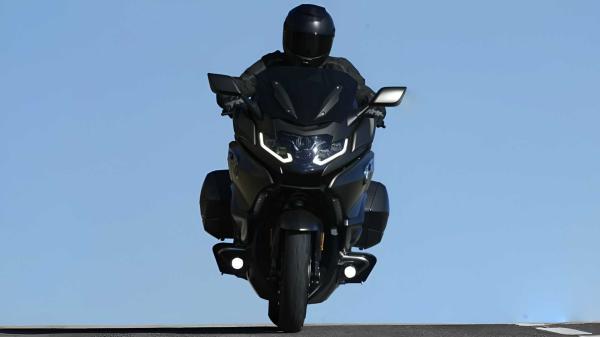
This BMW touring bike has a lot of similarities with the Gold Wing, including a six-cylinder engine and a unique suspension setup.
The Smooth Engine Is An Engineering Marvel

When Honda set out to make the first Gold Wing over half a century ago, it knew it needed to come up with something extra special to combat the likes of Harley-Davidson. The longitudinal flat-four configuration was the answer, one that today has evolved into the flat-six setup that everyone talks about. It uses Honda’s patented Unicam SOHC head to make sure that it doesn’t become as wide as a regular DOHC head.
It displaces 1,833 cc and has an exactly square bore and stroke. A compression ratio of 10.5:1 helps extract 124.7 horsepower at 5,500 RPM and 125.3 pound-feet of torque at 4,500 RPM. It’s safe to say that Honda met its targets of refinement and power in a single package, but the gearbox truly elevates this driveline to another level.
Both A Manual And Automatic Gearbox Are Available

Whether you get the Gold Wing or the Gold Wing Tour, you do get a choice of a manual or an automatic gearbox. The manual gearbox is something that is familiar; it is a six-speed gearbox with an assist and slipper clutch, but no quickshifter is available. Diving deeper, the automatic gearbox is the only true automatic available in this segment with a dual-clutch setup. It has seven forward speeds and one reverse speed.
You can pick between different ride modes to suit whatever kind of riding you’re doing. D mode is what will be used the most; it is an adaptive mode that learns what you are doing with the bike and changes shift points accordingly. But if you are sure you’re going to hustle the Gold Wing along, there is always S mode, or you can even take manual control of the gearbox via paddles on the left handlebar.

Honda hasn’t just focused on the 500-mile days; it has also thought of the rider’s needs while trying to move the Gold Wing around in a parking lot. You can back up the manual gearbox Gold Wing with the help of the integrated starter generator, while the automatic gearbox, as we mentioned, has a reverse speed. In addition, it has a ‘Walk’ mode that allows the bike to creep forward.
The Kawasaki Tourer That Makes Gold Wing Owners Look Twice
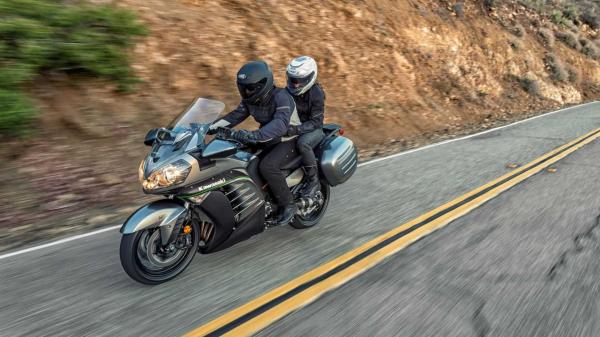
This motorcycle offers 80 percent of the Gold Wing’s comfort, yet allows you to enjoy your corners to the fullest
The Chassis Is As Unique As The Engine

The Gold Wing uses an aluminum die-cast twin-spar unit that uses the engine as a stressed member. The current generation of Gold Wing has also changed its front suspension from telescopic forks to a wishbone setup more commonly seen on BMWs. This change has allowed the Gold Wing to become shorter overall and place the engine further forward in the chassis. As a result, the rider’s reach to the handlebars is much more comfortable, and the weight distribution is better, making it more maneuverable and making highway miles feel easy.

At the rear, there is the Pro-Arm single-sided swingarm with the driveshaft that has a Pro-Link monoshock. The suspension has electronic adjustment, and travel available is 4.3 inches at the front and 4.1 inches at the rear. The brakes are some of the largest fitted to a motorcycle; the front has twin 320 mm floating discs with six-piston radial fixed calipers. At the rear, there is a 316 mm disc with a three-piston floating caliper. Unusually for a touring motorcycle, the Gold Wing uses sintered brake pads. There is a set of alloy wheels with an 18-inch front and a 16-inch rear fitted with tubeless tires.
Tips The Scale At Over 850 LBs
The Gold Wing has similar dimensions to other tourers, but it feels a lot easier to manage because the weight is well centralized. Little wonder then that it is the touring bike that veteran riders trust for life. We’re going to take the Gold Wing Tour as the baseline for the measurements since that is the heavier of the two Gold Wings. It is over 100 inches in length and slightly under 40 inches in width, with a wheelbase of 66.9 inches. The seat is 29.3 inches high, whereas the ground clearance is 5.1 inches. Lastly, the Tour with the automatic gearbox and optional rider airbag is the heaviest, at 856 pounds ready to ride with a full tank of fuel. Still lighter than the equivalent American tourers, though.
Honda’s Best Two-Wheeler Tech Is In The Gold Wing

Since the Gold Wing’s last refresh, the competition has upped its game, which might make the Honda seem a little behind the times, but it couldn’t be further from the truth. It has a seven-inch TFT display, but the display is exclusively for information that is not motorcycle-related, so it has enough real estate for the navigation and Bluetooth items. It is flanked by two large analog dials for the speed and revs.
In addition to this, there are a few reverse LCD screens that show coolant temperature, fuel level, ride stats, ride modes, and the gear selected, among others. The Gold Wing’s navigation system has a gyrocompass, which means it doesn’t really need satellites once you’ve got going; it will even function in tunnels, a feature which is unique to this motorcycle.

The trunk and saddlebags are standard on the Gold Wing Tour. They offer a total of 32 gallons of space (half of which is thanks to the trunk) and can be locked and unlocked remotely. It also has heated grips and seats, with a different temperature that can be set for the pillion seat — if you’re into couple adventures on a motorcycle, this will be the perfect answer. In addition, a tire pressure monitoring system and automatic volume adjustment for the audio system are standard.

As far as electronics and safety are concerned, the Gold Wing has a complete package that starts off with the by-wire throttle and a six-axis IMU. There are power modes, linked brakes, and cornering functions for the ABS, traction control, and engine braking. We’ve already talked in detail about the automatic gearbox and how it is unique to the segment.
The BMW Sport-Tourer That Will Surprise Gold Wing Fans
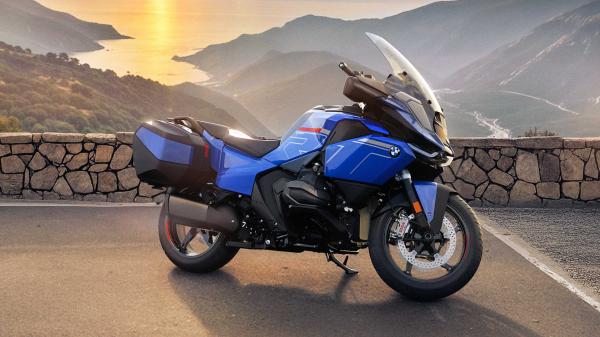
The R 1300 RT is a great sporty option to the Gold Wing without giving up much of the comfort
There Is Some Stiff Competition For The Gold Wing

The full-dress tourer segment has a surprising amount of innovation, and therefore, the Gold Wing does not have an easy job staying at the pinnacle. If you’re American, you’d obviously want a high-torque, large-displacement V-twin tourer that feels perfect at highway speeds, and that’s exactly what the Road Glide Limited is. The Milwaukee-Eight engine powering this now has variable valve timing, and there are creature comforts like a massive 12.3-inch TFT touchscreen.

If you want even more modernity than the Harley but still prefer to keep it a little traditional, there is always the Indian Pursuit. This has America’s largest production liquid-cooled V-twin engine, and it has an equally impressive set of features that include inverted front forks, radial Brembo front brakes, and an excellent reputation for reliability. At the price, it certainly makes luxury feel worth it.

Finally, if we’re going to talk about six-cylinder motorcycles, there’s no way you can ignore the BMW K 1600 GTL, the only motorcycle that can have Gold Wing owners reconsidering their choices. This one approaches it from a different direction, though; this is an inline six-cylinder engine that generates an incredible 160 horsepower. This too is an older but reliable platform, but none of these mentioned here will have the kind of reliability and low ownership costs that the Honda will offer.
Source: Honda PowerSports

Related posts

Latest Post


No Comments