
BMW’s New 3 Series Arrives In 2027 With A 463-HP Electric i3 And Drift Mode
4 minutes reading
Tuesday, 29 Sep 2026 22:01 0 85 autotech
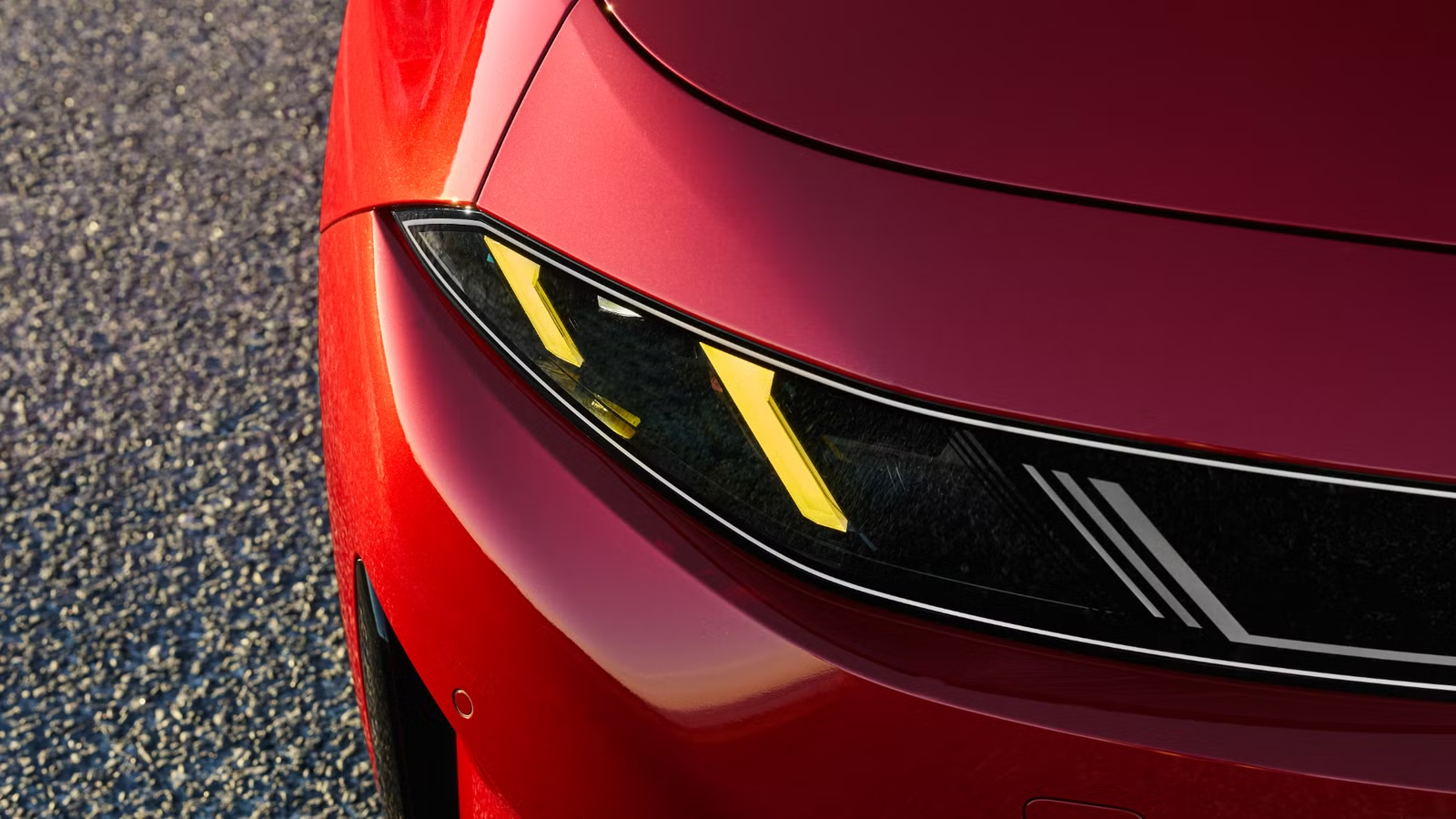
BMW has officially unveiled the eighth-generation 3 Series, and for the first time, the brand’s best-selling sedan splits into two distinct powertrain paths under one design. The lineup, announced September 29, 2026, and arriving at U.S. dealers in the first quarter of 2027, pairs a fully electric BMW i3 50 xDrive with gasoline-powered 330, 330 xDrive, and M350 xDrive models, all wearing the same Neue Klasse design language.

108 autotech
The headline numbers are hard to ignore: 463 hp and an estimated 468 miles of range on the electric i3, or 437 hp and a 3.9-second 0-60 sprint on the gas-powered M350 xDrive, complete with a new rear-wheel-drive Drift Moment mode. Pricing starts at $49,900 for the base 330 and tops out at $65,900 for the M350 xDrive, with the i3 50 xDrive landing at $61,500. BMW is calling this its “technology-open” strategy, and the new 3 Series is the clearest example yet of what that actually means in showroom terms.
One Design, Two Very Different Engines Under the Skin
The new 3 Series is built on the Neue Klasse platform, BMW’s next-generation architecture that first appeared on the iX3. That means the i3 and the gas-powered 3 Series share sheet metal cues, cabin architecture, and tech, even though they’re built at different plants for different reasons. The i3 rolls out of Munich, the same site BMW has used since 1923, now fully converted to electric-only production starting in 2027. The gasoline models, meanwhile, are built at Dingolfing, marking the 3 Series Sedan’s return to that plant after a long hiatus.

77 autotech
Under the hood, the M350 xDrive uses a 3.0-liter inline-six with 48V mild-hybrid assistance, producing 437 hp and 428 lb-ft of torque, up from 386 hp in the outgoing model. The base 330 and 330 xDrive use a 2.0-liter four-cylinder making 255 hp and 295 lb-ft, both hitting 60 mph in 5.9 seconds. The i3 50 xDrive uses BMW’s sixth-generation eDrive tech with dual motors, good for 463 hp, 476 lb-ft, and a 4.5-second 0-60 time, plus an estimated 446 to 468 miles of range.
New Cylindrical Battery Cells And Faster Charging For The i3
The i3’s battery is arguably the bigger engineering story here. BMW switched from prismatic cells to new cylindrical cells measuring 46mm by 95mm, which the automaker says deliver 20% greater volumetric energy density than the previous Gen5 pack. The cells are integrated directly into the battery pack without separate modules, a cell-to-pack design that also does double duty as a structural part of the car’s underbody, cutting weight while adding rigidity.
On the charging side, the i3 supports up to 400-kW DC fast charging over an 800V architecture, capable of adding 191 to 208 miles of range in just 10 minutes. It also gets bidirectional charging, letting the car function as backup power for a home or as a mobile power source through BMW’s Multifunction Charger and Vehicle-to-Load adapter.
Panoramic iDrive And The Heart Of Joy Computer Tie It All Together
Every version of the new 3 Series gets BMW Panoramic iDrive, a new cockpit setup built around a 17.9-inch central display, a full-width windshield projection called BMW Panoramic Vision, and an optional 3D head-up display. Voice control now runs through Amazon Alexa+, which uses large language model AI to handle more natural conversation and pull in outside information, not just control climate and windows.
Driving dynamics are managed by what BMW calls the Heart of Joy, a high-performance computer that’s tuned differently depending on powertrain. In the i3, it works alongside the BMW Dynamic Performance Control Driving Stack, processing data ten times faster than prior systems to manage the drive system, brakes, and steering as one unified function. Gasoline models use an equivalent but distinct optimized Driving Stack refined over decades of combustion-specific tuning. Both feed into SAE Level 2 Highway Assist, which allows hands-free driving on approved highways at up to 85 mph.
Drift Moment And The M350 xDrive’s Case For Being The Entry Point To M

The M350 xDrive gets its own party trick: Drift Moment, a mode that sends all power to the rear wheels for controlled slides, something BMW says was previously reserved for full M models. It’s activated through the central display and works with the M Sport differential and DSC Off mode. Drift Moment isn’t available at launch, though. BMW says it arrives via software update sometime in 2027, and it’ll even reach M350 xDrive models already sitting in customer driveways.
The i3 gets its own quieter party trick in Soft Stop, a recuperative braking feature that lets the car coast to a complete, jerk-free stop using regenerative braking alone, saving the physical brakes for emergency or spirited driving. Combined with the six-zone interior lighting and material themes, M Yellow Lights on M Performance trims, and a unified Neue Klasse face across every variant, BMW is betting buyers will pick their powertrain based on lifestyle, not because one version feels like the compromise.

Related posts



Latest Post


No Comments