
BMW Just Built a Car Seat Out of Wood, and It Might Actually Work
Article Summary
- BMW’s three-year FSCM project developed a wooden seat shell, a wood-and-cork cockpit, and a load-bearing door panel as circular-economy demonstrators.
- Instrument panel carriers and tail lights now run on significantly higher recycled-plastic content, though safety- and light-critical parts still have limits.
- The new iX3 50 proves the research reaches production: about a third of the car is secondary material, including 80% recycled wheel carriers and steering knuckles.
BMW and a consortium of manufacturers and research institutes just closed out FSCM, a three-year project built around a single question: how much of a car can be made from recycled or renewable material without giving up the safety, quality, and durability BMW normally builds to. The project split that question into four work areas, and each one produced something concrete enough to point to.
Plastics: Recyclate Where It Works, Limits Where It Doesn’t

The plastics team looked at whether recycled content could lower the CO2e footprint of major component groups without cutting into safety, quality, or function. They developed CO2e-reduced materials for instrument panel carriers, lights, and trim parts, using both pre- and post-consumer recyclate pulled from packaging and discarded household-industry parts, plus closed-loop approaches where material from a retired vehicle goes straight back into production of a new one.
The results were mixed in a useful way. Instrument panel carriers and tail lights reached significantly higher recycled content and held up in testing against current production parts. But the project also found a real ceiling: components with tight safety or optical requirements, including parts that carry light or current, aren’t yet served well by recycled plastics at the level of virgin material. FSCM doesn’t paper over that gap.
Metals: Less Material, More Recycled Content,Same Crash Requirements
Steel and aluminum are structural and safety-critical, so the metals work area had a narrower path. The team pursued two levers: using new material and component concepts to need less metal in the first place, and pushing recycled content higher to cut dependence on energy-intensive primary raw material. Demonstrators built for safety-relevant body structures showed material could be used more efficiently without compromising crash safety or quality requirements.

The digitalization work area is less visible than a wooden seat shell, but it may be the piece that decides how much of this actually reaches production. The team built a digital data and information platform that pools material properties, test results, and sustainability criteria in one place so they can be compared and evaluated systematically, rather than relaunching that research from scratch every time a new material comes up. The goal is to let BMW make material decisions on recycled content, quality, or where a material’s limits sit, earlier and on better data, and to move sustainable material approaches into series production faster.
The Wooden Seat Shell and The Wood-Cork Cockpit
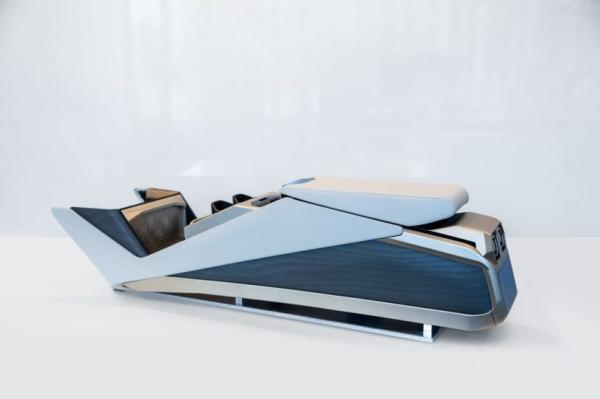
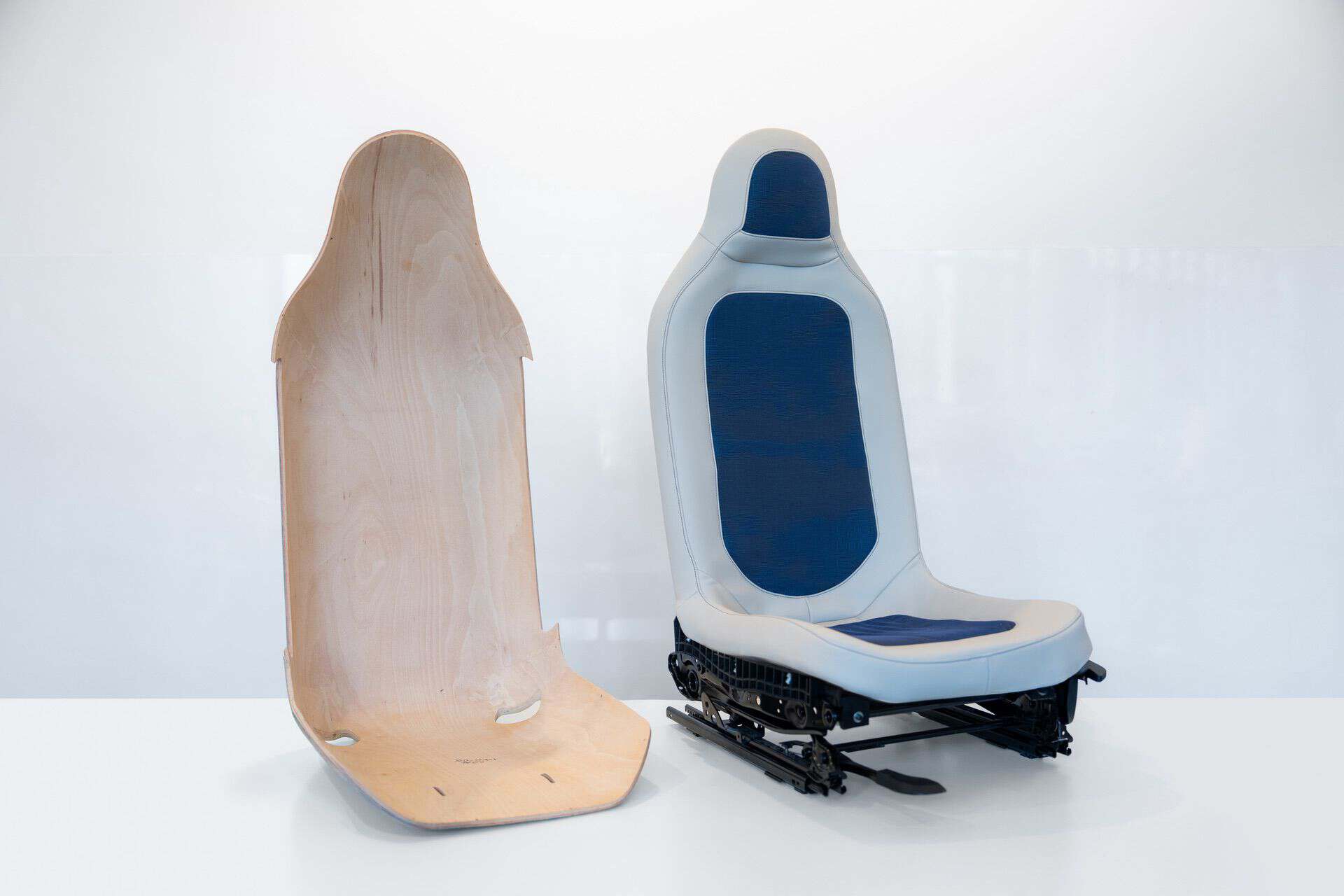
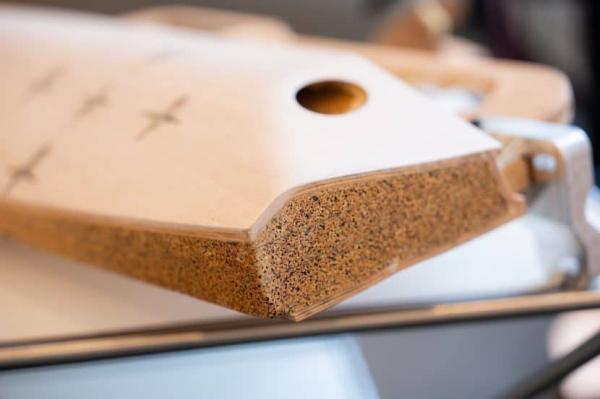
This is the work area that produced the most visible demonstrators. By building circularity into a component’s design from the start, rather than trying to bolt it on later, the team developed a shell seat concept where a wooden shell replaces the plastic structure typically used to shape the seat, a wood-and-cork cockpit, and a newly developed door panel that takes on a load-bearing function for the interior handle and armrest.
BMW says they hit that high occupant-protection bar through strong energy absorption while still being straightforward to separate and recycle at end of life, which is the actual test for a circular-economy component, not just what it’s made of on day one. BMW also notes the principles behind this work aren’t limited to cars; other industries face the same problem of designing products to be resource-efficient and recyclable from the start.
FSCM’s consortium ran wider than BMW alone. Partners included Evonik, MOCOM, the Kunststoff-Institut für die mittelständische Wirtschaft NRW, thyssenkrupp Steel Europe, Constellium, Toray Industries Europe, three chairs at the Technical University of Munich, material.one, Forward Engineering, the DRÄXLMAIER Group, and the Fraunhofer Institutes ICT and WKI. That breadth across plastics, steel, aluminum, and materials research is roughly what it takes to move a wooden seat shell from a one-off concept to something that could plausibly sit in a production car.

Related posts




Latest Post


No Comments