
Audi’s Latest Patents Hint At A Surprising Change Of Plans
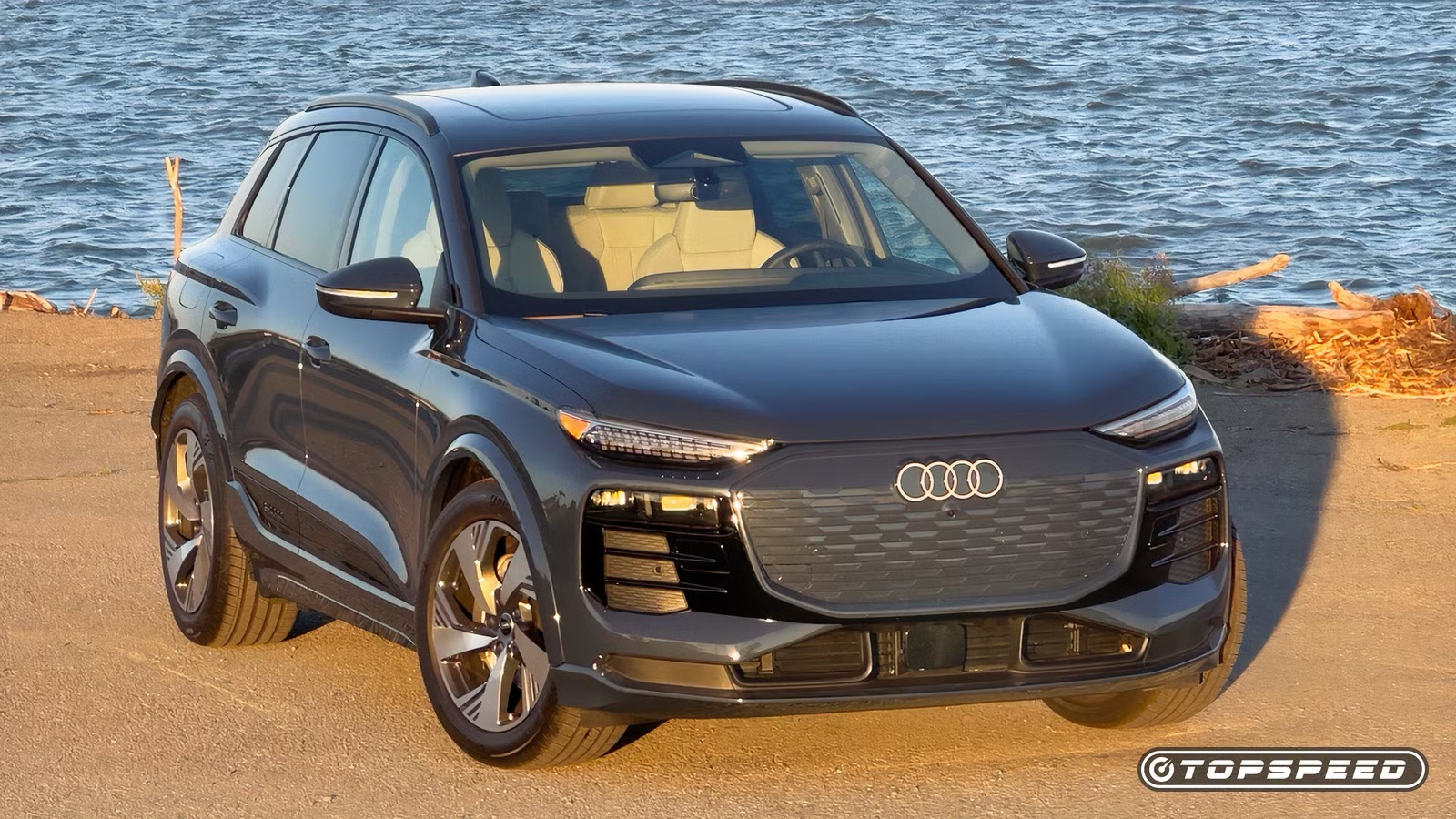
Audi just filed two patents that read like a company hedging its bets. One describes a clever way to hang a small gas engine from a strut brace inside an EV platform. The other outlines software deciding, mile by mile, whether the car should run on battery power, gas, or some blend of both based on weather, route grades, and traffic.

Together, they point to Audi developing its own extended-range EV, or EREV, architecture. That’s notable timing. GM just confirmed it’s finished absorbing $11.2 billion in charges from its own EV pullback, and automakers have been walking back all-electric promises in favor of hybrids and range extenders. Audi isn’t saying it’s building an EREV. But the patents suggest the engineering groundwork is already there.
How Audi Plans To Fit A Gas Engine Where None Was Meant To Go
The first patent solves a packaging problem. Most EV platforms simply don’t have room, or mounting points, for an engine. Audi’s answer is to skip the usual subframe-and-strut-tower setup and instead hang the engine from a strut brace, laid back in the empty bay. That lowers the center of gravity and frees up space.

The engine, likely just one or two cylinders, wouldn’t drive the wheels directly. It would connect to the electric motor instead of a transmission, using the motor as a generator to top up the battery.
The Software Side Might Matter More Than The Hardware

The second patent is arguably the bigger deal. Audi’s own filing admits that a gas engine in an EREV is inefficient, converting fuel to usable energy at only 25 to 40%. Because of that, the engine should only run when it actually makes sense.
Audi’s system would use navigation data, weather, and route conditions, including mountain grades, speed limits, and expected traffic, to decide in real time whether to charge, burn gas, or blend both. It could also use the engine to heat the cabin or pre-condition the battery. The system would also compare real-time charging costs against fuel costs for a given trip and optimize accordingly, which is a genuinely new idea for mainstream EREVs.
Why This Looks Like A Hedge, Not A Retreat

Patent filings aren’t product announcements, and Audi has said nothing about a production EREV. But the timing lines up with a broader industry reversal. GM just wrapped up paying for its EV retreat right as gas prices climbed roughly a third amid tensions in the Middle East, and hybrid sales are up 22% through September, led by Toyota.
An EREV sidesteps the two problems pure EVs still haven’t solved for a lot of buyers: charging anxiety and total cost of ownership. That’s especially relevant in the US, a market that’s been cooler on EVs than Europe or China. If Audi can build EREVs on platforms it already engineered for battery power, it protects its EV investment while giving buyers in gas-skeptical, charging-poor markets a reason to consider the brand again.

Related posts



Latest Post


No Comments