
Pontiac’s 1962 Dealer Supercar Pulled The Yenko Camaro Playbook Years Early
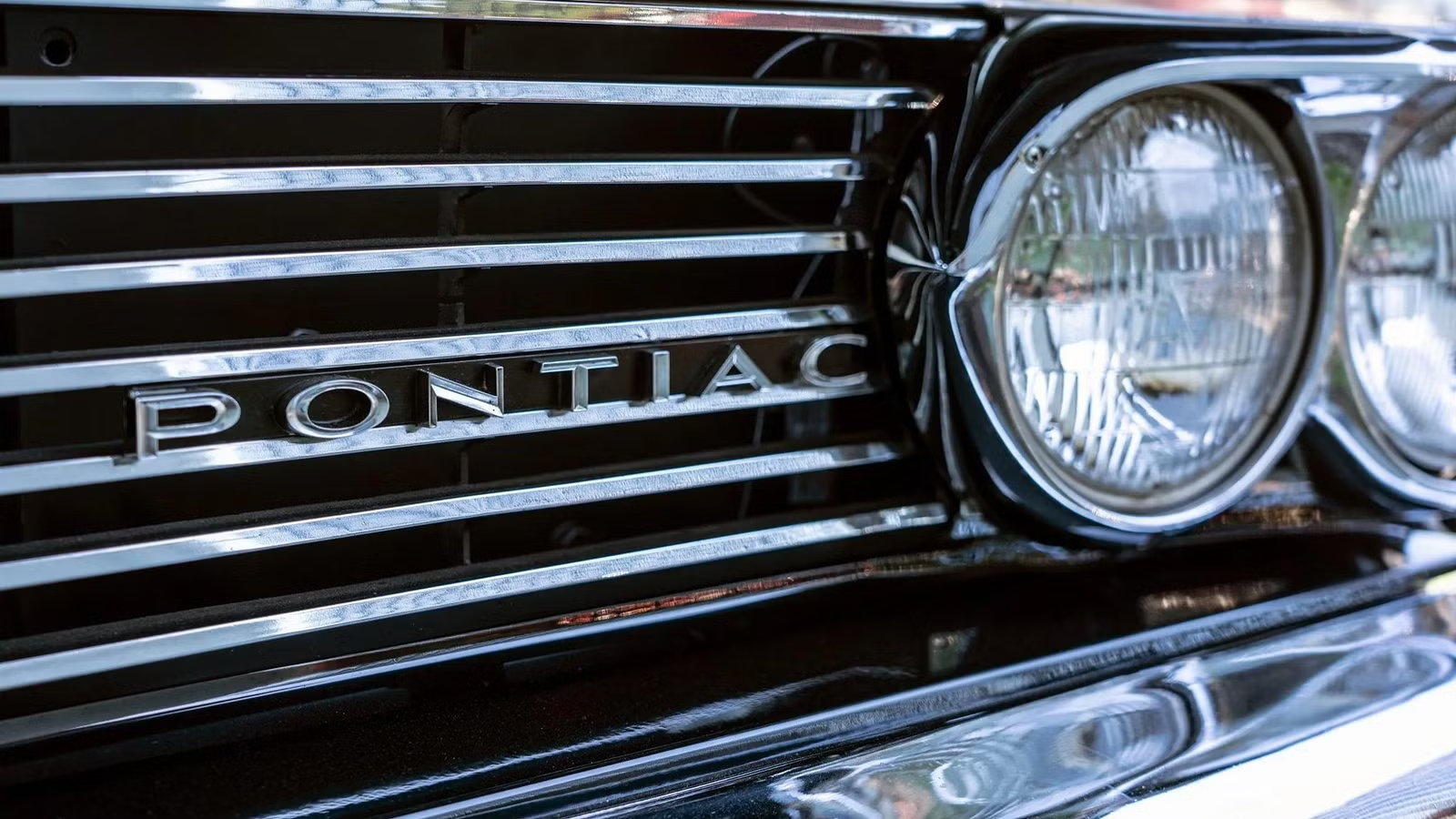
In the early 1960s, a ban on factory-backed racing left muscle car enthusiasts stuck choosing between detuned family sedans and harsh-riding track machines. Before the cure came in the form of the “dealer supercar,” a group of people inside Pontiac found a loophole. By pairing factory racing hardware with a custom showroom tuning package, they bypassed the corporate red tape and created a sleek sleeper that could dominate the drag strip while idling smoothly on the redline. Long before Don Yenko dropped the 427s into Camaros, the Pontiac showroom-built muscle monster established the blueprint for dealer-modified performance cars to come.
Before The GTO, Street Performance Had To Be Manufactured In Secret

In 1962, the muscle-car formula that would become the gold standard hadn’t been forged in Detroit yet, and the GTO was still a couple of years from production. Enthusiasts who wanted real modern speed had options limited to massive full-size heavyweights with grunt but almost no agility. Pontiac at the time did have a Super Duty racing package, but that was meant for the track as it was raw, loud, and unforgiving at regular suburban street speeds.
Enthusiasts faced a frustrating choice: whether to settle for a docile factory V8 or get the uncompromising factory race spec. The market and the enthusiasts needed a middle ground: a machine with superior acceleration that could also handle daily commuting without overheating, messing up the spark plugs, or rattling the driver to the bones during grocery runs or highway cruises.
How Royal Pontiac Turned A Showroom Floor Into A Racing Lab


An informal backroom partnership between Pontiac General Manager S.E. “Bunkie” Knudsen, advertising mastermind Jim Wangers, and Ace Wilson Jr., owner of Royal Pontiac in Royal Oak, Michigan, created a car that would change how dealers sold cars. They realized that while the factory couldn’t legally market or sell an extreme street racer, an independent dealer could modify it and sell specialized tuning kits directly on the showroom floor.
To give this program a distinct identity without alerting the corporate higher-ups, Wangers came up with a branding trick by taking chrome lettering from standard factory badges, plucking the “B” and “O” from Bonneville alongside the “C”, “A”, and “T” from Catalina and mounting them together on the front fenders, creating the “Bobcat.” This was the first iteration of a modern special edition; enthusiasts instantly knew what Bobcat stood for: exclusive, custom, heavy firepower under the hood.
The 1962 Pontiac Catalina Royal Bobcat: The $120 “Screwdriver Tune-Up”

The 1962 Pontiac Catalina Royal Bobcat wasn’t built on the assembly line; dealers sold it as a specialized tuning and appearance package. Buyers could order the Bobcat package with a tamer Pontiac V8 or go all-in by equipping it with factory-ordered Super Duty models. While a standard full-size Catalina weighed between 3,800 and 4,050 pounds, factory Super Duty models featured lightweight aluminum fenders, hood, and bumpers that shaved nearly 200 pounds, bringing total weight down to around 3,600 pounds.
The Bobcat package, paired with the Super Duty configuration with an 11.0:1 compression ratio, high-lift camshaft, and dual quad-jet carburetors, could push around an estimated 460 to 500 horsepower compared to the stock 405 horsepower. The key to unlocking Pontiac’s V8 performance was Royal Pontiac’s $120 “Screwdriver Tune-up”.
For approximately $120 for the basic performance package or $200 for a comprehensive package with milled cylinder heads to bump compression even further, Royal Pontiac modified the spark advance curve. The ignition angle was set precisely to 36 degrees for optimal high-rpm combustion, and the vacuum advance was disconnected to ensure instant, uncompromised throttle response under heavy load. Dual-quad carburetors were re-jetted to deliver a significantly richer air-fuel mixture during aggressive acceleration, and custom intake manifold gaskets were installed to block heat-riser passages, lowering intake temperatures to create a denser air-fuel charge inside the combustion chambers.
162 Super Duty Catalinas And The Great Transmission Mystery

The Bobcat package’s real-world impact showed up on the streets and on the quarter-mile drag strip. While a standard factory Super Duty 421 posted a 13.9-second quarter-mile time, a Super Duty Royal Bobcat could do the same in 12.38 seconds at 116.23 mph. This performance gain showed the full-size Pontiac could take on its purpose-built rivals with precise tuning and weight reduction. To understand how rare the Royal Bobcat was, you need to separate historical fact from enthusiast lore and myth, particularly regarding drivetrain options and production volumes in the period.
Auto historians disagree over the transmissions available for the Super Duty 421. While purists maintain that Super Duty production was restricted to the Borg-Warner T10 four-speed manual transmission, period road tests and some historical records say otherwise, as heavy-duty three-speed manuals and specially prepped Roto Hydra-Matic automatics were used, prepped by Royal Pontiac. Furthermore, only 162 Super Duty Catalinas and 16 Super Duty Grand Prix models ever left the factory in 1962; that made Super Duty Bobcats ultra-rare compared to standard dealer-tuned examples.
How The Royal Bobcat Shaped Muscle Car History

The Royal Bobcat proved what was to come in the latter half of the decade: dealers could deliver high-performance cars through clever techniques and marketing, bypassing corporate sanctions. Knudsen, Wangers, and Wilson established the dealer-supercar era by installing factory race components at the dealership level, distributing tuning kits over the counter, and marketing complete performance packages entirely outside factory paperwork.
It eventually became the direct operational blueprint Jim Wangers later used to launch the iconic 1964 Pontiac GTO, birthing the golden era of American muscle. More importantly, it laid the groundwork for Don Yenko at Yenko Chevrolet, Baldwin-Motion, and Grand Spaulding Dodge. The 1962 Royal Bobcat was far more than a fast Pontiac; it was the catalyst that ignited the American muscle car golden era, transforming ordinary dealership service bays into performance laboratories.
Source: Hagerty, Bring a Trailer, Wiki

Related posts


Latest Post


No Comments