
This G-Body Proves Restomods Can Be Good For The Environment
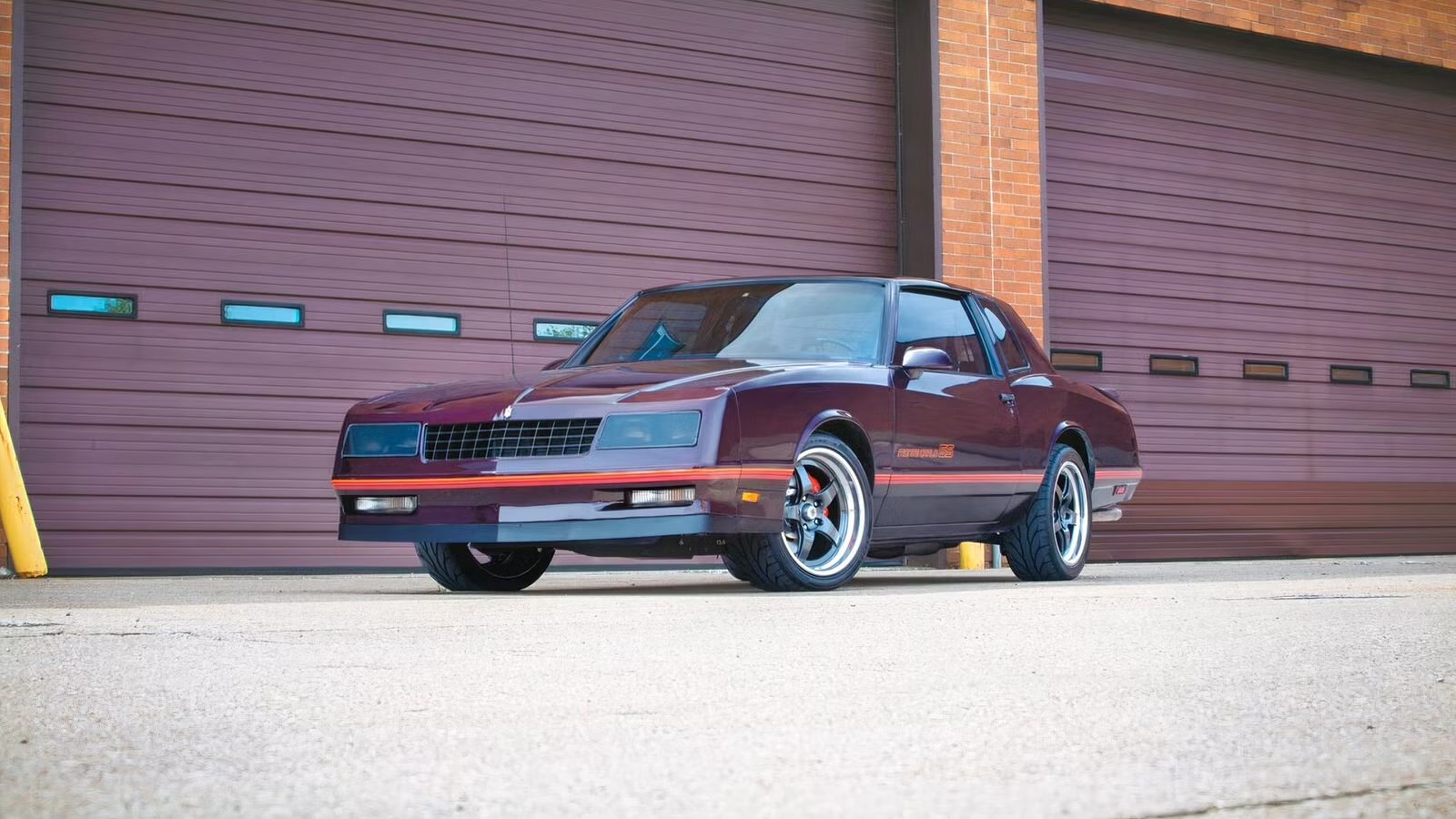
Bolt a crate engine, a big intake and a set of headers onto a 39-year-old Chevy, and most people expect a car that sounds great and smells like a 1987 parking lot. Summit Racing rolled its Prodi-G Monte Carlo SS into the 2026 SEMA Show with a very different scorecard. More power was the easy part, and the other number on that sheet is the one turning heads.
Summit Racing Started With A Tired 1987 Monte Carlo SS

Summit’s own display sign says the build was meant to change how the “non-octane washed masses” look at hot rodding. That’s a cheeky way of saying it wanted people who don’t live at the drag strip to stop seeing modified classics as rolling smog machines. So the target went on paper before a single bolt came loose. Double the horsepower and cut the emissions in half, compared to the car’s stock form.
The donor was no garage queen. It had more than 90,000 miles on the clock, no clear service history, and the original 305 ci small-block V8 that Chevy put in the SS. Think of it as the typical high-mileage G-body sitting in somebody’s driveway right now, still running, still rumbling, and quietly doing a worse job than it did in 1987.
Before touching anything, Summit brought in emissions specialist Greg Banish and SEMA Garage Detroit, a CARB-recognized emissions lab in Plymouth, Michigan, to put real numbers on how dirty the old 305 was. Banish’s point is one most owners never consider. An engine worn out by years of use and patchy maintenance loses power and makes more pollutants at the same time. Get it running properly again and both numbers move in the right direction.

The 5.3-Liter LS Swap Did The Heavy Lifting

Summit didn’t jump straight to an LS swap, and that’s what makes this more than a parts-catalog flex. The team worked through the original 305 with conventional upgrades first, stepped up to a 383 stroker, and only then landed on a modern 5.3-liter LS. Each stage was documented, so the build doubles as a running experiment on what actually moves the needle on power and tailpipe numbers.
The final engine is a Summit Racing 5.3-liter LS long-block on ICT Billet swap mounts, fed by a FAST LSX multiport intake and Trick Flow 36 lb/hr injectors. Hedman swap headers handle the exhaust, a Cold Case radiator and Flex-a-lite electric fan keep temperatures in check, and an HP Tuners package lets the team dial in the calibration. That tune matters more than any shiny intake, because modern fuel injection meters fuel far more precisely than the carbureted 305 ever could. Crucially, the catalytic converters stay in the exhaust, so nobody found this power by pulling emissions hardware.
The payoff is 302 hp at the wheels, according to Summit. Behind the engine sits an upgraded GM 200-4R four-speed automatic with a Boss Hog Night Stalker torque converter, sending power to a Moser 12-bolt rear end with 3.73 gears. That’s a serious shove for a car that left the factory as a comfy personal coupe with a modest V8. Summit didn’t forget the chassis either, because 302 hp on 1987 suspension would be a white-knuckle ride. A QA1 Level 2 handling kit goes in front and rear, Wilwood Forged DynaPro six-piston big brakes handle stopping, and a Detroit Speed steering box tightens up the G-body’s lazy steering. Forgeline GF3 18-inch wheels on Kenda Vezda UHP Max Summer tires finish it off, and Summit even took the car to its 2026 Autocross Week to prove it wasn’t just a show pony.
Why This Matters Beyond One G-Body

Strip away the shiny parts and Prodi-G is an argument for keeping old cars on the road. Building a new car eats raw materials and energy long before it reaches a dealer lot. Rebuilding something that already exists avoids some of that, even if new engines, wheels and parts carry their own manufacturing footprint. Banish’s testing also kills an old assumption. A classic like the 1987 Chevy Monte Carlo SS doesn’t have to keep its original inefficiencies to keep its character. Modern fuel injection, a proper tune and working catalytic converters can clean up how an engine runs without turning it into an appliance.
The timing helps, too. Right next to the car at SEMA sat a display for SEMA’s own emissions certification program, which the EPA backed in a July 2026 letter. Parts makers now have a clearer path to proving their hardware doesn’t make cars dirtier, and Prodi-G is basically a rolling demo of that idea. Enthusiasts have spent decades being told to pick a side, fun old cars or clean air. This Monte Carlo SS just made a pretty convincing case for keeping the V8, keeping the G-body, and leaving a lot less mess behind it.
Source Summit Racing

Related posts




Latest Post


No Comments