
The Royal Enfield That Feels Far More Expensive Than It Is
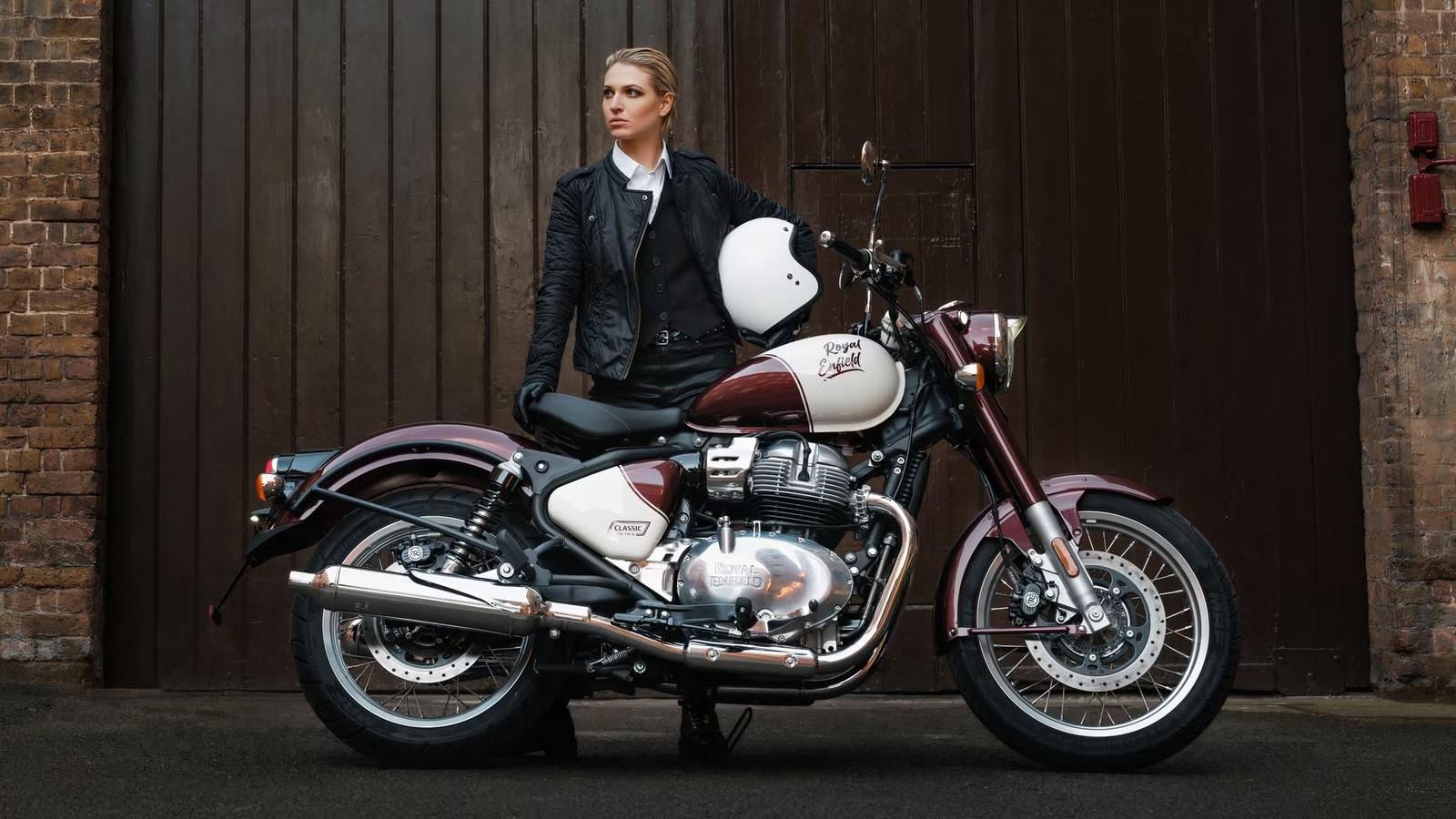
A motorcycle’s price tag rarely tells you how it feels. Sure, spending more usually gets you richer paint, brighter chrome, and switchgear that feels engineered rather than assembled. But “usually” is doing a lot of work there. Some pricey machines feel oddly hollow up close, while a few budget-friendly ones are finished well enough to embarrass bikes costing thousands more. Royal Enfield built its name on affordable motorcycling, and for years that affordability came with visible compromises. Its latest generation has changed that. In fact, one Royal Enfield now feels so well-built that most riders would guess its price several thousand dollars too high.
Royal Enfield Has Rewritten What “Affordable” Feels Like

Few brands are as closely linked to budget-friendly motorcycling as Royal Enfield, though the label tells only part of the story today. The brand still prices its bikes to tempt first-time buyers and seasoned riders alike, yet its newer models are no longer built simply to hit a number. They’re built to impress, with hardware and finishes that hold up surprisingly well against machines from far pricier brands. The results are hard to miss.

Today’s lineup feels genuinely well-built, and several models now offer far more than their sticker prices would suggest. The Himalayan 450 brought the brand’s first liquid-cooled engine along with a round TFT display, while the Super Meteor 650 became Royal Enfield’s first middleweight to wear an inverted fork. The Bear 650 raised the bar again with a big-piston Showa upside-down unit, and across the range, paint runs deeper, and switchgear feels properly engineered. Prices, meanwhile, have stayed remarkably grounded. One model, though, pushes that idea further than any other.
The Royal Enfield Classic 650 Pairs A Bargain Price With A Big-Money Finish


That model is the Royal Enfield Classic 650, the most old-school bike in the brand’s 650 family. Royal Enfield didn’t just give a modern machine a vintage paint job here. It dug into its own history instead, drawing the teardrop tank, casquette headlight, and tiger-eye pilot lights from its 1948 500 Twin. Twin chrome peashooter exhausts sweep down either side, and they look every bit as British as the bike’s heritage, even though it’s built in India.
With all that on display, you’d expect a price tag well into five figures. Royal Enfield asks just $7,499 instead, and that holds whichever color you pick. It undercuts its closest retro rivals, the Kawasaki W800 ABS at $10,699 and the Triumph Speed Twin 900 at $11,495, by roughly $3,200 to $4,000. That’s a big gap, though it starts to make even more sense once you look closer.
Authentic Heritage Styling That Goes Beyond Retro Cosplay

Most modern retros are costumes. They borrow a look from another era, then hide modern hardware under a few vintage props. The Classic 650 doesn’t need to play dress-up, because Royal Enfield is drawing on its own history. The sculpted teardrop tank and twin chrome peashooter exhausts are signatures the brand has worn for generations; the speedometer layout comes straight from a WWII-era Bullet, and the headlight sits in the same style of metal casquette its bikes have used for decades.
That authenticity carries through to the finish. The pinstripes on the Teal and Black Chrome bikes are painted by hand by factory specialists, and the Teal version even gets a color-matched frame. Chrome is applied generously across the engine and bodywork, too, and its quality goes well beyond what this price bracket usually delivers. These touches don’t just look the part. They’re what separate a genuine heritage motorcycle from a retro-themed one.
Solid Metalwork That Feels Built To Last

Paint and chrome make the first impression, but it’s the materials that make it stick. On the Classic 650, that material is overwhelmingly metal. Plastic is hard to find anywhere on the bike, and the switchgear is aluminum, paired with retro-style rotary switch cubes. The result is a solidity and presence that many motorcycles at higher price points can’t match. It isn’t trying to pass for a Triumph, though up close, it doesn’t have to. Reviewers around the world have reached the same verdict, too, rating its fit, finish, and chrome well above what this price usually buys.
Proven Parallel-Twin With Refined Old-School Character

That sense of quality doesn’t stop at the bodywork, because the engine behaves as it belongs on a pricier motorcycle as well. Royal Enfield’s 648cc parallel-twin has proven itself across the brand’s entire middleweight range, and in the Classic 650 it has been recalibrated for a more graceful, unhurried attitude. The air- and oil-cooled engine uses a 270-degree crank and an SOHC head, and it makes 47 horsepower and 38 pound-feet of torque.
Those figures look modest on paper, though they say very little about how the bike actually rides. The torque arrives early and keeps building in a smooth, linear surge, so the Classic 650 pulls cleanly from low revs in almost any gear. That makes threading through city traffic easy, and once the road opens onto the highway, the engine never feels caught off guard. All this while, the six-speed transmission is paired with an assist-and-slipper clutch.
A Planted Chassis That Rides Like A Bigger Motorcycle

An engine this refined needs a chassis to match, and the Classic 650 borrows a proven one. It’s built on the Super Meteor 650’s platform, sharing that bike’s steel tubular spine frame, with a 43mm telescopic fork up front and Showa twin-tube shocks at the rear. Spoked wheels complete the package, with a 19-inch up front and an 18-inch out back, keeping the stance period-correct. Braking comes from a 320mm front disc and a 300mm rear disc, both with twin-piston floating calipers and dual-channel ABS. At 535 pounds with a 58.07-inch wheelbase, this is a big motorcycle, yet the weight sits low in the chassis.
Finally, there are some modern conveniences, too. The small LCD beside the analog speedometer shows gear position, distance covered, and fuel level, and there’s a USB-C port near the handlebar. LED lighting takes care of both ends of the bike. Beyond that, there are no ride modes and no traction control menus to scroll through.
The Classic 650 Earns Its Place Among Pricier Retros

On paper, its rivals hold the edge. The Kawasaki W800 ABS brings a larger 773cc engine, while the Triumph Speed Twin 900 adds an upside-down Marzocchi fork along with cornering ABS and traction control. The Classic 650 is no lightweight either, and it skips electronic aids beyond ABS. What it offers instead is a set of qualities riders notice every time they walk up to a motorcycle, from genuinely old-school design and generous metalwork to a twin that never feels strained. For anyone who values craftsmanship over spec-sheet bragging rights, few motorcycles make $7,499 feel this expensive.
Source: Royal Enfield USA

Related posts


Latest Post


No Comments