
The Most Reliable Japanese Cars From The Last Decade
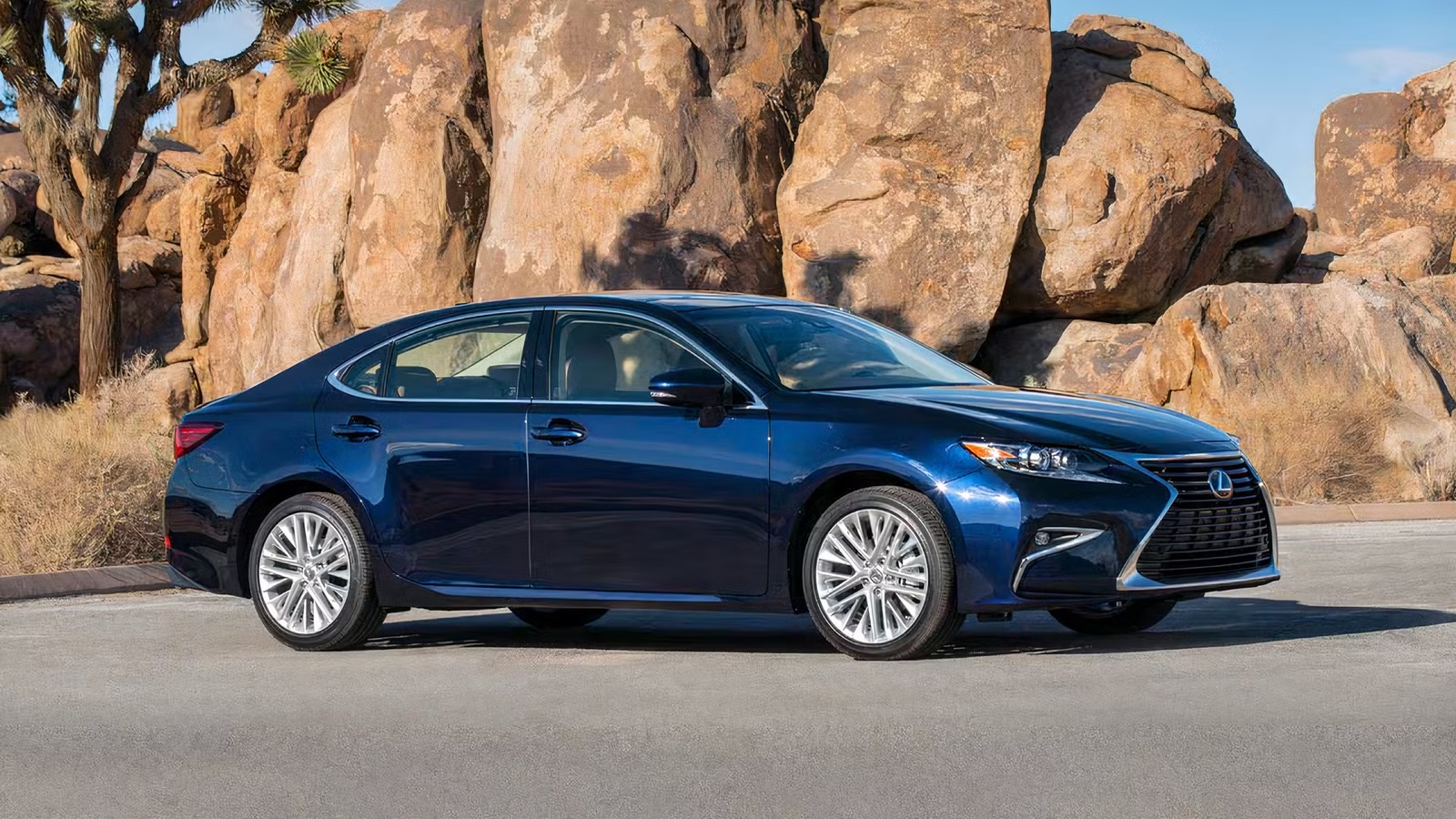
When it comes to long-term dependability, few debates generate more data — or more passion — than which Japanese vehicles have truly stood the test of time. We dug into the numbers so you don’t have to. What the research reveals may not shock hardcore enthusiasts, but the sheer dominance of one brand is still striking: every single vehicle on this list is a Toyota product, or leans heavily on Toyota’s engineering DNA — Lexus, after all, is Toyota’s luxury division in everything but name.

This isn’t brand loyalty talking — it’s data. We examined every Japanese vehicle produced across the 2011–2020 model years and identified the models with the highest overall J.D. Power Reliability Scores within that window. Here’s the list.
2011 Toyota Avalon
Reliability Score: 87/100
The Buick of Japanese sedans, the 2011 Toyota Avalon, is a standout performer. The 2011 model year received a facelift and is the last production year of the third-generation Avalon. With exceptional marks in every category, the 2011 Avalon is the quintessential full-sized sedan.
Reliability

With updated styling and technology, this final model year is without a doubt the most refined package of this Avalon generation. Pair that with one of Toyota’s most celebrated engines — the 2GR-FE 3.5-liter V-6 — and you have a proven recipe for success. It has served as the powerplant of choice for over 10 different Toyota models across nearly two decades.
2011 Lexus GS 350
Reliability Score: 87/100

The 2011 Lexus GS 350 is everything you could want from the 2011 Toyota Avalon, but nicer in every way. A plush ride, smooth engine, and rock-solid build quality make the 2011 GS 350 the best — and last — model year of the third-generation Lexus GS.
Reliability
Much of the 2011 Lexus GS 350’s reliability comes down to the 2GR-FSE 3.5-liter V-6 that powers it. The earlier 2GR-FE served as a rock-solid foundation for the FSE variant to build upon. The FSE is a more capable version of the same basic engine found in the Avalon, producing more power while also improving efficiency — largely thanks to its upgraded direct-injection fuel system. Now, well over two decades since its debut, its reputation for reliability has only grown stronger.
2013 Lexus GS 350
Reliability Score: 87/100

The 2013 Lexus GS 350 is a rare vehicle for how solid it is despite being only the second model year of a new generation. The general rule of thumb is that later model years tend to be the most refined. Yet, the 2013 fourth-generation GS 350 proves as reliable as its renowned predecessors right out of the gate.
Reliability
This continued success is thanks to the carryover between generations of the 3.5-liter 2GR-FSE engine. This FSE variant is a further-improved iteration of the one found in the previous generation. If you are looking for as bulletproof a V-6 as possible, this 2GR-FSE deserves a spot on your shortlist.
2011 Lexus RX 350
Reliability Score: 87/100

The 2011 Lexus RX 350 is the blueprint for what a reliable luxury SUV should be. With a solid combination of comfort, efficiency, and practicality, the 2011 model year holds the highest average rating among the third-generation RX lineup.
Reliability
The third-generation RX 350 marks the final use of the standard-setting 3.5-liter 2GR-FE engine in the Lexus RX. We first discussed this engine in the context of the 2011 Toyota Avalon, and there is a clear reason Toyota deployed it across so many models with such consistent acclaim for well over a decade.
2020 Lexus RX 350
Reliability Score: 87/100

Most vehicles across segments in the 2020 model year suffered from inconsistent reliability. The 2020 Lexus RX 350 is one of the few exceptions. It is the most modern vehicle on our list and the only one from this decade. Just when it seemed Toyota had squeezed everything possible out of the 2GR V-6 platform, they found a way to make it even more efficient.
Reliability
The 2020 RX 350 continues the reliability legacy of the 3.5-liter 2GR V-6 family. Under the hood sits the 2GR-FKS variant, which delivers better fuel economy and efficiency than any previous 2GR iteration. This variant debuted in 2015 and continues to power current Lexus 350 models today.
2014 Toyota Camry
Reliability Score: 88/100

An absolute symbol of reliability is the Toyota Camry. The 2014 seventh-generation Camry may be among the most dependable Camry models ever produced.
Reliability
Featuring the same 3.5-liter 2GR-FE (in V-6 models) found in the 2011 Lexus RX 350 and 2011 Toyota Avalon, the 2014 Camry guarantees reliability. The 2014 Camry additionally offers the first inline-four engine on our list: the 2.5-liter 2AR-FE. It served as the platform for many mid-sized Toyota models from 2008 onward. Beginning with the 2017 model year, it was replaced by the A25A-FKS engine platform, which continues to power the current-generation Camry.
2014 Scion FR-S
Reliability Score: 88/100

The 2014 Scion FR-S is the only true sports car on our list. Any sports car that earns a place on a reliability ranking is something special.
Reliability
The 4U-GSE 2.0-liter boxer engine powering the first-generation FR-S is the only engine on this list that is not a full Toyota product. Known as the FA20D in its Subaru-based designation, this particular variant was discontinued in 2021 with the introduction of the second-generation Toyota GR 86. It’s a Toyota-affiliated product, but this is not a pure Toyota engine. A thorough understanding of the vehicle’s maintenance history can help avoid the common pitfalls and costly mistakes associated with these engines.
2011 Lexus IS 250
Reliability Score: 88/100

Rounding out the top three of our list is the 2011 Lexus IS 250. The 2011 model year represented the second refresh of the second-generation Lexus IS line.
Reliability
The first Lexus 250 model on our list means this sporty sedan is powered by the 4GR-FSE 2.5-liter V-6 engine. The 4GR is a detuned variant of the renowned 2GR-FSE we have discussed at length. Its reduced power output compared to the 350 models translates directly into an overall gain in long-term reliability.
2017 Lexus ES 350
Reliability Score: 89/100

Next on our list is none other than the 2017 Lexus ES 350. This luxury mid-sized sedan strikes one of the finest balances of refinement and value in the segment. The 2017 facelift model is the last model year of the sixth-generation ES.
Reliability
To no one’s surprise, the 2GR-FE 3.5-liter V-6 resides under the hood of the 2017 Lexus ES 350. There is a reason Toyota kept this engine in the ES 350 for over a decade without replacement. It’s simply that good.
2011 Lexus LS 460
Reliability Score: 89/100

Who would have thought that the most reliable vehicle on our list would be powered by a 4.6-liter V-8? Yet it is entirely fitting that the facelifted 2011 Lexus LS 460 delivers one of the most luxurious and dependable ownership experiences of any car on this list.
Reliability
The 4.6-liter 1UR-FSE V-8 engine debuted in the third-generation LS 460. With the LS serving as Lexus’s flagship model, virtually no expense is spared in its engineering and construction. The previous-generation UZ V-8 platform was solid, but comparatively slow and inefficient alongside the 1UR. It is no wonder Lexus relied on the 1UR-FSE for over a decade to cement the LS 460’s reputation for reliability. The UR platform remains in use today, powering performance-focused Lexus models across the brand’s entire lineup.
Sources: J.D. Power, Kelley Blue Book, Edmunds, RepairPal, CarEdge, and Consumer Reports

Related posts





Latest Post


No Comments