-
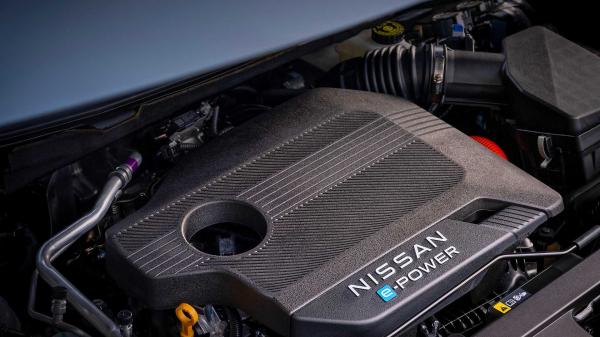
2027 Nissan Rogue Hybrid close-up shot of the engine Nissan -
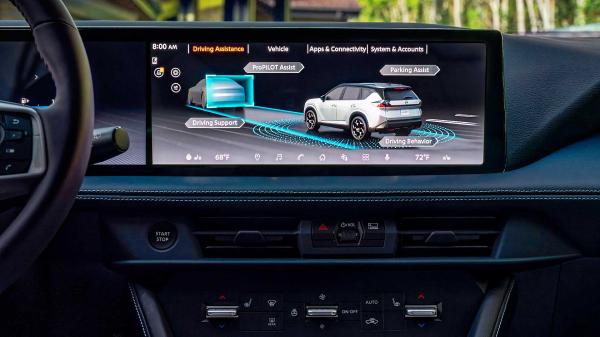
2027 Nissan Rogue Hybrid SR interior shot showing dash Nissan -
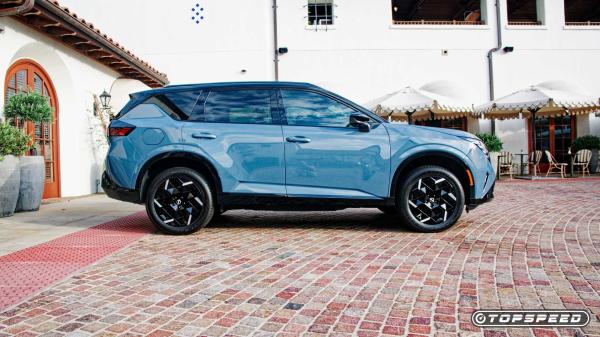
2027 Nissan Rogue Hybrid side shot parked TopSpeed | Michael Frank

2027 Nissan Rogue Hybrid First Drive: Should Toyota Be Worried?
7 minutes reading
Friday, 30 Oct 2026 12:00 0 10 autotech
For decades, Nissan hubristically sought its own path. Yes, they were ahead of the curve with the first Leaf. Ahead of even Tesla, in fact. But Nissan stalled after that effort, and by the time the Ariya hit (a perfectly fine, but not extraordinary car), they’d squandered their early command of the EV segment.

84 autotech
Nissan, thankfully, remains stubborn. And its new e-Power Rogue is an entire reinvention of hybridization. You’ll experience nothing like the droning hybrids you may know from, oh, its main rival, Toyota. Instead, the entirely new Rogue operates so much more like an EV, with often entirely silent operation. It’s so good that anyone shopping in the fat-middle of the crossover segment who isn’t willing to purchase an EV should take one for a test drive. In fact, I’d argue that e-Power has the potential to be a game-changer for any would-be hybrid buyer, period.
What The Heck Is e-Power?
To make this distinction as simple as possible, a conventional hybrid, one you’ve most likely experienced, is what’s called a parallel hybrid. That is, it uses both electric propulsion via motors and its gas engine in “parallel,” powering the wheels. But e-Power is a series hybrid, where the gas engine operates like a generator, charging the battery, which juices two electric motors that, in turn, drive its wheels. Its 1.5-liter three-cylinder gas motor seldom revs above 2,000 RPM because it’s just a generator. The engine’s only role is to charge the 1.67 kW Li-ion battery.

55 autotech
Why Care?
A series hybrid doesn’t need a transmission. And that’s a big deal. Most transmissions for parallel hybrids are CVTs. These tend to have a long wind-out ricochet effect, where the gas engine revs to a miserable pitch — then hangs there as the car, eventually, slingshots to accelerate. That delay, and the seeming lack of motion in response to what’s going on under the hood, is one of the primary drawbacks to these systems.
e-Power Is Like An Electric Car You Never Need To Charge

Driving the e-Power Rogue, quite eerily, seems like driving an electric car. The tiny, three-cylinder, 148-horsepower engine wakes up occasionally to charge the Rogue’s battery, but the car so often is just running off battery power. On the highway, unless we were climbing a steep grade, the gas engine went back to sleep, and whenever we weren’t on the throttle, you didn’t even know it was a gas car. At a constant 65 MPH, you could carry on a conversation at normal volume, and Nissan’s engineers made a huge effort to silence road noise and wind noise.
As Aero As Possible


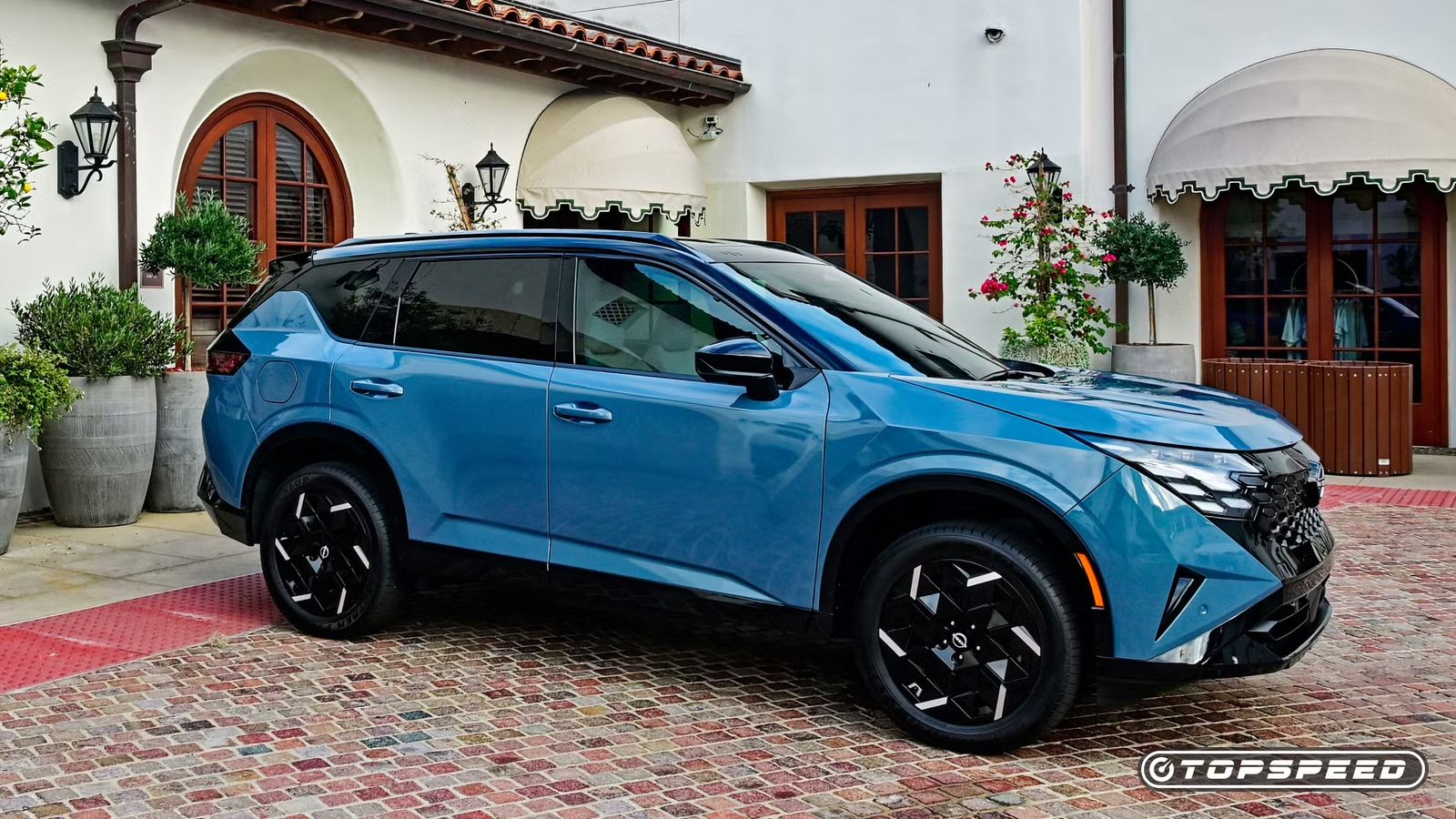
You can see that in small physical details like the slope of the roof, its flush rails, and in the shaping of the grille as it meets the tires. The wheels, despite looking exceptionally ornamental, are actually wind-cheating, with two pieces: both a cover and the wheel behind it. Nissan also added a great deal of sound-deadening, and the cabin is genuinely luxury-car quiet. In fact, it’s notably quieter inside than a Lexus RX I drove recently.
e-Power Is Plenty Fast, Too

If you’re thinking 148 horsepower isn’t enough to move a roughly 4,100-pound crossover, you’d be correct. That said, that’s not the output you should care about. Because the Rogue’s dual motors (one for each axle) can produce a combined 225 horsepower from a standstill. Also, the system is infinitely variable, so the power split can go to either axle in any percentage, and to either side, too. Torque hits far quicker than in any series hybrid I’ve tested, with up to 243 pound-feet coming from the front motor and 144 pound-feet from the rear. You’ll arrive at 60 MPH in just a hair over six seconds, but that’s not the stat that matters most.
The Shove That Matters

For daily driving, like jumping from 30 MPH on a tight highway on-ramp up to 70 MPH to merge, the Rogue is EV-shove-your-butt-hard-into-the-sculpted-seat-back sporty. At no time did I think the Nissan was underpowered, and without any transmission, about all you’ll hear when you floor it is a fairly satisfying engine moving you up to speed and then scuttling back to its quiet corner the instant you lay off the gas.
A Spiffy Interior
A year after Toyota redesigned and updated its RAV4, and made it a default hybrid, Nissan’s new Rogue arrives and looks outstanding on the inside. Nissan brought the top-trim RAV4 to this launch so we could drive them back to back, and in comparison, the Rogue is not only much quieter, its cabin is also far more premium. An integrated screen sweeps across the dash and incorporates both the instrument cluster and infotainment.
And Nissan labored hard over every human-machine interface. Designers added subtle detailed surface treatments wherever possible, and every cubby gets grooved, slightly rubbery texturing. That’ll grip a handbag you place in the bottom tray of the double-decker center console, and makes it easier to grab the door release.
Luxury-Level Seating

Nissan’s new wide-band seating adds ribbing to the seats’ shoulders and spine, which, like a high-tech backpack panel, allows greater airflow and more comfort on warmer days, even without opting for the heated and cooled seats that come standard on the top-grade Platinum Rogue.
The Price Is Right

Nissan targeted the king of the category, the $37,600 Toyota RAV4 Hybrid SE AWD. The Rogue defaults to AWD, and its base trim, the SV, comes in just shy of that mark, at $37,065 with destination. Nissan says the somewhat better-equipped SR will comprise the bulk of orders, and at $39,000 with destination, that’s pitted directly against the XLE Premium AWD RAV4 Hybrid. These aren’t the only cars in the category, however. And a biggie, the new 2027 Hyundai Tucson Hybrid could well undercut both of the Japanese brands. The outgoing 2026 hybrid Tucson stickers at just over $34,000.
One Big (Or Small) Hangup For The Rogue

The e-Power Rogue is very impressive. But it’s possible Nissan missed an opportunity to make it larger. In theory, they have the Pathfinder for that. But the Rogue outsells the Pathfinder by more than two-to-one, so it’s a potential problem that its cargo volume comes up short of every major rival in the category.
At 34.4 cubic feet with its aft seats upright, the Rogue trails the nearly 42 cubic feet offered by the Tucson and the nearly 38 cubic feet of the Toyota RAV4. With its seats folded, the 66 cubic feet in the Rogue competes reasonably against the more generous 70.4 cubic feet in the RAV4 — but both sit well shy of the new Tucson’s over 80 cubic feet. The Tucson will also get a far roomier second row, with nearly 42 inches of second-row legroom. I sat behind my six-foot-plus-tall co-driver during our evaluation and still had decent knee space, but I am well shy of that height, and the Rogue’s 36.2 inches of second-row legroom might feel tight for some buyers.
TopSpeed’s Take

The Rogue’s combined 38 MPG fuel economy trails the 41 MPG offered from Toyota’s RAV4 Hybrid XLE AWD. With continued high gas prices, that top-line number may be all that matters to you. Because if you can’t manage the complexities of EV ownership (i.e., you don’t live anywhere where you can add home charging), you’re chasing the best fuel economy possible.
Nissan’s e-Power solution is genuinely impressive, however, and three MPG isn’t going to matter that much in the grand scheme of ownership costs. Will the hybrid Hyundai Tucson be even better? We don’t know yet. But I can tell you that if you’re in the market, you should be cross-shopping the 2026 RAV4 against its increasingly competitive rivals.
Sources: Nissan, The EPA

Related posts




Latest Post


No Comments