
How Ford Quietly Broke A 40-Year Truck Rule On Its Biggest SUVs
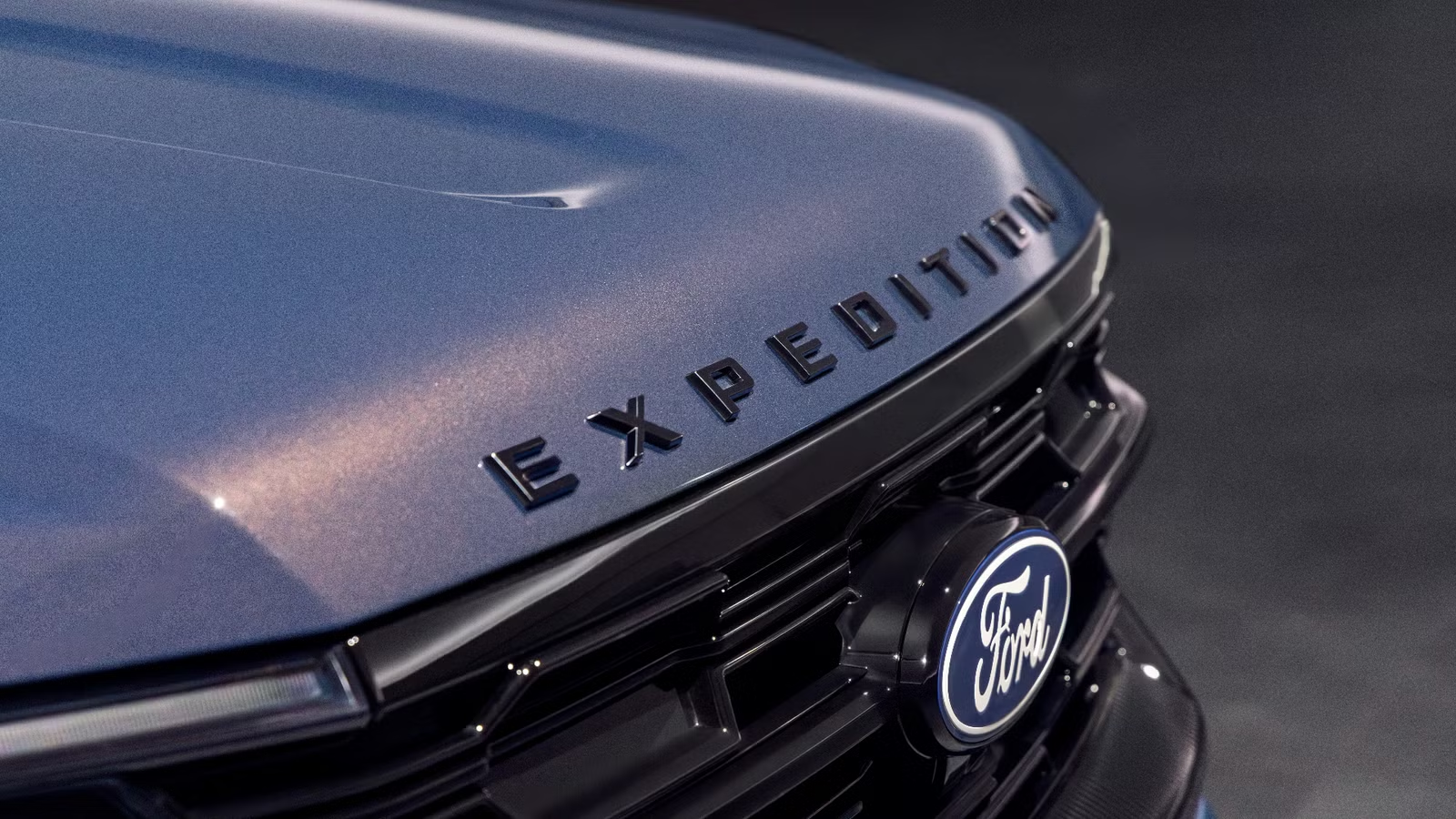
Ford may be well-known for its cars. But, it’s also made a name for itself in creating great SUVs. That’s not just been the case with the main Ford brand, but also with the Mercury and Lincoln brands alongside it. One of those fantastic SUV platforms not only has been a consistently strong performer in Ford’s model line-up, but it also pioneered a change in the way full-sized SUVs were designed. It did that by breaking an essential rule of Ford’s truck construction that had held sway for 40 years.
Body-On-Frame SUVs Are Often Held As The Holy Grail Of Off-Road Capability And Durability

When people are looking for the most practical and most capable SUVs, they always go for the old-school body-on-frame ones. These kinds of SUVs are very different from your usual smaller urban crossovers. They’re built first and foremost for going off the beaten track. They have more in common with pick-up trucks in their construction and mechanical parts. In fact, quite a few of them basically are pick-up trucks with a different body on top.
Those pick-up truck underpinnings are what gave us two of the Ford Motor Company’s best full-sized SUVs – the Ford Expedition and the Lincoln Navigator. These big, Ford F-150-based SUVs are still being produced today (albeit in unibody, rather than body-on-frame, form) and they’re still really popular.
From The Early 2000s, Ford’s 4×4 Body-On-Frame SUVs Started Sitting Lower Than The 4×2 Versions


The initial Ford Expedition and Lincoln Navigator generations were both identical to the Ford F-150 under the skin. This included the suspension setup, which was designed for utilitarian truck work rather than SUV comfort. That also meant that 4×4 versions typically sat higher off the ground than their 4×2 counterparts. But, from 2003, something changed. The more capable 4×4 versions actually started to sit lower than the 4x2s. That’s something that broke a long-standing rule of thumb with how American trucks and body-on-frame SUVs were. It was always the case in the past that four-wheel drive models sat higher than two-wheel drive ones. That’s something that made sense in the minds of lots of enthusiasts, too. The 4×4 models are the more capable ones that are supposed to be able to handle serious off-roading, and that extra ground clearance certainly helps.
They Sit Lower Because Ford Radically Changed The Rear Suspension Setup
Why do post-2002 Ford Expeditions and Lincoln Navigators sit lower? It’s because Ford completely changed the rear suspension setup. Ford changed from using a live axle to an independent multi-link setup in the rear, while keeping the front suspension setup as it was. Using an independent multi-link setup at the rear is more like what you’d find on a smaller, crossover-style SUV, rather than the pick-up truck-style setup body-on-frame SUVs were typically using at the time.
This is a change that other full-sized SUVs have adopted since. The Chevrolet Tahoe, Chevrolet Suburban, GMC Yukon/Yukon XL and Cadillac Escalade/Escalade ESV switched to having independent rear suspension setups in 2021. The Infiniti QX80 and Nissan Armada also use an independent rear suspension setup.
This Change Didn’t Happen On Ford’s Full-Sized Pick-Up Trucks

While the change to independent multi-link rear suspension happened on the big SUVs, that change didn’t cross over into the trucks. The Ford F-150 still kept the old rear axle setup. That actually makes a lot of sense for multiple reasons. A couple of those reasons are ones that we’re going to get into in just a little bit. The main one, though, is that the Ford F-150 is intended to be a work vehicle first and foremost. A heavier-duty, live axle setup in the rear makes more sense for carrying heavy loads in the back. Since a body-on-frame SUV is much less likely to be used for serious heavy-duty hauling, the live rear axle setup that prioritises utility over all else seems a little bit overkill!
The Change To Independent Multi-Link Rear Suspension Offered A Lot Of Benefits
You might think that the change to an independent multi-link setup in the rear would be a bit counterintuitive, for SUVs are supposed to be more rugged and more capable than most. But, the Ford Motor Company did actually have a couple of good reasons for making that change. When you have a look at what those reasons were, and the advantages they offered to an SUV-style car, it makes a lot of sense as to why Ford chose to do this rear suspension change.
Expeditions And Navigators Now Had Better Packaging

The first of the big benefits these full-sized SUVs got by switching to an independent multi-link rear suspension setup was that their overall packaging ended up being better. The main indicator of this was the interior space. With the new suspension setup, the Lincoln Navigator L ended up having a monstrous 128 cubic feet of cargo space with both rows of rear seats folded down. While the overall weight that these big, body-on-frame SUVs can carry is reduced by using indepedent rear suspension, the new setup allows for much better space for passengers. In a car that’s meant to be a family transport, that’s much more important.
The Ride Quality Considerably Improved

The other big benefit these SUVs got from the switch to the independent rear suspension setup is that the ride quality really improved. While a live axle setup at the rear might be great for hauling heavy loads, it makes the ride fairly uncomfortable over bad roads or if there isn’t a lot of weight in the back. The more car-like independent multi-link setup solves those issues, simply because it’s better designed for a car that’s more for carrying passengers instead of heavy loads.
Sources: expeditionforum.com, Ford, Lincoln

Related posts





Latest Post


No Comments