
The Forgotten Japanese Hatchback That Got Everything Right
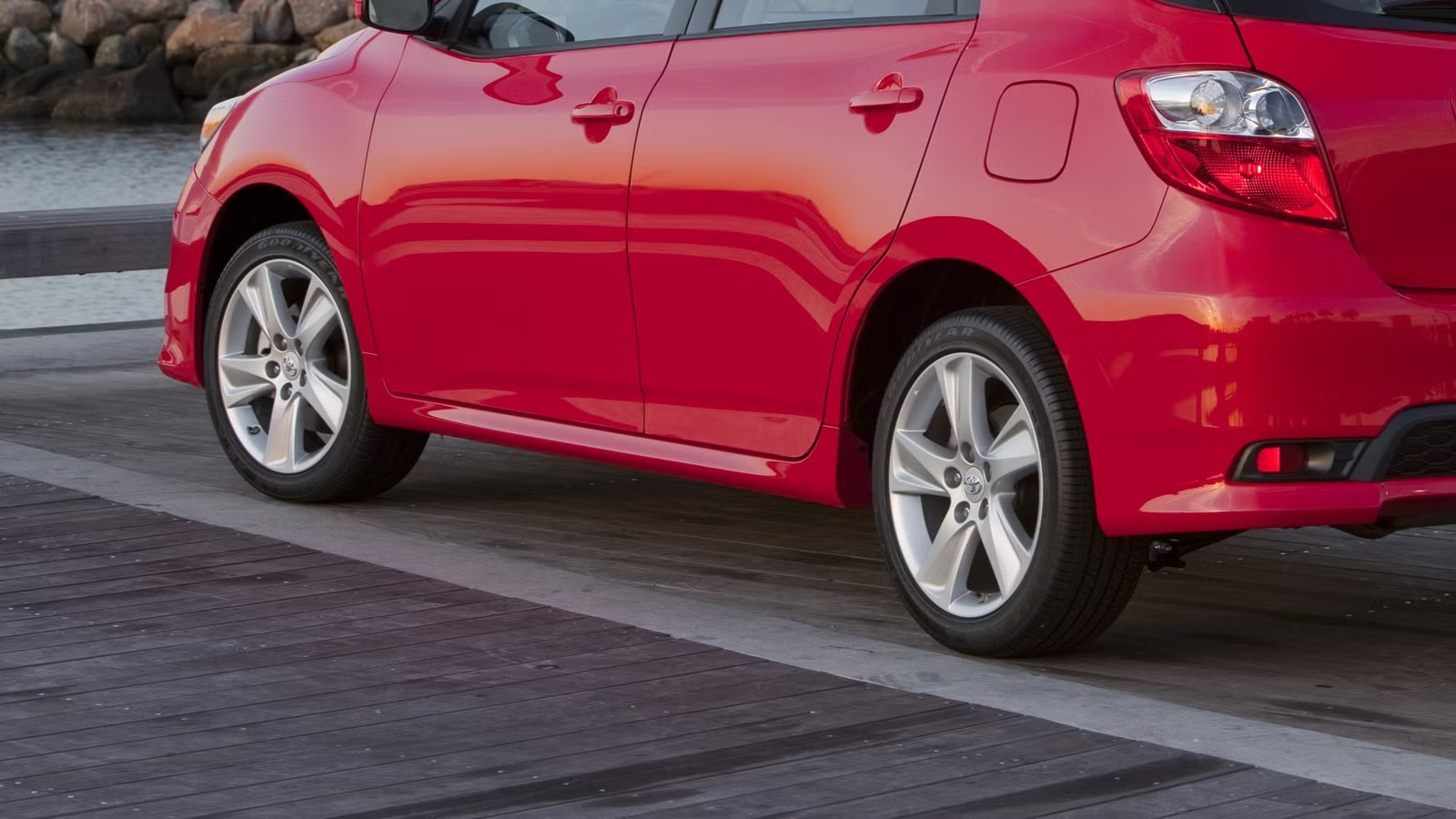
In 2013, Toyota maintained a conservative U.S. strategy focused on conventional internal combustion engines and standard sedans, treating hybrids as niche efficiency options. Over the past decade, the automaker executed a massive operational shift. Today, Toyota prioritizes high-margin SUVs, crossovers, and trucks, having phased out several traditional cars.

Furthermore, the brand transformed electrification from a single-model experiment into its core foundation. Rather than relying solely on pure electric vehicles, Toyota now offers hybrid or plug-in powertrains across virtually its entire mainstream catalog, while expanding its dedicated bZ electric sub-brand to balance regulatory mandates with consumer demand.
How Toyota Earned The American Consumer’s Trust
Toyota built unwavering trust with American consumers through a persistent commitment to quality, durability, and practical value. Entering the market with affordable, fuel-efficient vehicles during the 1970s oil crisis, the automaker proved its engineering superiority when domestic competitors struggled. Central to this success is the Toyota Production System, which empowers factory workers to halt assembly lines instantly to fix defects, ensuring exceptionally high manufacturing standards.

Toyota prioritizes incremental and disciplined engineering as opposed to incorporating shortsighted design trends or unproven technologies. This conservative approach yields powertrains capable of running reliably for hundreds of thousands of miles with minimal maintenance costs. Furthermore, the early commercialization and proven longevity of the hybrid system demonstrates that Toyota could pioneer green technology without sacrificing long-term dependability.
The Toyota Matrix Left A Lasting Impression

Introduced for the 2003 model year, the Toyota Matrix was a compact hatchback designed on the Corolla platform to offer young buyers utility, versatile cargo space, and sportiness. First-generation models, sold from 2003 to 2008, performed exceptionally well in North America, with U.S. sales peaking above 60,000 units annually as buyers embraced its practical, flat-folding interior and optional all-wheel drive. However, the second generation, between 2009 and 2013, faced steeper challenges.
Stiffer competition, conservative exterior styling updates, and changing consumer tastes caused demand to drop sharply. By the early 2010s, American buyer interest had rapidly pivoted toward subcompact crossovers like the RAV4, leaving traditional compact hatchbacks struggling. Recognizing this market shift alongside internal overlap with the core Corolla sedan, Toyota discontinued the Matrix in the U.S. after 2013 and in Canada after 2014.
The Matrix Was A New Hatchback Bargain

When new, the 2013 Toyota Matrix offered an accessible entry price, starting at an original base MSRP of approximately $19,275 for the standard L trim. Upgrading to the sportier S trim or adding all-wheel drive pushed the original factory pricing upward from $22,000 to $23,000, depending on optional packages. On the pre-owned market today, valuation data across major automotive aggregators shows impressive value retention driven by Toyota’s reputation for long-term mechanical reliability.
According to Edmunds market metrics, used trade-in and retail appraisal values for the 2013 Matrix typically range between $1,800 for high-mileage units in rough condition up to $10,100 for clean, low-mileage examples, with an average estimated market value settling around $7,100. Data compiled from J.D. Power reflects similar used transaction figures, showing that buyers actively pay between $6,000 and $10,500 for dealership retail inventory based on trim level and vehicle history.
Toyota’s Trusted Engine Lines

The 2013 Toyota Matrix offered two four-cylinder engines paired with multiple transmission choices. Standard base L models featured a 1.8-liter engine producing 132 horsepower and 128 pound-feet of torque, mated to a five-speed manual or four-speed automatic transmission, achieving a 0 to 60 MPH time of 9.3 seconds. The sportier Matrix S upgraded to a 2.4-liter engine delivering 158 hp and 162 lb-ft of torque, paired with a five-speed manual, five-speed automatic, or four-speed automatic on all-wheel-drive variants, yielding a faster 0–60 time of 8.7 seconds.
In terms of efficiency, the base 1.8-liter model earned EPA ratings of 26 MPG city, 32 MPG highway, and 28 to 29 MPG combined. The 2.4-liter S trim registered 21 MPG city, 29 MPG highway, and 24 MPGcombined. With a 13.2-gallon fuel tank, the base model provided a driving range of about 370 to 420 miles per fill-up. Assuming an average regular gasoline price of $3.50 per gallon, filling the tank costs roughly $46.20. At 28 mpg combined, driving 25 miles consumes 0.89 gallons, costing $3.12. Over five years and 75,000 miles, the Matrix yields around $1,500 to $2,500 in total fuel cost savings compared to the average new vehicle of its era.
How The Japanese Brand Masters Long-Term Reliability

The 2013 Toyota Matrix primarily utilizes the 1.8-liter 2ZR-FE engine, featuring a die-cast aluminum cylinder block with spiny-type iron liners that maximize heat dissipation to prevent bore distortion. Engineered for low friction and high thermal efficiency, the valvetrain employs roller rocker arms with needle bearings, hydraulic lash adjusters that eliminate periodic valve clearances, and Dual VVT-i to optimize intake and exhaust timing continuously. A durable, maintenance-free timing chain replaces traditional rubber belts, ensuring exceptional long-term reliability.
Servicing requirements are straightforward and cost-effective. Oil and filter changes are specified every 5,000 miles or six months, costing roughly $40 to $70. Major maintenance occurs every 30,000 miles to inspect cooling systems and replace cabin and engine air filters, while long-life iridium spark plugs require replacement at 120,000-mile intervals at a cost of $150 to $250. Average annual routine maintenance runs between $300 and $500, solidifying the model’s low cost of ownership.
Plenty Of Room For The Average American Family

The 2013 Toyota Matrix offers practical cabin features across two trim levels. The base L trim provides standard cloth seating and manual air conditioning. Furthermore, this entry model includes cruise control and a tilt steering wheel. Occupants operate media through a basic audio system containing four speakers and an input jack. Next, the premium S trim adds a touchscreen interface and Bluetooth connectivity. This upgraded version also features a stereo using six speakers.
Additionally, the S model incorporates a folding front passenger seat to accommodate long items. Interior space remains competitive for the compact vehicle segment. Front passengers receive nearly 40 inches of headroom and 41.6 inches of legroom. Rear occupants experience 39.4 inches of headroom and 36.2 inches of legroom. Therefore, four adults can ride comfortably during daily commutes. Utility stands as a primary engineering focus for this hatchback. The rear cargo area holds 19.8 cubic feet of volume behind the back row. Owners can fold the rear seats flat to expand capacity to 61.5 cubic feet. Toyota lines this cargo floor with durable plastic. Consequently, drivers can easily clean the loading area after hauling supplies or heavy equipment. This versatile layout maximizes interior functionality for daily tasks.
Owners Hold The Matrix To A High Standard

The 2013 Toyota Matrix earns solid scores across major automotive consumer platforms, reflecting its durable Corolla-based underpinning. In terms of owner dependability, J.D. Power awards the hatchback a Quality and Reliability score of 81 out of 100, placing it squarely in the “Great” category. Meanwhile, longevity analysis from iSeeCars projects an average lifespan of roughly 138,480 miles or nearly 10 years of usable service, with top-tier maintained examples routinely crossing the 200,000-mile threshold.
On Edmunds, verified buyers grant the 2013 Matrix an average consumer rating of 4.1 out of 5 stars. Highlighted pros consistently point to its exceptionally practical interior space, flat-folding rear passenger seats, robust mechanical dependability, and easy-to-use cabin controls. Drivers also value the available all-wheel-drive configuration for winter traction. Conversely, key cons noted by reviewers include sluggish acceleration from the base, noticeable cabin road noise at highway speeds, and dated interior materials compared to newer compact rivals. Despite these minor drawbacks, consumer feedback confirms that the Matrix remains a highly dependable, low-cost daily driver.
Sources: Toyota, J.D. Power, Edmunds, iSeeCars, and the EPA.

Related posts






Latest Post




No Comments