The Real Reason Honda Civic Type R Buyers Skip A Used BMW M2
11 minutes reading
Saturday, 27 Jun 2026 18:00 0 48 autotech
Cross-shopping a new 2026 Honda Civic Type R against a used BMW M2 should be straightforward: one is a front-wheel-drive hatchback, the other is a rear-wheel-drive premium sports coupe. But the buyers doing this comparison are rarely naive. They’ve run the numbers, they know what both cars weigh, and they understand that horsepower figures don’t exist in a vacuum.
The FL5 Civic Type R arrives at dealerships carrying an MSRP of $46,895 for the 2026 model year, and used G87 M2s, the current generation launched for 2023, are listing in overlapping territory on Edmunds and KBB, with average asking prices for 2023 and 2024 examples ranging from roughly $51,000 to $63,000. At that price delta, the BMW’s rear-wheel-drive pedigree and S58 twin-turbo inline-six start to look compelling. But the sticker price is only where the conversation starts. Insurance premiums, maintenance schedules, depreciation trajectories, and the quieter business of everyday ownership quickly reshape the equation, and they reshape it decisively in favor of the Honda. What follows is why the Type R doesn’t just hold its own against the M2, but why, for a certain kind of buyer, it makes the used German irrelevant before the first test drive.
When A New Honda Civic Type R Costs The Same As A Used BMW M2
2025 Honda Civic Type R front 3/4 shotGuillaume Fournier | TopSpeed
Let’s set the market up clearly. The 2026 Honda Civic Type R carries an MSRP of $46,895, with Honda’s $1,150 destination charge pushing the out-of-pocket figure to just over $48,000. It is a single-trim car: no options packages to inflate the transaction price, no detuned entry version to muddy comparisons. You get 315 horsepower and 310 pound-feet of torque from the K20C1 2.0-liter turbocharged four-cylinder, a six-speed manual transmission, a mechanical limited-slip differential, Brembo four-piston front calipers, Michelin Pilot Sport 4S tires, and adaptive dampers.
Against it, a used 2023 BMW M2 in good condition currently lists at a KBB private-party value of approximately $51,200, while 2024 examples are averaging around $60,000 to $63,000 on Edmunds, depending on specification and mileage. The early G87 M2 brings 453 horsepower from its twin-turbocharged 3.0-liter S58 inline-six, rear-wheel drive, and a choice of six-speed manual or eight-speed automatic. On a purely performance-specification basis, the M2 wins by a wider margin than many buyers expect. 453 horsepower versus 315 horsepower is not a rounding error. The M2 covers the quarter-mile meaningfully quicker and its power advantage on track is real.
So why does the comparison happen at all? Because performance buyers who have owned premium German machinery before tend to arrive at the cross-shop already knowing what the M2 costs to live with. The conversation shifts from spec sheet to spreadsheet, and that’s where the Type R quietly takes control.
14 Affordable Alternatives To The Porsche 911 In 2026
These sports cars prove that you can still find the magic and thrill of a proper sports car for less than the price of a Porsche 911.
The Real Difference Is That Type R Buyers Want Performance Without The Ownership Anxiety
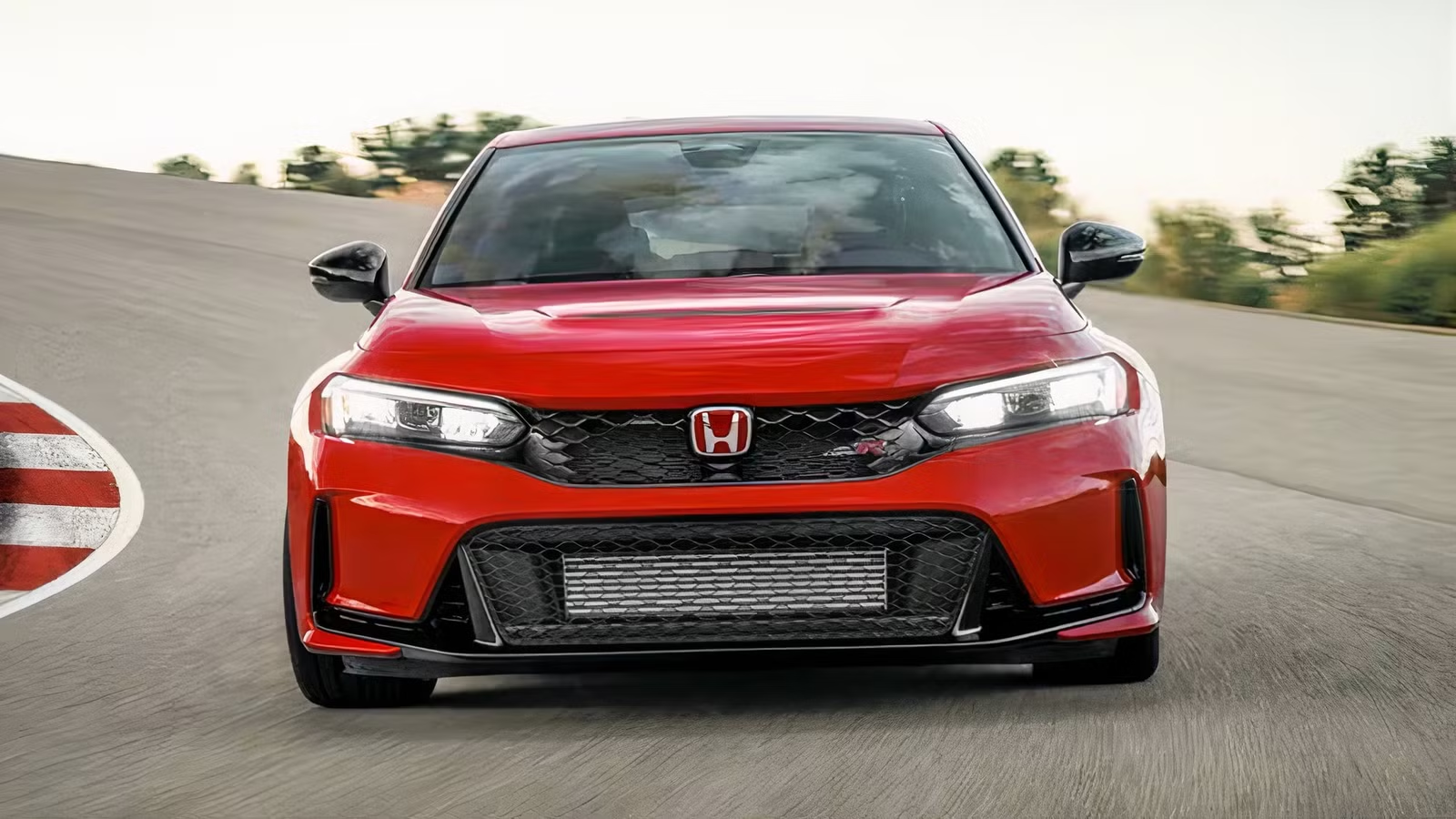
Front 3/4 action shot of 2026 Honda Civic Type R in red being driven on roadHonda
Insurance is where the gap between these two cars becomes immediately tangible. According to Kelley Blue Book’s cost-to-own data (as of mid-2026), the 2025 BMW M2 costs approximately $24,590 per year to insure, or around $2,049 per month. Over five years, that single line item reaches $122,950 before a single oil change or fuel stop.
The 2025 Honda Civic Type R, by contrast, carries an estimated annual insurance cost of $18,595, or roughly $1,549 per month, according to KBB’s cost-to-own modeling. That’s a difference of just under $6,000 per year. Over a five-year ownership period, the gap reaches approximately $30,000 in insurance costs alone.
The Reasons Are Structural, Not Incidental
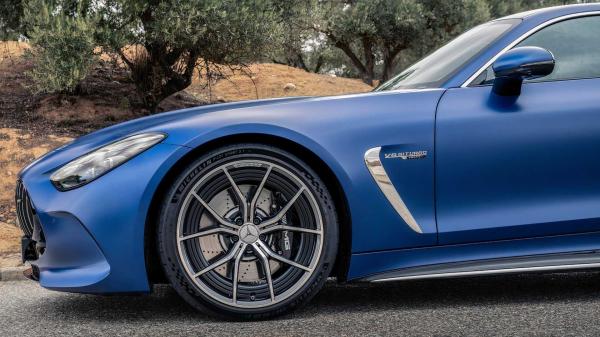
2024 BMW M2 side shotLyndon Conrad Bell | TopSpeed
The M2’s S58 engine produces 453 horsepower and is rear-wheel-drive, a combination that statistically produces more high-severity incidents in actuarial models. It is also a premium-brand vehicle, meaning parts and repair costs following any incident are higher. The Type R’s K20C1 is a 315 horsepower unit in a front-wheel-drive platform from a brand with a historically conservative loss profile in the compact performance segment. Insurers price that difference aggressively.
For the buyer running a monthly budget, this isn’t an abstract point. At the M2’s insurance rate, a buyer spending $47,000 on the Type R is effectively paying $6,000 more per year to own the M2 before they’ve so much as scheduled their first service interval. That kind of money buys tires, track days, or a meaningful chunk of a performance upgrade budget.
The Daily Driver With Japanese Reliability And Porsche-Level Driving Feel
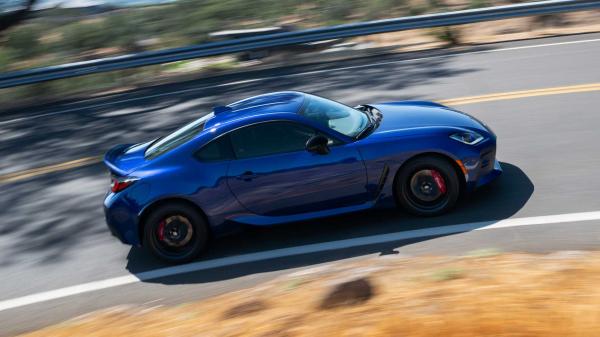
Discover how the Toyota GR86 delivers a Porsche-like drive at an affordable price—blending reliability with everyday thrills.
Front-Wheel Drive Precision And Everyday Practicality
Side action shot of 2025 Honda Civic Type R in redHonda
The Honda Civic Type R’s front-wheel-drive layout is frequently cited as its limiting factor by M2 advocates, and in pure rear-end rotation terms, they’re not wrong. But the FL5’s engineering achievements in the FWD space are not trivial and deserve to be named specifically. Honda’s dual-axis strut front suspension, unique to the Type R, eliminates the torque steer that plagued earlier high-power front-wheel-drive cars by mechanically decoupling the steering axis from the drivetrain load. The result is a car that puts 315 horsepower and 310 pound-feet through its front wheels without the nervous straight-line behavior that historically defined the segment’s weakness.
Base Trim Engine
2L inline-4 Turbo
Base Trim Transmission
6-speed manual
Base Trim Drivetrain
Front-Wheel Drive
Base Trim Horsepower
315 HP @6500 RPM
Base Trim Torque
310 lb.-ft. @ 2600 RPM
Base Trim Fuel Economy (city/highway/combined)
22/28/24 MPG
Make
Honda
Model
Civic Type R
Segment
Compact Hatchback
The FL5 also holds the outright front-wheel-drive production car lap record at the Nürburgring Nordschleife, recorded at 7:44.881 in 2023. That record means more than bragging rights: it confirms that the chassis, braking system, and mechanical LSD are tuned to a level of front-wheel-drive performance that has no direct peer.
The Type R’s Hatchback Body Adds Utility The M2 Coupe Cannot Match
The rear seats are genuinely usable, and the rear cargo area, accessed through a proper lift-up hatch, accommodates carry-on luggage, weekly grocery runs, and track-day gear without compromise. The M2 is tighter in the rear, built more explicitly as a driving tool with a back seat that functions primarily as a courtesy shelf.
This matters to the buyer profile cross-shopping these cars. The Type R’s target buyer typically drives it daily, uses it as a sole vehicle, and wants the performance experience without needing to park a second car in the garage for everyday duties. On that basis, the M2’s rear-wheel-drive engagement, genuinely rewarding in the right conditions, doesn’t offset a narrower interior, more compromised cargo access, and a stiffer ride that owners consistently note as its most intrusive daily characteristic.
10 German SUVs With The Lowest Maintenance Costs In 2025
German SUVs aren’t renowned for being cheap to maintain, but these 10 German SUVs have the lowest maintenance costs out of all of the 2025 models.
Why Long-Term Reliability And Lower Running Costs Matter More Than Rear-Wheel-Drive Thrills
2025 Honda Civic Type R rear 3/4 shotGuillaume Fournier | TopSpeed
Scheduled maintenance for the 2025 BMW M2 averages approximately $902 per year according to KBB’s cost-to-own data, with five-year total maintenance costs estimated at $4,513. The 2025 Civic Type R runs about $1,275 annually by the same metric, for a five-year total of roughly $6,379. On scheduled maintenance alone, the M2 appears marginally cheaper.
Scheduled Maintenance Is Only Part Of The Story
2025 BMW M2BMW USA
CarEdge’s five-year total cost-of-ownership model for the BMW M2 puts the aggregate ownership cost at $78,213, a figure that encompasses depreciation, insurance, fuel, financing, and maintenance. KBB’s depreciation data for the 2025 M2 projects a five-year loss of approximately $28,796, averaging $5,759 per year. For context, that’s depreciation alone eating roughly 40 percent of the M2’s original purchase price over five years.
The Civic Type R’s depreciation story is more complex, and it is worth stating plainly: the FL5 does not depreciate cleanly in the traditional sense. KBB projects a five-year depreciation of around $18,620 for the 2025 model, averaging $3,724 annually, meaningfully lower than the M2’s curve. But the used market tells a more interesting story. According to CarGurus, the average price for a used FL5 Civic Type R was sitting at approximately $41,388 at time of research, with 2024 and 2025 examples selling for $45,629 and $48,943 respectively. Low-mileage examples have been reported as selling at or above their original MSRP.
Front 3/4 action shot of 2025 Honda Civic Type R in white driving on roadHonda
This is partly an artifact of the FL5’s allocation-constrained launch (2022–2023 examples sold above sticker during high-demand periods), and partly a product of the car’s rising new price floor: the 2026 model costs $1,000 more than the 2025, which was $800 more than the 2024. Rising new prices support used values. The manual-only spec also constrains supply, since a meaningful segment of the market will not engage with a clutch pedal. What this means in practice is that the Type R’s depreciation advantage over the M2 is real, but it is not as dramatic as a simple MSRP-to-residual comparison might suggest. Buyers should verify current private-party values via KBB or Edmunds before assuming a steep depreciation advantage.
The Long-Term Reliability Case Becomes Clearest Is In The Engine Itself
2025 Honda Civic Type R EngineHonda
The K20C1 at the heart of the FL5 is the latest evolution of Honda’s K-series platform, a family with over two decades of production history and one of the most thoroughly validated reliability records in the compact performance segment. According to NHTSA data, the K20C1-powered Type R logged only eight complaints across two model years, placing it in the cleanest reliability tier within the Civic lineup. Unscheduled repair costs and the anxiety of out-of-warranty premium-brand service visits are a meaningful part of used M2 ownership that rarely appears on the spec sheet but reliably appears on the credit card statement.
The Civic Type R Delivers The Complete Performance-Car Experience Without The Premium-Car Compromises
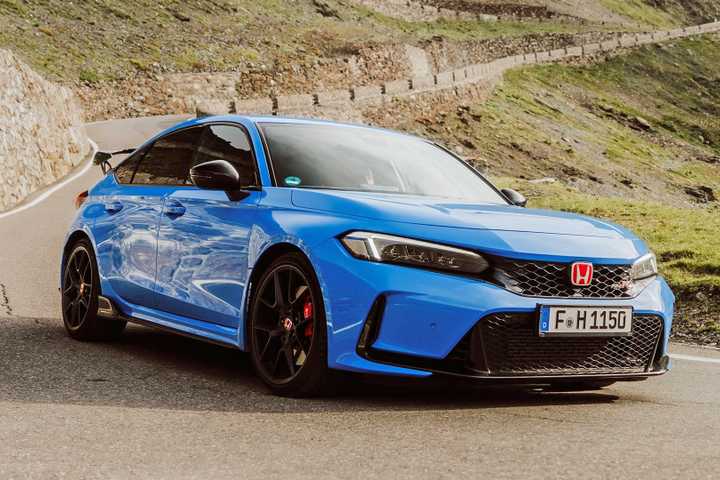
Profile shot of 2024 Honda Civic Type RChase Bierenkoven | TopSpeed
Stack the numbers honestly and the picture that emerges is not that the Type R is a budget compromise that happens to be quick. It’s that the Type R is a comprehensively engineered performance car that also happens to be rational to own, and in the used-versus-new comparison with the M2, rationality turns out to be a genuine ownership advantage.
The BMW M2 G87 is an excellent machine. Its S58-derived engine is muscular and aurally satisfying in a way that Honda’s K20C1, for all its precision, does not quite match. Rear-wheel-drive balance, the ability to rotate the car on throttle, and the associated engagement ceiling are all real advantages in the right conditions and for the right driver. No honest assessment of these two cars should pretend otherwise.
2025 Honda Civic Type R front cabin showing dashboard and front seatsGuillaume Fournier | TopSpeed
But the buyer being asked to spend $47,000 on a new Type R or $55,000 to $63,000 on a used G87 M2 faces a specific question: which car represents the better total ownership experience for someone who will drive it daily, insure it annually, and live with its quirks and costs for the next several years? On that question, the one that actually gets answered every morning when the key turns, the Type R makes a case that is hard to argue with. Approximately $6,000 less per year in insurance premiums. A depreciation curve that has proven more resistant to erosion than the M2’s. A factory warranty that covers the car from day one, versus the used-car uncertainty of a post-warranty M2 with an S58 under the hood.
The Nürburgring lap record, the Brembo brakes, the mechanical LSD, and the six-speed manual with rev-matching are not consolation prizes for buyers who could not stretch to the M2. They are the headline specification of a car engineered without compromise to a different set of priorities: performance without penalty, engagement without anxiety, and a total cost of ownership that leaves room in the budget to actually enjoy the machine. That’s the real reason Type R buyers skip the used M2. They’ve done the math.
















No Comments