
Plymouth Once Made A Muscle Car Nobody Remembers

The muscle car genre might have kicked off with the pretty 1964 Pontiac GTO, which packed a modest 325 horsepower from its Tri-Powered 389 CID V8 engine, but things got mean pretty quickly. These relatively simple two-door, three-box designs with a V8 up front caught on quickly, and for every customer buying a cooking muscle car, there were another three dreaming about more power.

The power wars quickly kicked off, and manufacturers and specialists looked for the largest, most powerful mill they could find to stuff under the hood. The COPO Chevy Camaro ZL1 has 430 horsepower, but many experts believe this is more likely to be in excess of 500 horsepower, with torque rated at 450 lb-ft. The Yenko Nova S/C has 425 horsepower, with 60 mph arriving in approximately 4.2 seconds, and was deemed too extreme for the roads. But while the carefree ’60s were the era of the unhinged muscle car, all this was about to change. The ’70s ushered in an oil crisis and encroaching emissions regulations — and with that, a new type of American performance machine that is often overlooked today.
The Early ’70s Saw The Dawn Of The Mini Muscle Car
With the benefit of hindsight, it was clear that something was going to break, or rather explode, with the muscle car Golden Era of the ’60s. This was a time when a $4,200 1968 Dodge Charger 426 Hemi, conservatively rated at 425 horsepower and 490 lb-ft of torque, could hit 60 mph in 4.8 seconds right out of the showroom. Consider this for a second: the Lamborghini Miura that was launched a year before, with a 3.9-liter V12, could only manage that speed in 6.7 seconds — and that cost almost $20,000. The inexpensive, face-melting performance that the Charger offered didn’t go unnoticed.

Insurance companies were closing in, with premiums on muscle cars going through the roof. California had also implemented vehicle emissions standards in the late ’60s, and Congress passed the first major Clean Air Act in 1970, requiring a 90 percent reduction in emissions from new automobiles by 1975. Cranking up power to nuclear levels and then getting one mile per gallon was going out of fashion. Carmakers realized that they needed a more modern approach, a muscle car that was light, compact, and more agile: this would be the mini muscle car.
The Plymouth Duster 340 Was Small But Mighty

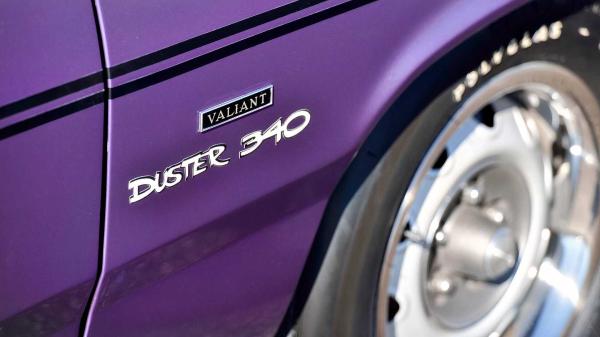
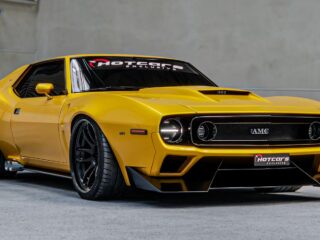
It wasn’t an entirely new idea, with the Chevy Nova SS arriving as a true compact muscle car in the mid ’60s. Then there was the AMC AMX, a quirky but quick muscle car that, aside from the Corvette, was one of the only two-seat sports cars on offer in the USA. Then came the Plymouth Duster, a compact slice of muscle that lived in the shadow of the ‘Cuda and desirable Road Runner, but should never be overlooked. A two-door fastback version of the Valiant, the Duster shared its A-body platform with the Dodge Dart and the early Barracudas.
Plymouth Wanted To Have A Budget-Friendly Duster Range Topper

There were some humdrum inline-sixes and two-barrel small-blocks on offer for the Duster, but Plymouth knew that the car would make a usefully quick small muscle car without resorting to a monster big block. Between 1970 and 1973, the Duster 340 offered up a punchy small-block package, for not a lot of money. The premium for the top model was $400, and that included a beefed-up suspension, including 0.87-inch diameter front torsion bars and a 0.88-inch front anti-roll bar, 10-inch front disc brakes, Carter AVS four-barrel carb, and three-speed manual.
The Duster’s 340 Was Enough In A Small Package

The high-revving 340 V8 was Chrysler’s best small block at the time, with 10.5:1 compression, 2.02/1.60-inch valves, and high-flow, X-code heads. This mill wouldn’t stop until 6,000 rpm and was rated at 275 horsepower and 340 lb-ft of torque. Buyers had a choice of a three-speed TorqueFlite automatic, three-speed manual (ratios of 2.55, 1.49, and 1.00:1), or the optional A-833 Hurst-shifted four-speed stick (ratios of 2.44, 1.77, 1.34, and 1.00:1).
The Duster was something of a sleeper, despite its performance — catching out unsuspecting muscle cars was its specialty. Externally, the 340 had just a few performance additions, with two black body-length stripes as well as cool black stripes across the rear that joined up the rear lights. This is the section that many other drivers would end up looking at after the lights went green.
The Most Criminally Overlooked Mopar Muscle Car
Chargers and ‘Cudas were kings of the streets back in the day, but this forgotten Mopar definitely earned a spot in the muscle car hall of fame.
The Duster 340 Could Clean Up At The Stop Light

The 1970 Duster 340, which weighed in at 3,110 lbs, may have been less imposing than full-size, meaty muscle cars, but underestimate it at your peril. The Duster had an impressive turn of speed for its time, and even stacks up pretty well today. The 340 Plymouth hit 60 mph in roughly 6 seconds and topped out at around 130 mph. The quarter-mile time sits at 14.39 seconds at 97.2 mph. A 1971 HEMI-powered Charger R/T would be neck and neck, posting a quarter-mile time of 14.3 seconds. A 1971 Ford Mustang Boss 351, with 330 horsepower and 370 lb-ft of torque, would just have the edge on the Duster 340, posting a quarter-mile time of 14.1 seconds.
The Duster 340 Represented A Shift In Muscle Car Thinking

The Plymouth Duster 340 wasn’t just another fast car from the muscle car era — it represented a shift in how American manufacturers approached performance in the early 1970s. During the late 1960s, the formula for speed was simple: install the largest engine possible into a mid-size platform and let the horsepower numbers speak for themselves. Cars like the HEMI Charger, big-block Chevelle, and Pontiac GTO followed this blueprint with huge displacement engines that prioritized brute force over efficiency.
By the time the Duster 340 arrived in 1970, however, the landscape was beginning to change. Insurance companies were raising premiums on high-performance models, emissions regulations were tightening, and fuel economy was becoming a bigger concern for buyers. Instead of abandoning performance altogether, manufacturers began experimenting with lighter cars powered by high-revving small-block V8 engines.
This approach gave the Duster a unique advantage. Rather than relying purely on horsepower figures to dominate the streets, it used its lighter weight and strong power-to-weight ratio to deliver impressive real-world performance. In many situations — especially short sprints and stoplight races — that combination allowed the Duster 340 to run neck and neck with larger, more powerful big-block muscle cars.

Unicorn Muscle Car Found…But It’s Not What You Might Expect
This muscle car was forbidden fruit overseas and there are just three like it.
The Duster 340 Proved Itself Where It Mattered Most — The Strip

For a car that never carried the badge prestige of a HEMI Charger or a Boss Mustang, the Duster 340 had a quiet confidence that came from one place: the drag strip. With a quarter-mile time of 14.39 seconds at 97.2 mph, the 340 wasn’t just competitive — it was embarrassing cars that cost nearly twice as much. That quarter-mile run put it within a hair of the 1971 HEMI-powered Charger R/T, a car packing a legendary big block and commanding a price tag to match. The Boss 351 Mustang, with its 330 horsepower and 370 lb-ft of torque, could only edge the Duster by a slim 0.29 seconds over the quarter mile. For a budget compact running a small block, those are remarkable numbers. The 340’s high-revving nature — spinning freely to 6,000 rpm — meant it built power fast off the line, exactly where drag racing is won and lost. It was the kind of car that made big-block owners nervous at the lights, and that was precisely the point.
The Duster Is An Underrated Muscle Car That Deserves A Second Chance

The Duster was the kind of car you wouldn’t win many barroom debates with, due to its relative lack of power, but it did its talking at the drag strip. With a sticker price of $2,547 when new in 1970 — the aforementioned 1971 Ford Mustang Boss 351 would cost more than $4,000 — buyers ignored the lack of bragging rights and snapped it up in droves. Plymouth shifted 24,817 Duster 340s (from a total of 217,192 Dusters) for the 1970 model year, says Hemmings, showing how popular the top flight option was. The company managed to sell 69,115 Duster 340s from 1970 to 1973.
The Duster Doesn’t Have The Legendary Status Of Some ’60s and ’70s Icons — But That’s A Good Thing

The Duster’s ubiquity, and its lack of a ground-shaking big block, means that it has never quite achieved the cult status of the big contenders, and remains rather underrated in the world of muscle cars. That’s good news if you want one because prices remain affordable today — just like when it was new. Expect to pay $29,500 for a good condition 1970 Valiant Duster 340, says Hagerty, up to $33,900 for the 1971 cars, and $28,200 for 1972, when power of the 340 was down to 240 horsepower. That 1971 Charger R/T will cost around $84,000 in good condition, by comparison.
Ultimately, the reasons the Duster 340 made sense in the early ’70s — that is, high gas prices and less space in cities — make even more sense today. If you want a smaller muscle car that is a bit better on gas and easier to park, the Duster 340 could be the perfect choice.
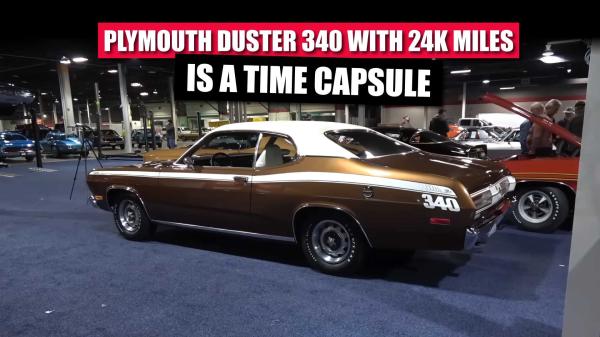
This Plymouth Duster 340 Survivor With 24k Original Miles Is A Time Capsule
This Chestnut Brown Plymouth Duster 340 has only 24k miles on the odometer and every piece of historical paperwork you might want in a car this old.
The Numbers Make The Duster 340 One Of The Smartest Collector Buys Around

In the world of classic American muscle, the Duster 340 occupies a rare and enviable position: genuinely quick, historically significant, and still affordable. While a 1971 Charger R/T in good condition commands around $84,000 today, a comparable 1970 Duster 340 can be had for roughly $29,500 — less than a third of the price, for a car that ran neck and neck with it at the drag strip. The 1971 cars sit at around $33,900, while 1972 models — where the 340’s output dipped to 240 horsepower — can be found for around $28,200, making them an accessible entry point into the era. Plymouth sold 69,115 Duster 340s between 1970 and 1973, meaning parts and knowledge are far easier to come by than with rarer, low-production muscle cars. Its relative lack of cult status has kept prices grounded, but that won’t last forever as collectors increasingly look beyond the obvious icons. For anyone wanting a piece of the muscle car era that can actually be driven, enjoyed, and stored without a second mortgage, the Duster 340 makes a compelling case that it hasn’t finished surprising people just yet.
Sources: Hagerty.com

Related posts



Latest Post



No Comments