
The Detroit Diesel Two-Stroke That Turned 2,100 RPM Into A War Cry
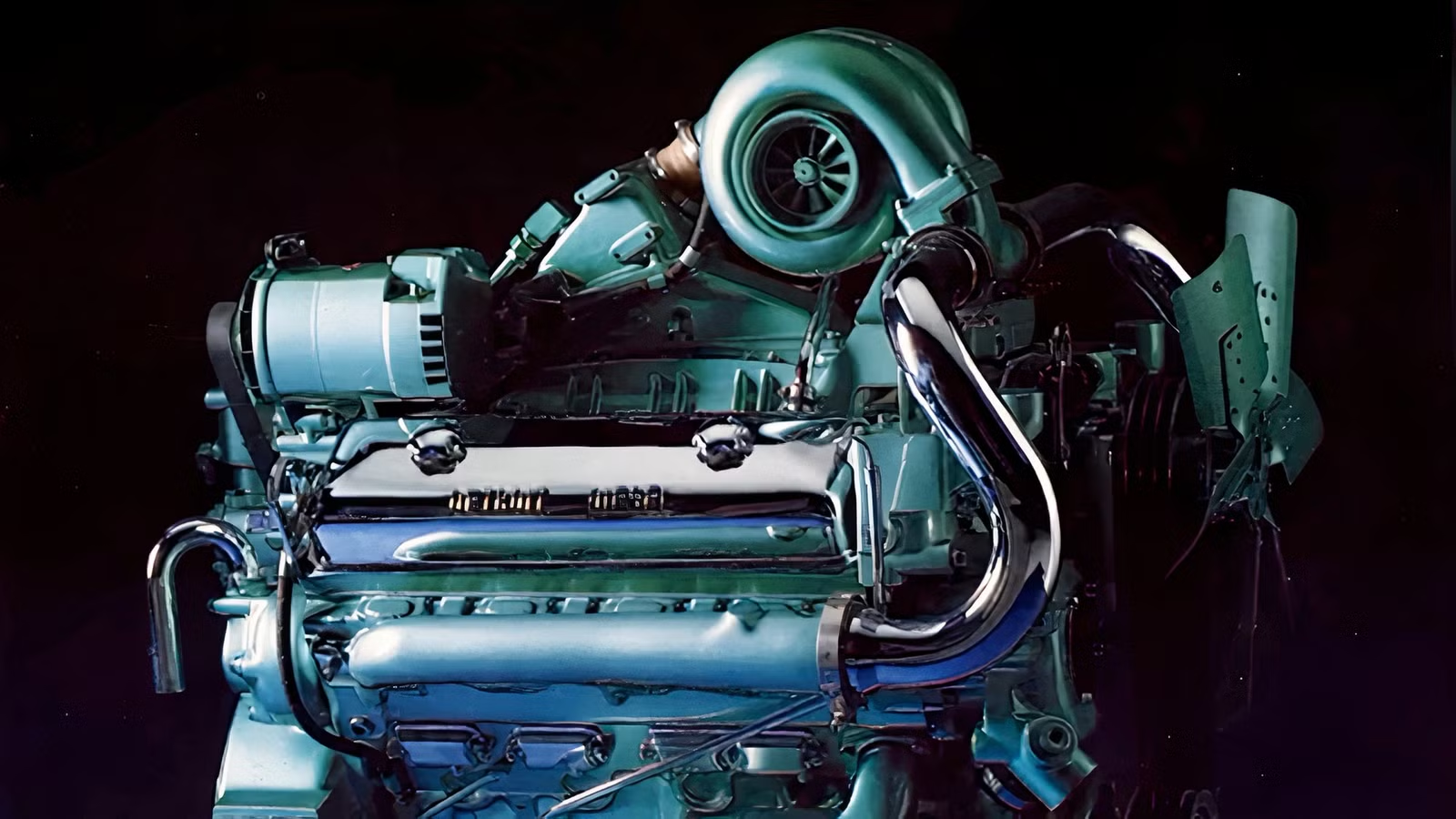
A loading dock could be calm one second, then sliced open by a metallic howl that bounced off warehouse walls and made everyone nearby wonder what the… This particular sound wasn’t polished, musical, or even especially pleasant in the normal sense. Instead, it was urgent, sharp, and slightly ridiculous, like heavy machinery had just discovered tequila.

Possibly the oddest part was the tach. The needle wasn’t doing anything heroic, yet the exhaust note suggested the crankshaft had thrown away its retirement plan. This old diesel made 2,100 rpm sound like mechanical rage, and that trick turned it into one of the most recognizable voices in American work history.
Modern Diesels Forgot How To Scream
Modern diesel engines are better at nearly everything that matters on a spreadsheet. They’re cleaner, quieter, more efficient, easier to calibrate, and far less likely to leave a neighborhood wondering whether a tugboat has taken a wrong turn through a residential street. For fleets, regulators, and anyone trying to hold a conversation near a loading dock, that’s progress.

Nothing comes free though, and the cost was personality. The old American diesel world had a soundtrack, and it wasn’t polite. City buses, cabovers, workboats, fire trucks, construction gear, and industrial equipment once carried a hard-edged mechanical note that cut through traffic like a circular saw with taxes to pay.
And more than anything, that’s honestly what makes this old diesel really stick in memory. It turned work into noise. Some might even call it theater. It could be hauling freight, idling beside a jobsite, powering a generator, or pushing a boat through chop, and it still sounded like it had somewhere urgent to be. This thing knew how to make an entrance.
The Wagon That Quietly Hid A 400-Horsepower Muscle V8
A humble ’60s family wagon hid a 400-hp V8 secret under its long hood, turning grocery runs into muscle-era mischief.
The Trick Was Never The Tachometer

Don’t be misled: the secret wasn’t that the engine was spinning at some massive speed. It only sounded that way, which is much funnier, if you think about it. A typical four-stroke engine fires each cylinder once every two crankshaft rotations. A two-stroke diesel fires once every crankshaft rotation, so the exhaust pulses come twice as often.
At a normal working speed, the engine produces a sharper, busier rhythm than your ear expects from a big diesel. The brain hears all those pulses packed close together and assumes the engine is revving far higher than it really is. That’s why an engine working around 2,100 rpm could sound like it was spinning twice as fast, even when the tach was telling the truth.
The Supplier Of Panic

Then came the Roots blower, which turned the whole thing from loud into awesome. On these two-stroke engines, the blower was part of how the engine breathed, forcing air through the cylinders and helping clear exhaust gases. In the process, it added its own hard mechanical whine to the already frantic exhaust note.
Put the two together and you get the scream. The firing rhythm supplied the panic, the blower supplied the high-pitched edge, and the exhaust carried the whole mess into the next county. What an invention.
The Unbreakable GM Engine Everyone Loves To Hate
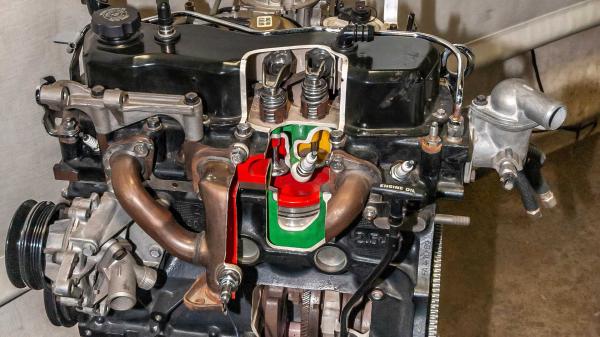
With a simple design and low output, this powerplant could run practically forever.
The 6V92 And 8V71 Were Detroit’s Loudest Calling Cards

|
Engine |
Displacement |
Power |
|
8V71 |
1.2-28.4 liters |
60-1,000 hp |
|
6V92 |
6.0-24.0 liters |
200-1,500 hp |
The Detroit Diesel two-stroke family became famous as the Screaming Jimmy, and the nickname made sense from both ends. “Jimmy” came from the old General Motors connection, while “screaming” came from the way these engines sounded when they were working.
The badge math was beautifully simple. In an 8V71, the “8” meant eight cylinders, the “V” meant a V-configuration, and the “71” meant 71 cubic inches per cylinder. That gave the 8V71 about 568 cubic inches, or roughly 9.3 liters, and one commonly cited rating for the 8V71 sits around 318 hp. In truck terms, that was a compact brick with a big voice and enough attitude to make a quiet engine feel like it was wearing loafers.
How America Worked Hard

The 6V92 followed the same logic, only from the later 92-series family. Six cylinders, V-block layout, 92 cubic inches per cylinder, and about 552 cubic inches overall, or roughly 9.0 liters. The 92-series engines were the harder-hitting follow-up act, used where operators wanted serious shove from a relatively compact package.
What made these engines feel larger than their spec sheets was where they showed up. The 71-series stretched from tiny single-cylinder versions to huge multi-cylinder configurations, and V-block versions joined the lineup later. They worked across trucks, buses, military equipment, marine applications, industrial machines, and generators. If something in America had to work hard, make noise, and annoy everyone within earshot, a Detroit two-stroke was probably qualified.
Drivers Loved Them Because They Had To Be Worked Hard
The Screaming Jimmy didn’t drive like a lazy modern diesel that digs into a basement of torque and lets the transmission nap. These engines wanted attention. They liked revs and commitment, and they made the driver participate. You didn’t just point one down the road and wait for boost to solve your problems.
That’s why the old-school trucker lore around these engines has teeth. The phrase “drive it like you’re mad at it” fits because the engine rewarded a heavy foot and a busy right hand. Let it fall out of its happy range and it could feel flat, but keep it singing and it became a rhythm machine. You worked the throttle, worked the gears, listened to the pitch, and kept the whole rig moving like you were trying to stay half a step ahead of gravity.
Loud, Leaky, And Smoky

The 8V71 and 6V92 were loud, leaky, smoky, and not exactly shy about oil, but they gave drivers something modern engines often filter out: feedback, noise, and mechanical stakes. The sense that the engine wasn’t merely powering the job, but arguing with it in public.
With hindsight, it’s also pretty American through and through. A compact V-configuration diesel could sit under a cabover, in a bus, in a vocational rig, or in a workboat and produce the kind of sound that made bystanders look up before they knew what they were looking for. It was blue-collar surround sound.
The Diesel Engine That Made Pickup Trucks Unstoppable
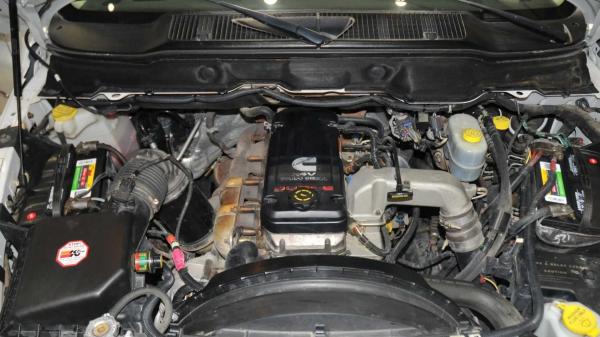
Before turbo-diesels became pickup legends, the 5.9-liter Cummins changed the game with torque, simplicity, and lasting power.
The Same Sound That Made Them Legends Also Doomed Them

The same design that made the Detroit Diesel two-stroke unforgettable also made it a poor fit for the modern world. The two-stroke cycle gave it that busy firing rhythm, but it also brought emissions problems that became harder to excuse as regulations tightened. The blower whine and exhaust scream were fun for nostalgia, but the smoke was harder to romanticize when it was hanging over traffic.
Oil consumption was part of the brutal tradeoff. These engines could reportedly burn up to a gallon of oil every 1,000 miles, and a lot of that ended up as dirty black smoke. The Detroit Diesel Series 71 family lasted an astonishingly long time, from its 1938 roots to the end of production in 1995. Engines don’t hang around that long by accident.
A Pivot, Not A Closure

But the ending is key. Detroit Diesel didn’t disappear, and the Series 60 was not another two-stroke chapter. The company moved into cleaner, more efficient four-stroke power, with electronic control and a completely different character. That pivot helped keep Detroit Diesel relevant while the old scream faded into truck-stop memory, vintage cabover videos, restored buses, old boats, and diesel gatherings where half the crowd pretends their ears still work fine.
Sources: RPM Diesel, Diesel Rebuild Kits, Curbside Classic, SlashGear, Jalopnik.

Related posts






Latest Post


No Comments